



 0
0

State-run Egyptian media fighting a lost battle
CAIRO: Oh dear! These are difficult times for the control freaks who run Egypt’s media. Amid continuing demonstrations against President Mubarak and the lectures from Washington about freedom and democracy, they are struggling to keep their grip.
Last week, on a tour of the Middle East, the US secretary of state, Condoleezza Rice, stopped off in Cairo and made a speech. “When we talk about democracy,” she said, “we are referring to governments that protect certain basic rights for all their citizens - among these, the right to speak freely.”
No sooner was she gone than the Egyptian censors swung into action, as if to illustrate her point. They objected to a cartoon about Ms Rice’s visit in the independent weekly, Cairo Magazine. Exactly what was wrong with the cartoon is unclear, but readers can judge for themselves (and also displease the censors) by viewing it on the magazine’s website. It’s not easy to see in the web version, but the slavering beast in the right-hand corner has a collar saying “NDP”, the initials of President Mubarak’s National Despotic — sorry, Democratic — party.
This was the second time in less than a month that the authorities had interfered with the magazine. The previous occasion was an issue reporting on Egypt’s ludicrous constitutional referendum in May and the brutal treatment of the demonstrations that accompanied it.
The censors eventually relented but the result of their action, in both cases, was to delay distribution of the magazine. This is a familiar form of harassment which has the effect of confusing readers, who can’t find publications in the shops on the expected day, and discouraging advertisers. Over time it can drive publishers out of business — at which point the authorities throw up their hands and deny that government suppression had anything to do with it.
Cairo Magazine is now thinking of having the cartoon printed on T-shirts — an idea that opens up all sorts of anti-censorship possibilities. Do T-shirts count as “publications” under Egypt’s media laws? Can they be impounded, along with their wearers, by the censors?
Ms Rice’s speech in Cairo was a mixture of flattery and barbs. “Throughout its history, Egypt has always led this region through its moments of greatest decision,” she said ... “President Mubarak has unlocked the door for change.” But she continued: “We are all concerned for the future of Egypt’s reforms when peaceful supporters of democracy — men and women — are not free from violence [a reference to the demonstrators beaten up and sexually assaulted by Mubarak’s plainclothes thugs].
The day must come when the rule of law replaces emergency decrees — and when the independent judiciary replaces arbitrary justice.” The forthcoming presidential and parliamentary elections, she said, must meet the objective standards that define every free election: “Opposition groups must be free to assemble, and to participate, and to speak to the media. Voting should occur without violence or intimidation. And international election monitors and observers must have unrestricted access to do their jobs.”
This is not what the Mubarak regime normally has in mind when it holds elections, and it all proved a bit too much for the state-run media whose task is to portray the 77-year-old leader as a man of infinite wisdom and benevolence. Their reaction to Ms Rice’s speech was to highlight her compliments and ignore the rest. Al-Ahram newspaper, on its front page, quoted the phrase about Mubarak unlocking the door for change but overlooked the calls for an end to emergency laws and arbitrary justice.
A recent, and highly embarrassing, trip to Washington by the prime minister, Ahmed Nazif, was treated in much the same way, with the government media relying on rose-tinted accounts given by Egyptian officials. It was a similar story when US President George Bush phoned Mubarak earlier this month. “I urged him once again to have as free and fair elections as possible,” Mr Bush told reporters later. “People ought to be allowed to vote without being intimidated, people ought to be allowed to be on TV, and if the government owns the TV, they need to allow the opposition on TV, people ought to be allowed to carry signs and express their pleasure or displeasure. People ought to have every vote count.”
According to al-Ahram, however, the two presidents chatted about Israeli-Palestinian peacemaking and bilateral ties.
The only real effect of this sort of behaviour is to make the state media look ridiculous, since people can easily find out what is going on from satellite television, the internet and Egypt’s non-state media. Some of the best day-to-day coverage comes from a group of unpaid bloggers on The Arabist Network. It should be obvious to the editors of these papers by now that they are fighting a losing battle, but they continue to clutch at any straws. Last Friday, a headline in al-Gomhuria, another government newspaper, announced: “The Guardian cites Samir Ragab: Mubarak is leading reform in the Middle East”.
Samir Ragab, who is editor-in-chief of al-Gomhuria, had written a column in his own paper saying that Ms Rice’s speech merely “reiterated the same concepts” advocated by Egypt. “We have to acknowledge that it was President Hosni Mubarak who took the initiative for reforms in the Middle East,” he continued. “Washington now recognises that we were correct and sincere.” The Guardian quoted Mr Ragab’s views in a round-up of media reactions to Ms Rice’s Middle East trip, including other comments such as one from the Lebanese Daily Star which talked about sweeping away “all of the dust and cobwebs that have limited democratic progress in the Arab world”.
A mention in the Guardian was scarcely any reason for Mr Ragab to get excited and publish a story about it, but readers of al-Gomhuria may well have got the impression that by quoting his remarks the Guardian was agreeing with them — which was not the case.
Even by the hyperbolic standards of Egypt’s government press, when it comes to singing the praises of President Mubarak, Mr Ragab’s prose is difficult to match. One of his finest tributes, discussed recently in another blog, From Cairo With Love, was this:
“Every time we follow President Mubarak to locations of bounty and growth and prosperity ... we are compelled to truly believe that lapping water flows only from springs gushing with purity ... purified by his heart, intellect, honesty and the fact that, in this day and age, there is still a leader like him.”
Such drivel is only to be expected, given the ludicrous rules that govern Egypt’s media. The system is described in detail by the German-based Heinrich Böll Foundation, but one of its more important aspects is that editors are effectively hired and fired by the government.
The system is also so authoritarian that important news is not allowed to happen until these big chiefs give it their approval. When a bomb went off in Cairo’s old city last April, the Qatar-based satellite channel, al-Jazeera, was broadcasting the news by 6.30pm. It was not until two and a half hours later that Egyptian state television got around to even mentioning it.
This, according to reports in the independent press, was because the state television’s news director had switched his mobile phone off and could not be contacted to give permission.
As the cracks in the Mubarak regime widen, there have been persistent rumours that a clearout of brain-dead media chiefs is on the cards. This would not solve all the media’s problems but it would certainly be a good start — especially since many of the editors are already past the compulsory retirement age.
The Higher Press Council, which is nominally responsible for appointments, has been trying to quash the rumours, however, and recently issued a statement saying the dinosaurs would be kept on ... “in the interests of the nation”.—Dawn/The Guardian News Service
Thank you, with a bunch of flowers too!
STRANGE people we can be, as has been evident time and again. And here it happens once again. The outgoing city nazim, Mr Niamatullah Khan, has reportedly expressed fears about his life, in a rather indirect sort of a way. He has asked the federal government, according to a press report, to provide him protection at home as he does not have even a chowkidar there. And he fears that terrorists could attack him at home.
Why does the elderly, fatherly Mr Niamatullah Khan sounds so worried? He, in the same breath almost, refers to two other points: the development work that took place in the last several years; and the fears that have come alive that local bodies polls could bring election-related bloodshed and violence that this society is familiar with. Indeed most citizens are aware and familiar with the sustained opposition that the city nazim faced throughout his tenure. But the maturing of this society would surely warrant that those differences be set aside, now, and the elections pave the way for a decent, stable and efficient system where the local leadership provides to Karachi the quality of life that its millions of inhabitants are yearning for. One prays that our fears do not come true, and now that the election schedule has been announced, this metropolitan does not slide into any kind of disorder. What the city nazim has said is disturbing to say the least. Perhaps it does not even reflect well on society. One would have imagined that an outgoing nazim, who was a Lord Mayor indeed, would sound happy at least. He has put in his best and has given to the city a new look in many places in Karachi. A complete turn around? No that is asking for too much, given the material resources and public attitudes that we have. Given the governance we have, and the decades of backlog that have piled up.
But the local government system, introduced by this government, has made a difference. Let’s face it, we are a hard to please people, and our expectations are rising all the time. We are impatient people, and demanding the moon without making our contribution as individuals and organizations. We seek too much, too soon. And we believe (rightly and wrongly) that we only get too little, too late. The reality is somewhere in between, insist citizens who desire to see peace and law and order in this city. Indeed the outgoing city nazim Mr Niamatullah Khan had his critics, and surely neither he nor anyone else can please everybody, all the way. Let’s face it. He gave to the office that he held a towering dignity and credibility, and above all the citizens always got the impression that concerted and successful efforts were being made to upgrade the infrastructure of the Sindh capital. He kept his team on its toes, and himself too, in spite of the recurring problems that came his way.
In the interest of the wellbeing of the city, one does not seek to make specific and pointed references to what is believed to be public knowledge, the problem that he was confronted with.
Many thoughts come to mind as one looks back and forth at the local bodies in the city. Take this one about the City District Government Karachi budget that was approved by the City Council on June 28. A budget of Rs43.807 billion was approved by the members ‘amid the thumping of desks’, after the nazim concluded his speech. The members of the Haq Parast group boycotted the proceedings of the budget session, and before that they tore off the budget documents and chanted slogans against water shortage in the city.
Relevant here is the fact that Advisor to the CM on Local Government Mr Waseem Akhtar termed the presentation and approval of the budget by the city nazim ‘illegal’. He argued that it was a violation of the orders of the Sindh chief minister and was a breach of the constitution and the SLGO. He added that the officers of the district government had been ordered not to implement the budget. This has been received by citizens with concern. Does it mean that until a new team is in place, the development work will not be done? Will the heart and soul of the city receive a setback until a new nazim is elected and installed?
In his fourth and last budget speech, Mr Niamatullah Khan not only vowed to make Karachi a most modern and civilized city of the Islamic world by 2010, but also underlined that the city government had arranged Rs35 billion for the unprecedented number of development projects. He also unfolded details of his ‘vision 2010’ wherein the CDGK would, in collaboration with the federal and provincial governments, set up a surveillance system to check activities of anti-social elements so that all those efforts being made to ensure rule of law, peace and tranquillity, progress and prosperity were not sabotaged.
Indeed there are plans and promises and from published accounts there are fears of sabotage too.
I am distracted and disturbed here by what the Federal Minister for Religious Affairs Ijazul Haq said in Karachi on Sunday last (June 26). He had expressed fears that acts of terrorism might escalate in the run up to the elections in Karachi. (One Karachiite, who is keeping an eye on the local bodies polls in view of the tension that has already set in, wondered whether such fears of violence were relevant with reference to other cities also.) The Minister was referring to the recent acts of terrorism that had taken place in Karachi, and added that the federal government would decide whether the army was needed or not to ensure peaceful polls.
There is indeed much to say on this theme. One must here attach due importance to what President Pervez Musharraf said on Thursday. He said that the key issue of the local council system was the relationship between district nazim and chief minister which was unnecessarily becoming adversarial. He spoke of the need to provide a more balanced approach with respect to the division of powers between district nazim and chief minister. Indeed we should improve our governance as we go along. We need to learn from our experiences. In the case of the Karachi nazim, Mr Niamatullah Khan, he may not have been the ideal person, as some may like us to believe. But he was, not only in his own words but in those of a vast majority, a decent hardworking Karachi lawyer, who put in his as many as 18 hours a day for the greater good of society. And there are all evidences that he gave to Karachi a healthy ambience, despite the inherent odds that the Sindh capital suffers from. He was an image of care and caring, and tried his best to make this city a better place than what it was when he took charge.
Quite certainly, the least and the smallest gesture that citizens can show him is to say ‘thank you’ with a bunch of flowers too.
Underwater and can’t swim
SO A cloudburst is all it takes to bust the bubble of the Punjab’s glossy capital and Pakistan’s ‘fun city’? It is there for all to see, and will remain there for much of the rainy season, because no amount of gloss put over rot makes the latter go away. What happened on Friday was not exactly nature’s fury in action. Saturday’s continuing moderate rain and equally bad conditions on city roads prove just that. It happens almost every year, and can happen several times a year, if it, well, rains. Images of Punjab University students riding a boat through a recently constructed pedestrian underpass connecting the hostels with the campus told all.
Others living elsewhere in the city, too, could have used boats and avoided being electrocuted by fallen power lines, which seem to acquire a life of their own when not hanging between poles. The city district government may have been dissolved in preparation for next month’s local body elections, but Lesco and Wasa remain firmly in charge of the torture chair reserved for Lahore’s citizens.
The classical and folk poetry and the ragas associated with the rainy season would not sound altogether otherworldly today if those who composed them had lived in the 21st-century Lahore. The muses that inspired such works of art have long abandoned this urban jungle of commercial cacophony, where even rain-water drains have been covered and land thus reclaimed has been auctioned off to building contractors and the ‘parking’ mafia.
The same posh parts of the city that are showcased before potential foreign investors, and which we are told make our country cousins living across the border go green with envy, present a spectacle of neglect, greed and inefficiency — all rolled into one. This burgeoning metropolis is now beginning to burst at the seams, thanks only to the lack of proper planning and an outdated, overburdened urban infrastructure. Time was when drainage problems affected only the so-called low-lying areas of the city. Northern Lahore was infamous for that. The entire area from Badami Bagh to Baghbanpura north of the main railway line became non-navigable for much of the rainy season. Things have admittedly got worse there, but the rest of the city also seems to have caught up with northern Lahore. Many have complained of water entering their homes.
Reeling under water until late Saturday afternoon were large parts of Gulberg, residential colonies along the canal, Garden Town, Model Town and even the DHA. The last mentioned may have managed to keep the riff-raff out by erecting walls all around, but it cannot change its geography or the drains that it shares with the rest of the city.
Gulberg’s M M Alam Road, hailed as the trendy counterpart of the food streets elsewhere, was but a canal that led you nowhere. Gulberg III was definitely the worst hit part of the locality. And to think that these areas are considered the city’s best foot forward, the face you want the world to see and admire; let’s not do that on a rainy day. The chief minister, followed by a barrage of pertinent officials, we were told, went to tour the affected areas. If he really went to the affected areas, one would like to know the mode of transport he chose for the auspicious occasion. It couldn’t have been the regular limousines; those white elephants of the poor country are treated well and kept in good shape. Promises abound. The CM chose the otherwise very pleasant day to cheerfully tell us that the entire province’s drainage system was being revamped and so were the water supply lines. One wishes he also uttered a word or two in respect of Lesco’s power distribution system, if only for a feelgood purpose. If the past is any guide, the best promises made by a politician are the ones that remain just that.
The rainy season has only just begun, and because it has begun bang on time this year, we still have more than two months of it to contend with. This should give the government ample time to do something more concrete to show that it shares the citizens’ misery on account of the existing water, power and drainage-related problems.
With the city district government conveniently sent packing, the Punjab government will now have to bear the brunt of the people’s complaints when the very basic of civic services don’t work the way they should. You can blame the late arrival of trains and plains on bad weather, but that’s just about it. If rain water in your street is not flushing out long after it has stopped pouring, or if there emerges a pond of filthy water next door that’s breeding flies and mosquitoes, try as you will, you can’t blame it on the weather.
And there is a reason why: you pay for having water in your tap and for the drains to run underground and not on the street.
THERE were sad tidings from a number of low-income neighbourhoods of Kasurpura, Marzipura, Shafiqabad, Chah Jumanwala et al along Ravi Road. Contaminated water supply reaching the area resulted in the death of several people this past week. One says several people, because one doesn’t want to argue over numbers as these are nearly always disputed by the authorities concerned.
Numbers, anyway, are irrelevant in matters of life and death if you ask those who have lost their near and dear ones to something as seemingly harmless as drinking water. Where does a poor man’s misery stop, you may ask. Rising oil prices in the world market, we are told, are responsible for the increase in the prices of vegetables, pulses and wheat. The poor can, and have been, cutting down on their intake of these staples, and now they cannot even have water without worrying for their lives. After initial denials, the government responded by making alternative arrangements for the affected residents, who are now being supplied drinking water through municipal tankers. Meanwhile, laboratory tests have confirmed that those who died had consumed tap water that had come mixed with sewage through faulty supply lines, which are now being replaced.
A GROUP of Christians belonging to the St Andrews Church Committee took to the street near Bohrrwala Chowk on Friday in knee-deep water. They were demanding that the church building in question be handed back to them. Pakistan Railway, the longtime custodian of the building, had run an English-medium school on the premises, which it has now reportedly leased out to a commercially run school system belonging to Foreign Minister Khurshid Mehmood Kasuri’s family. Without prejudice to the last mentioned, the move leads one to question the greed prevailing in the corridors of the railway headquarters. Where does it stop? First it was the railway golf club that was leased out to a private party. Then we heard of plans to tear down old colonial bungalows in Mayo Gardens — which should be declared a national heritage and conserved for posterity — to make room for ungainly town houses or what have you. And now this school building has gone to one of the most lucrative elite school businesses in the country.
Pakistan Railway, luckily, remains a public-sector entity so far. It is the responsibility of the government to ensure that its priciest assets are not leased out to commercial enterprises. As regards the fate of St Andrews Church, it should be handed back to the community it belongs to. If you can’t make your trains run efficiently and profitably, there is no cause to put a premium on a minority’s place of worship and turn it into a golden goose for yourself. — Observer
Chinese Muslim admiral opened sea routes
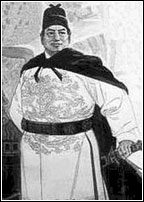 ISLAMABAD, July 2: A Muslim admiral of China, Zheng He, opened his country’s sea routes to Asia and Africa in the early 15th century much before Columbus discovered America.
A glimpse of what a Chinese account called an “unprecedented feat in mankind’s history of navigation” was provided by a film shown by the Chinese Cultural Centre in Islamabad on Thursday night to a select gathering of journalists and intellectuals.
The achievement dates to China’s famous Ming Dynasty when China, now one of the world’s leading economic powers, was already an advanced country with a booming economy and prosperous culture.
“In order to strengthen relations with countries lying to the west of China as well as to flaunt the national power of the great Ming empire, emperor Chengzu launched a series of marine activities,” a statement explaining the film said.
These expeditions were led by Zheng who was ordered by the Ming court seven times to act as an envoy to more than 30 countries and territories where he took his fleets.
According to the account of his first voyage in 1405, Zheng He led a huge fleet of more than 300 ships carrying sailors, clerks, interpreters, officers, soldiers, artisans, medical men and meteorologists that set sail from Liujia harbour near Suzhou on a distant voyage.
With its large cargo including silk, porcelain, gold and silver ware, copper utensils, iron implements, cotton goods, mercury, umbrellas and straw hats, the fleet sailed along China’s coast to Champa close to Vietnam, crossed the China Sea, visited Java and Samatra and reached Sri Lanka after passing through the Strait of Malacca. On the way back it sailed along the west coast of India and returned home in 1407.
Zheng’s second and third voyages undertaken shortly afterwards followed roughly the same routes with envoys from India and several other countries also boarding his ships to visit China.
Each time, according to the Chinese account, Zheng commanded a big fleet and staff of more than 20,000 men.
His fleets also visited Yemen, Iran and the Islamic holy city of Makkah and even further west to the present-day Somalia in East Africa.
No matter what country he visited, the statement said, Zheng called on the rulers of the land, presenting them valuable gifts as a token of China’s desire to develop friendly relations and inviting their emissaries to China.
“In ancient India, Chinese sailors made a good impression on the local people by observing their trading customs and practices such as clapping hands to clinch a deal in full view of others, never going back on it,” the statement said.
“Zheng He’s voyages contributed a lot to the economic and cultural exchanges between China and other nations and he opened sea routes for East-West trade just as (Chinese travellers) Zhang Qian and Xuan Zang had opened up land routes,” it said.
Zheng sailed to many places throughout South Pacific, Indian Ocean, Persian Gulf and distant Africa in seven epic voyages from 1405 to 1433, some 80 years before Columbus’s voyages.
According to a website on the Internet dedicated to the sailor, Zheng (1371-1435) is arguably China’s most famous navigator who, for 28 years, travelled more than 50,000km. He died in the tenth year of the reign of the Ming emperor Xuande (1435) and was buried in the southern outskirts of Bull’s Head Hill (Niushou) in Nanjing.
In 1985, during the 580th anniversary of Zheng voyage, his tomb was restored. The new tomb was built on the site of the original tomb in Nanjing and reconstructed according to the customs of Islamic teachings.
At the entrance to the tomb is a Ming-style structure, which houses the memorial hall. Inside are paintings of the man himself and his navigation maps.
The Arabic words Allah-o-Akbar (God is great) are inscribed on top of the tomb.
In the 1930s, a stone pillar was discovered in a town in Fujian province. It held an inscription that described the amazing voyages of Zheng. Five hundred years earlier, Zheng had chosen “a lucky day” to place this pillar in the Temple of the Celestial Spouse, a Taoist goddess.
Zheng described how the emperor of the Ming Dynasty had ordered him to sail to “the countries beyond the horizon,” all the way to the end of the earth.”
According to the website account, Zheng’s achievements show that China had the ships and navigational skills at the time to explore the world. “Mysteriously, China did not follow up on these voyages. The Chinese destroyed their ocean going ships and halted further expeditions. Thus, a century later, Europeans would ‘discover’ China, instead of the Chinese ‘discovering’ Europe.”
According to another website account, Zheng was born in 1371 in Kunyang, a town in southwest Yunnan province. His family, named Ma, were part of a minority group known as the Semur. They originally came from Central Asia and followed the religion of Islam. Both his grandfather and father had made the Muslim pilgrimage to Makka.
Zheng was well liked and admired for his quick wit in argument. Moreover, he was a brave soldier. When his prince seized the Chinese throne from a nephew, Zheng fought well on his behalf. As a result, Zheng became a close confidant of the new emperor and was given an important position at court.
Before Zheng set out on his first voyage in 1405, no nation on earth had ever sent such a fleet onto the ocean. It included 62 large ships, some 600 feet long, larger than any other on the seas. Hundreds of smaller vessels accompanied them. A Chinese historian described them: “The ships which sail the Southern Sea are like houses. When their sails are spread they are like great clouds in the sky.”
When the Chinese sailors reached Calicut, India, their giant ships created a stir. The ruler there presented his visitors with sashes made of gold spun into hair-fine threads and studded with large pearls and precious stones. The Chinese were entertained with music and songs. One crew member wrote that the Indians’ musical instruments were “made of gourds with strings of red copper wire, and the sound and rhythm were pleasant to the ears.”


























