



 0
0

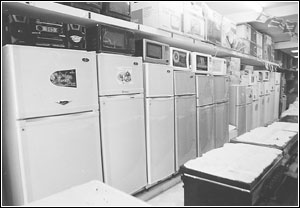 Increasing liquidity in the financial sector combined with serious concern on the part of government to improve GDP growth rate, has prompted economic managers to embark on a development strategy with a major focus on consumer – led economic growth and that too be domestic driven. This was contrary to the previous development approach, which was totally export-oriented.
Consumer financing has tremendously increased during the last two years and that too was available at a mark-up rate generally as low as seven per cent per annum until recently. Foreign investment is also flowing into consumer-focussed industries and services.
Emphasis on consumer financing was to create sufficient domestic demand for consumer items, which are effective substitute for imported goods such as automobiles and electronic items, particularly household electronic gadgets and cellular phones etc.
Foreign investment is more visible in mobile phone companies whose number has multiplied in last one year. The growing competition among cell phone companies has greatly slashed down the prices of instrument as well as call charges. As such cell phones are now within the reach of lower middle class also.
A sizable component of urban labour class, coming from rural or remote areas have developed urge to have cell phone to communicate with their families at home. Accordingly, consumer spending has accelerated among all strata of population.
Extra- ordinary surge in consumer spending occurs when a substantial rise occurs in GDP growth rate and per capita income resultant of expansionary macro-economic policies or is the outcome of tilt of affluent towards speculative activity, which initiates demonstration effect on all sections of the society.
No doubt, consumer financing has given impetus to manufacturing of electronic items and automobiles and also housing industry, but unfortunately a sizable share of consumer loans thus released have been misused and actually have facilitated speculative trading in real estate and stock exchange securities.
The builders and estate agents instead of developing new housing projects have utilized borrowed funds for speculative sale and purchase of landed property and stock exchange securities.
Sustainability of this nation-wide unusual surge in consumer spending irrespective of its legitimacy appears to be doubtful at this juncture as it has already been experienced in case of stock exchange securities and trading in properties. A little jerk in speculative trading can bring spill over effect on consumer spending at all levels of income. Very liberal car financing facilities offered by banks and leasing companies have prompted even lower middle income class to have a car.
Resultantly, in the face of sharply rising oil prices and overall inflationary trend, about 14,000 default cases have already been reported by banks relating to car financing alone. In addition to borrowing for car purchase, loan liabilities of this segment of population have further increased due to costly credit availed through (much publicized) credit cards and short term loans for financing consumption purchases.
Household equity of these unfortunate loan defaulters will ultimately turn out to be negative. Already saving rate has fallen to historic low of 12 per cent of the GDP. Consumer debt levels have risen considerably.
To seek full benefit of rise in GDP growth rate via consumer – led development strategies, there is need to put in place mechanism of protecting consumer rights. Hence total disregard of this fact by policy makers in the wake of steep rise in petroleum products impacting overall price level has raised inflationary rate to two digits in recent months.
As a result, State Bank’s intervention to curb inflation has raised the interest rates and private borrowings for purchase of automobiles and investment in housing have considerably reduced.
Accordingly, a set back has been occurred with regard to capacity to save of middle and lower middle income class making it practically impossible for them to service loan instalments if they desire availing car or housing loan. Hence, apparently all efforts to stimulate consumers’ demand will turn out futile in the long run.
Moreover, speculative trading in property and building material has made it impossible even for middle income class, who commands the buyers market, to own a house of their own. In a year’s time, prices of property in certain posh areas have registered an increase of about 150 per cent, whereas according to a news report, in Housing Scheme No 33 of Karachi where until recently prices of plots were affordable for middle and lower middle income class have now gone up by 300 per cent. Hence very purpose of liberalizing housing finance through banking channels has been defeated.
No new major housing projected has been floated by the government in the last three years, hence speculative buying and selling of existing properties has pooled the ownership either with land Mafia or few speculators.
The benefits of government policy to provide shelter for all, which is one of the indicators of social sector development, has not trickled down to the level of population where it is needed most. The majority of lower middle income class urban population employed in formal and informal sector is living in rented houses, which consumes almost 50 per cent of their total monthly income.
Further, it is being felt with greater intensity that benefit of low cost consumer financing has given fillip to hoarding and speculative trading in essential food items.
Recent shortage of wheat and sugar created by speculators, who misused bank funds, clearly illustrate the danger to public welfare from unscrupulous private sector. This has been possible in the absence of competitive market or proper government supervision to check illegal and immoral hoarding of essential food items and also speculative trading in real estate. These illegal and unethical practices need to be curbed through legislation, otherwise most cherished goal to have a market based economy will remain unachievable.
Lack of attention of policy makers towards the need of having regulatory mechanism has contributed significantly to price pressure in various segments of both industrial and agriculture sector. Most important being automobiles, cement and food items, thus compelling people to enhance their liabilities by getting trapped in vivacious circle of borrowing both from formal and informal sources to meet necessities of life.
Recent report appearing in leading newspapers regarding heavy withdrawals from National Saving Schemes reveals that major chunk of these funds have been invested in stock exchange securities and property. Assets of investors from lower income class have been depleted after big crash experienced in stock market. It has some repercussions on prices of property also, which have been slashed down by 20 to 25 per cent in quite a number of housing schemes where an unabated speculative trading was going on since last 1½ year.
The wealth losses being encountered by this segment of population who had indulged in speculation and also those who are not in a position to service their car loans, will not only enhance quantum of non-performing loans of financial institutions, but also totally wipe off movable and immovable assets of the borrowers.
Thus a major chunk of population would automatically be dragged down to poverty level. The strategy of promoting spending no doubt stimulates economic growth rate, but it needs extensive supervision and legislative protection to consumers to combat speculative and other unethical practices in vogue in trading of goods and services.
Artificial inflationary conditions created by speculators and hoarders of essential food items erode the savings and enhance household debt level, thus bringing slow down in effective demand for goods and services, which ultimately stagnates growth of economy.
It is not the case of a low-income developing country like Pakistan alone. Even in economically developed countries, where efforts were made to halt cyclical recessionary trend via liberalizing consumer financing, there also, despite legislative protection available to consumers, speculative activities got hold of the trading process. This happened especially in case of housing and stocks exchange securities.
In 2001, when US economy was receding fast and stock market had fallen to its lowest ebb, stimulation of household spending was considered as a feasible strategy not only to sustain domestic growth, but also to support achieving global economy targets, which are linked to US economy growth trends.
No doubt, as a result of this measure growth rate took off but at the same time excessive consumer spending resulted in drastic fall in savings ratio to country’s GDP, steep rise in consumer debt level. In addition to these economic adversaries, general public was exposed to house bubble caused by steep rise in prices of real estate.
Accordingly, in case of Pakistan immediate steps are need to be taken to protect consumers’ interest by arresting speculative and other unethical practices through imposition of heavy taxes and penalties on such transactions.
Otherwise liberal consumer-financing by banks in the face of heightened urge on the part of everyone to adopt life styles in vogue in economically developed countries, depicted through electronic media, now in reach of all strata of society would make the people more extravagant. This will further reduce rate of savings and real investment, leaving little hope for the country to come out of dilemma of growing poverty.






























