



 0
0

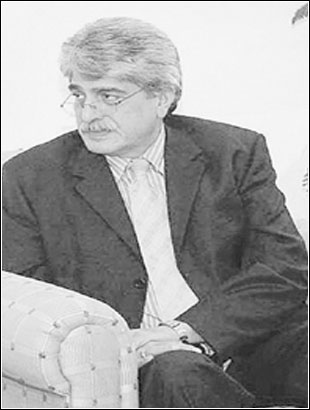 ISLAMABAD: The government has launched a three-pronged strategy — tightening of monetary policy, improving supply side management of food items and preparing local producers for international competition — to fight rising inflation that has started impacting every segment of society. Adviser to the prime minister on finance, revenue and economic affairs Dr Salman Shah said this in an interview with Dawn.
Dr Shah talked about the causes of inflation, its impact on the overall economy, particularly poverty reduction efforts, and the ways in which the government was tackling it.
He said the government was now giving an impression through its different policies that it would not let the inflation go out of hand because it affects every segment of society, particularly the poor.
In his view, the tough Poverty Reduction and Growth Facility (PRGF) programme of the International Monetary Fund (IMF), accommodative monetary policy of the State Bank, supply and demand gap of the commodities and increasing growth rates were the root causes of higher inflation — now at an eight-year high of 11 per cent.
He said the PRGF with the IMF was meant to restore fiscal balance and the current account balance. “Our fiscal and current account deficits were very high which had to be controlled. As a result of these deficits, the debt increased and so did its servicing cost. This eliminated Pakistan’s fiscal space, and almost 50 per cent of government revenues were going into interest payments and loans were taken even for current expenditure.”
He said the PRGF was a tough programme to control deficit from 6-7 per cent of the GDP to 3 per cent, the current account deficit was turned into surplus, and that internal reforms were carried out to restore macroeconomic stability in the economy. “As a result of PRGF there was slow-down in the economy in the beginning due to which growth was about less than two per cent in 2001, then three per cent, followed by 4.5 and then 5 and 6 per cent and now eight per cent.
So this period was of stabilization where growth was slow but macroeconomic stability was present, and as part of this stability inflation averaged between four and five per cent. Now the higher growth rate has resulted in shortages, which were taking time to go away and were also pushing up prices.
For example, if the construction sector is growing, the cement, iron and other construction material costs would increase because supply is not rising quickly. And then there is time lag when supply goes up and price stabilizes. So high growth in certain sectors results in supply shortages.
Second, the monetary policy of the State Bank was accommodative to stimulate growth. Interest rates were kept low and the money supply was kept relatively higher for higher growth. When growth started going up to 6-7 per cent, monetary policy was tightened by increasing the interest rates to eliminate excessive liquidity from the market. As a result of this tightening, interest rates have gone up by 200 basis points.
But this situation was preferable if compared with another where there is inflation but without growth, which is called stagflation. “We have seen stagflation occurring a number of times in our economy. At present the inflationary tendency is positive because there is growth. This means the demand and supply gap is reducing and when supplies improve the prices will come down.
“If you look at cement, the manufacturers have more than doubled their capacity which means that demand will be met in two to three years and increased supplies will reduce prices.”
Third, oil prices have played a key role as POL prices have gone up by 50 per cent. The oil prices in our neighbourhood are very high but we absorbed the increase and did not let POL prices increase more than 28 per cent. For this, the PDL (petroleum development levy) was almost neutralized and Rs50 billion were lost.
“If we analyze the Consumer Price Index, almost 50 per cent is food and 10 per cent is fuel and then house rent which is linked with construction.”
Dr Shah said the government was reviewing the CPI’s basket of goods but “we are not doing it ourselves to avoid criticism and have asked the IMF to do it.”
He said the impact of monetary policy and oil prices on inflation could not be quantified. He added that drought-like conditions also played a role because supply of livestock was low and the animals were underweight.
Fourth, he said Pakistan was a closed economy in the sense that “we wanted to have maximum supply from local producers and the concept of increasing supply through trade was not much developed.”
He said controlling inflation was one of the most important priorities the government. It definitely affects every segment of society but the poor the most because they have no flexibility in their consumption. They already have limited consumption and when prices rise, this affects them badly because they consume not out of luxury but as a matter of survival.
Hence, it is very important to control inflation because a country like Pakistan cannot afford its repercussions. So the combination of inflation and interest rate has to be kept stable and low.
He said it was the government’s strategy to ensure that inflation remains short-term phenomenon and is eliminated through two or three steps. For that he said monetary policy would be tightened, and excess liquidity reduced.
On the supply side particularly food items, where international prices or regional prices are lower than in Pakistan, Dr Shah said, imports could be made to reduce the shortage in the market.
“So we have allowed import of five items without any withholding tax, sales tax and free from every thing and allowed its import through land route as well. Live-animals, meat products, essential vegetables like onions, garlic, potatos and tomatoes, can now be imported as soon as possible and all relevant notifications have been issued,” he said.
Quarantine arrangements are in process to ensure that diseases are not imported and this will take two to four weeks after which imports can start. This will stabilize food prices.
Already some items which were kept in the cold storage have now started coming in the market, which had put brakes to rising prices. “We feel that when supply increases, the prices would drop by 10-15 per cent.”
Dr Shah said the government strategy was to take inflation very seriously and in the medium to long term it would come down and ultimately settle at five per cent.
He said: “Next year, we want inflation to come down to 6-7 per cent and reduce to five per cent in the subsequent year and then stabilize it at that level.” The idea is that market players, in financial market and product market, should have a clear indication that government will not allow the inflation to spiral out of control.
He said the government was are very sensitive towards consumers because so far it has given every benefit to the producer and now is the time that consumers be taken care of. Moreover, if the cost of doing business is higher, then it needs to be reduced so that producers are prepared to compete with the international market. Farmers, manufacturers and livestock owners have a lot of growth opportunities which not only can meet the needs of the local market but the markets of the neighbouring countries as well, he said.































