0
0

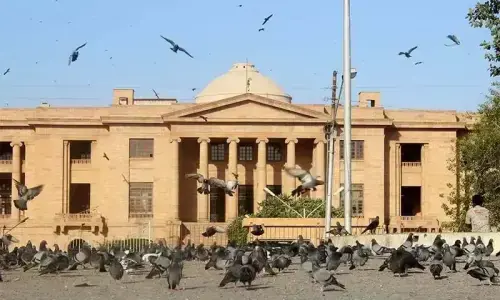
KARACHI, Jan 13: The nazims of Dadu, Jacobabad, Larkana and Mirpurkhas lost their offices as a legal consequence of the 'indisputably' valid establishment of eight new districts , the advocate-general argued before a division bench of the Sindh High Court.
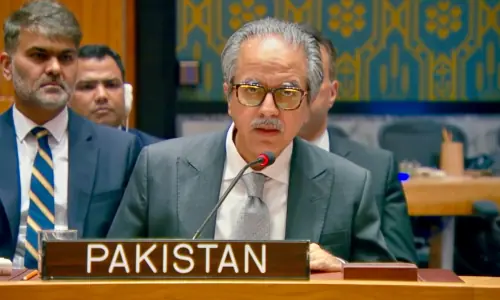
AG Anwar Mansoor Khan said the joint petition moved by the four relieved nazims and two naib nazims did not question the creation of the new districts. He also cited a judgment rendered by their counsel, Rasheed A. Razvi, in his capacity as a high court judge in 1995.
Upholding the establishment of the Malir district, the judgment declared that the provincial government had an unfettered legal authority to constitute and reconstitute the existing divisions and divide and sub-divide districts under the Sindh Land Revenue Act, 1967.
Once a district has been created under Section 6 of the Land Revenue Act, the AG said, a notification has to be issued under Section 7 of the Sindh Local Government Ordinance (SLGO), 2001.
He analyzed the relevant provisions of the 1967 Act, the SLGO and the Local Government Election Ordinance to argue that the government acted strictly in accordance with the law in relieving the nazims and naib nazims and asking the district coordination officers to look after the district governments pending the new elections.
About the allegation that all four nazims belonged to the opposition PPP, he contended that the local government polls are required by the law to be party-less and affiliation with a political party was sufficient to render a councillor, nazim or naib nazim ineligible and disqualified.
While the initial notification bifurcating the districts had not been questioned, the AG said, the legal consequences flowing from the notification had been assailed.
The petitioners could not be allowed to travel beyond their pleadings and the relief could not be modified at will, he argued. The DCO, he said, was not an outsider to the local government. He, along with the district council, constituted the district government.
He and not the naib nazim was to assist the district nazim in running the local government. In tandem with the nazim, he controlled the purse. As for Section 186 of the SLGO, under which the impugned notifications have been issued, the AG said it envisaged two contingencies in which the government may empower any person provisionally to perform the functions of the local government pending new polls.
One was 'natural calamity' and the other 'conditions beyond human control' and they were to be treated independently and not conjunctively. There was no natural calamity but there were conditions created by the extinction of old districts and creation of new ones that necessitated an interim arrangement, the AG argued.
The proceedings were adjourned to Jan 18. The special division bench, which was assigned the petition during the winter vacation, consists of Justices Sarmad Jalal Osmany and Zia Pervez.
By an interim order on Jan 4, the bench restrained all the parties involved to maintain status quo. The order effectively restrained the election authority from notifying fresh polls in the eight new districts pending the disposal of the petition.