0
0

Has Pakistan far more than an image problem abroad, deterring the kind of large-scale foreign direct investment with the latest technology that it seeks and needs.
Opinion is divided, with the vocal patriots maintaining the image is only the problem, and the government including the ambassadors and diplomats as a whole ought to counter that along with an aggressive media projecting the positive side of Pakistan.
The realists are more analytical and speak of the varied negative aspects of our life, which get well publicized by the foreign media abroad and ought to be remedied resolutely.
Luckily for the government as compensation for the reluctant western capital which makes numerous enquires about investment prospects about seldom comes in more than as a token, some investment capital from the Gulf States or Middle Eastern countries has been coming. It comes into the small and medium sectors, while their investors eye the larger enterprises like the PTCL, the PSO, and the KESC and the two major gas companies.
The Arab capital is coming as that is not welcome with open arms in the west, as it used to be, after 9/11 in 2001 nor is it very safe in the west. The Arab capital is not only safe in Pakistan but also the Arab investors are honoured by the Pakistan government in view of the excellent relations between the Gulf monarchies and Sheikhs and the Pakistan government.
So while the Aga Khan Development Fund took over he Habib Bank, the UAE ruling family invested in the United Bank. Other Arab investors have invested on several small banks which are expanding fast.
But as far as Pakistanis are concerned what we are getting is replacement capital instead of new investment with additional capacity creation and new employment with modern technology than we are familiar with. But we have to do with the best we can get. If not economic expansion, let that be replacement with foreign capital, which too is expanding modestly in the banking sector.
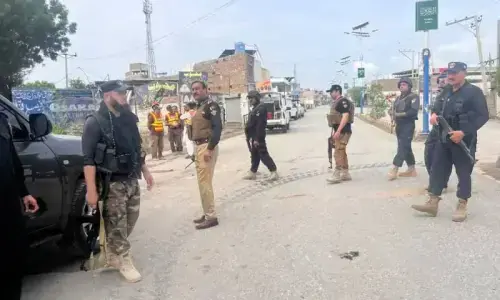
The other substitute as long as privatization is a major compulsion of the government is to sell shares to the people of Pakistan at a very high premium and boost the official resources to repay the foreign loans. But the fact is the law and order situation in the country has been bad, and marked with too many deaths, including in mosques and Imambargahs. The number of people killed at a time is very large and makes world headlines.
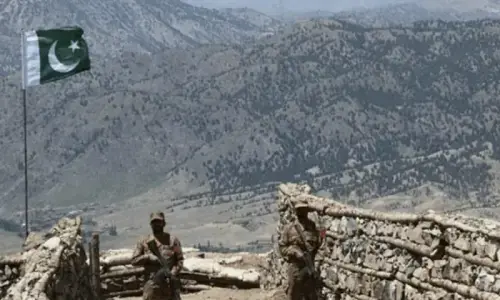
The border between Pakistan and Afghanistan in the north-west is unsettled and fighting breaks out in South Waziristan too often. The remnants of the Al Qaeda and the Taliban are still very active there after they had sought refuge in large numbers there.
Crimes, including murders of women and even police officers is on the increase in the country. So the police officers have to be heavily protected by escort vehicles.
Karo Kari murders in large numbers makes international headlines and the tragedy of Mukhtar Mai of Meerwala who was publicly gang-raped and then paraded along the street has been dealt in detail by the "Time" Magazine of the US.
Under the large heading of Asia's heroes - 20 of them under 40. Her heroism in defying the feudal system and its varied abuses has been praised by the magazine which says such ghastly needs are common place in rural Pakistan.
On the day President Musharraf said Pakistanis troubles were Over, a number of terrorists and soldiers were killed in Waziristan. And on the day the President addressed the Italian investors in Rome 31 persons were killed in a mosque in Sialkot All that has to make negative headlines for Pakistan and discourage foreign investors.
Recently the young members of the Metropolitan Rotary Club held a seminar on the image of Pakistan. While the speakers blamed the media in Pakistan for not creating the right image of Pakistan and the ambassadors for not projecting the right image of the country, the governor of the State Bank Dr Ishrat Husain spoke of over a dozen factors, including the many malpractices of businessmen which damaged the image of Pakistan and spoke of how we should correct all that by making amends for them. He was realistic.
Now Farooq Hassan, executive director of the Management Association of Pakistan, which has both Pakistan and multinational companies as its members, has brought out a paper raising ten questions for which he wants answers to decide whether Pakistanis truly attractive now to foreign investors. They are indeed very relevant questions which throws light on the deficiencies in our investment sector.
He says the expected foreign investment in the world in this year is about $1,000 billion of which $50 billion may go to China and around $8 billion to India. Only around 2 per cent of that goes to Japan while 28 per cent goes to Britain and 18 per cent to the U.S.
The bulk of the investment goes to Europe, particularly Eastern Europe which is attracting a great deal of foreign investment these days because of its cheap and skilled labour and attractive investment policies. Pakistan is lucky if it may get $1.5 billion of that investment, his paper says.
To begin with, the infrastructure is vastly inadequate for large scale investment. The maintenance is poor and its management leaves much to be desired. And it is costly for the users who find a container takes four days to reach Karachi from Peshawar.
Many foreigners regard an appointment in Pakistan as hardship posting in a non-family station. They find the security situation as threatening. The cost of doing business in Pakistan is regarded as high by foreign investors.
Too many officials visit their premises for inspection and the number of agencies could be as many as 30. The start-up time for a business in Pakistan is very long, and that adds to the cost of investment.
The judicial system is blemished and there is no sanctity of contract. He suggests the government must set up special commercial courts which take decisions quick.
Mobilizing finances was until recently difficult but now it has become easy, but world-wide, and the credit is cheap because of low interest rates - again a world phenomenon. Pakistani Banks awash with cash are eager to lend to solvent parties.
Poor productivity of labour and its unskilled workers is another deterrent. And labour unions usually tend to be militant and are strongly in multinational companies than in Pakistani outfits which discourage unions. Corporate loyalty of the employees in Pakistan is low.
The input costs are very high, beginning with the cost of electricity with its uncertain supply. Although the population of Pakistan is 150 millions the middle class which consumers goods produced by foreign companies is only 15 million. The very rich buy the luxury goods from abroad and their visits to Dubai are frequent.
When it comes to weddings, the rich go to India to do the shopping of jewellery and expensive clothes. The foreign investors have been calling for a level playing field instead of one that favours the domestic investors. Now they have got it for sure and Pakistani investors are complaining the foreign companies are getting preference.
Distinct improvement in eight of the ten areas is important if we want to attract large foreign investment. But assured improvement in the law and order situation and the political environment is a far cry as long as the regional uncertainties last. Adding to that is shortage of power and frequent break-down in supply.
Despite its socialist ideology and rather closed political system China attracts very large foreign investment because of the great gains to be made from there and the lure of the future prospects.
Foreign companies are going into China to produce not only to meet the local demand for goods and services but also to export their products in a big way because of China's low cost of production.
In spite of all our efforts foreign direct investment in South Asia in the five-year period between 1998-2002 was only 0.65 per cent of its GDP, while the private investment was 16.5 per cent of its GDP, says the World Bank. Evidently we have to do far more of our own investment instead of frantically wooing foreign investment all the time without being ready to pay the price for it.