0
0

DHAHRAN: In the desert washes where Americans first found this kingdom's black gold, Saudis scrambled this week to harden their defences. New security checkpoints cropped up at the edge of the vast tangles of steel in the oil fields. Makeshift snipers' nests appeared around town. A Saudi magnate logged on to an Israeli settler website for a few tips on home fortification.
Last weekend's carnage by suspected militants in the nearby petrochemical hub of Khobar drove the price of oil to a new high and laid bare an uncomfortable truth: The world oil market depends heavily on a calm that seems to be vanishing in this volatile desert kingdom.
Many people here believe that after years of threats, a struggle aimed at wrecking Saudi Arabia's storied oil industry has begun. The nature of the violence has morphed; suicide bombings at housing compounds in Riyadh gave way to two major shooting rampages at oil companies last month. Workers are no longer rattled or nervous - they are scared.
Saudi stability once seemed a relatively safe bet; now analysts are questioning the security of the kingdom's oil facilities and the tight grip of its ruling family. After gunmen killed 22 people last weekend, then vanished into a neighbourhood swarming with Saudi commandos, official explanations were tinged with inconsistencies and marked by inexplicable security lapses.
"Every society secretes its evil. We have our share, and you have your share," Abdallah S. Jumah, president of government- owned oil company Saudi Aramco, said in an interview here. "This is our share."
"The other day shouldn't have been allowed to happen, because they knew it was coming," said Tracy Thompson, a 43-year-old substitute teacher married to an Aramco employee. "And even if they catch these (fugitive gunmen), so what? There's another 200. It's very frustrating because we know there could be sympathizers living next door."
Saudi officials dismiss with scorn the suggestion that terrorism could block the flow of oil. It's one thing to blow up a housing compound or open fire at a lightly guarded company, they say, but quite another to obliterate a facility that pumps, transports or loads oil. The latter, they insist, is virtually impossible.
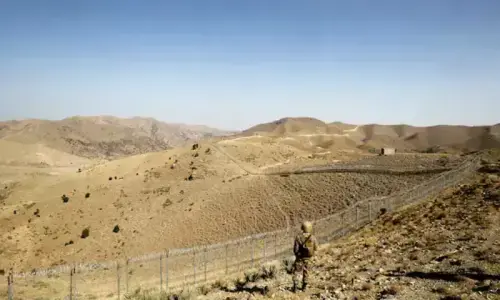
Wrapped in layers of fencing, barbed wire and hydraulic barriers, watched by camera and night-vision goggles, Aramco's oil facilities are monitored by more than 5,000 guards. Backed by Saudi troops, armed guards patrol on foot, in cars and in the sky.
"You'd need a nuclear power," said Ibrahim Muhanna, adviser to the petroleum and mineral resources minister. "To damage the biggest oil facilities you'd need to come from the sea."
But even if the kingdom's heavily fortified network of pumping stations and ports proved immune to assault, there is a soft spot: The workers. Roughly 6 million foreign engineers and software experts; schoolteachers and cooks live in Saudi Arabia, and they keep the oil business humming.
Now foreigners are barricaded in gated communities, terrified to venture outside. Some are abandoning Saudi Arabia altogether. Workers at Aramco estimate that dozens of employees have resigned since last weekend.
Nervous workers are urging their spouses and children to leave the country for the summer, or beyond. Many are quietly hunting for new jobs, hoping to line up a financial escape route.-Dawn/The LAT-WP News Service (c) The Los Angeles Times.