0
0

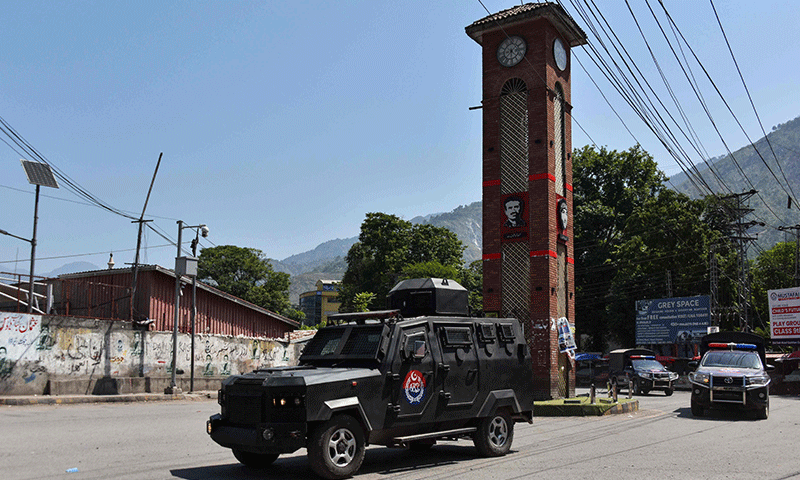
WASHINGTON, Feb 26: The Indian government often used excessive force in combating militancy in occupied Kashmir and the northeastern states, says a US human rights report for 2003, released on Wednesday.
The report also says rape, extra-judicial killings, torture and disappearances are still common in India. The report, which was submitted to Congress on Thursday as the official document on global human rights practices, pointed out that "extra-judicial killings, faked encounter killings and custodial deaths" occurred throughout India.
"Torture and rape by police and other agents of the government" were committed in occupied Kashmir and in the northeast, the report said. The authors also reported "poor prison conditions; arbitrary arrest and incommunicado detention in Jammu and Kashmir and the northeast".
"Continued detention of thousands arrested under special security legislation, lengthy pre-trial detention without charge and prolonged detention while undergoing trial" were happening throughout the country, the report said.
The US report also pointed out "occasional limits on freedom of the press and freedom of movement and harassment and arrest of HR monitors" in India. The authors also spoke of "widespread inter-caste and communal violence and religiously motivated violence against Muslims and Christians".
The report noted there was a "widespread exploitation of indentured, bonded, and child labour; and trafficking in women and children". The authors observed that these abuses were generated by a traditionally hierarchical social structure, deeply rooted tensions among the country's many ethnic and religious communities and violent secessionist movements.
"These problems were most visible in AJK, where judicial tolerance of the government's heavy-handed counter-insurgency tactics, the refusal of security forces to obey court orders, and terrorist threats have disrupted the judicial system," the report said.