0
0

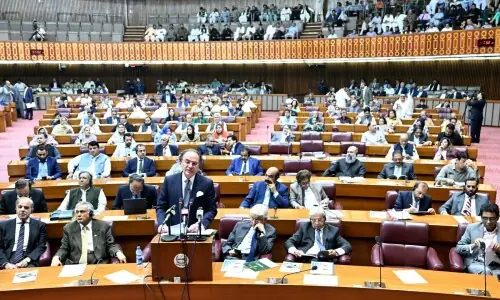
ISLAMABAD, Jan 4: Leaders of seven South Asian nations at the 12th Saarc Summit on Sunday urged the member states to facilitate an atmosphere of mutual respect and tolerance and encourage a sense of identity through more people to people contacts.
Sri Lankan President Chandrika Kumaratunga said the vision and courage demonstrated by the leaders of India and Pakistan to resolve bilateral issues had given the Islamabad Summit and the Saarc process a renewed sense of purpose and vigour.
"Our wishes will be with you during this historic moment in Indo-Pakistan history," she said.
Noting that South Asia has the highest number of people in the world living below the poverty line she said the Social Charter was an important landmark in the Saarc process. This charter adopts broad goals and objectives for national action in areas ranging from poverty alleviation, to health, education, women, youth and children.
On the issue of terrorism the Sri Lankan president reiterated that an important corollary to combating terrorism is the identification and resolution of root causes through courageous and bold approaches.
Prime Minister of Bangladesh Khaleda Zia in her address said Saarc should be made a more vibrant institution, so that it becomes a strong voice in international economic forums, and meaningfully contributes to achieving peace, progress, and prosperity in our region.
She said while facilitating intra-regional trade must remain high on Saarc agenda to add substance to regional cooperation. She said: "Trade liberalization should lead to a win-win situation for all."
"Trade promotion critically calls for reducing tariffs, dismantling non-tariff barriers and impediments of an institutional and attitudinal nature affecting exports from smaller to larger Saarc countries," she said.
Prime Minister Surya Bahadur Thapa of Nepal said he was extremely optimistic about the future of regional cooperation in the Saarc.
Drawing attention to the past commitments by Saarc member states Mr Thapa said: "May be we are giving too much focus on declaring our intents and are slow in implementing our pledges." He added: "Instead of long declarations and commitments, we should rather stress on implementing what had already been agreed upon. Most importantly we should stick to the deadlines we have set for ourselves."
Prime Minister of Bhutan, Jigmi Thinley, said South Asia had been living with the nightmare of terrorism and innocent citizens continue to suffer the pain of insecurity and fear.
Referring to the winds of rapprochement that are blowing across the region he said they had raised hopes of a more durable environment of peace and stability within the South Asian states.
President of Maldives, Maumoon Abdul Gayoom, also said while trade should be free, it should also be equitable. Pointing to the evil of terrorism and drug trafficking in the region he called for expanding cooperation in combating both to enhance regional security.