



 0
0

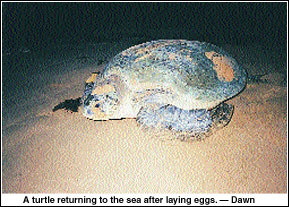 KARACHI, Dec 29: Eco-tourism relating to turtle watch, which is in its initial stages, is creating problems between the Sindh Wildlife Department and an international NGO, the World Wide Fund for Nature (WWF), it is learnt.
According to the sources, the SWD, for protection of turtles, wants to regulate the process of turtle watch by people visiting the beach, but the WWF, probably owing to communication problems, has not been able to satisfy the SWD.
The sources say that people visit the Hawkes Bay and Sandspit beaches between the months of September and January — the peak egg-laying season for marine turtles — during nights to watch turtles lay eggs. They make noise, come too close to the turtles or even touch them, which disturbs the turtles coming out of the sea to lay their eggs.
Responding to Dawn queries the SWD’s turtle project chief, Dr Fahmida Firdous said that the SWD just wanted the WWF or any other organization bringing people for turtle-watch to first inform the department well in advance, and visitors must be properly briefed by qualified people on how to behave during turtle watch.
She said that visitors had to remain silent while watching turtles so that they were not disturbed during the egg-laying process. She said a few days back the WWF took a large group of people to the beach and the visitors were making loud noises owing to which at least four turtles which had come out of the water to lay eggs were disturbed and returned without laying eggs.
She said it was not the first time and she had reported such incidents to her superiors many a time in the past, but the situation remained the same. She said the situation was serious as marine turtles were protected under the Sindh Wildlife Protection Act and anybody disturbing these creatures could be booked under the law, which prescribed heavy penalties and prison terms for violators.
Sindh Wildlife conservator Hussain Bakhsh Bhagat said the department had contacted the WWF many a time to discuss the matter so that a working relationship could be developed, but so far the meeting, despite numerous confirmations, had not yet taken place.
He said the matter would be taken up with the WWF, and hopefully would solved amicably.
The WWF’s deputy director-general Dr Ejaz Ahmed said that WWF organizes turtle-watch visits for the nature lovers and the visitors are first briefed properly at its Wetland Centre near the beach. “Later they are taken to the beach, only when turtles start laying eggs. He said that utmost care was taken so that visitors did not disturb the turtles, but sometimes it could happen.
Referring to the last week’s incident, he said that a group of over 55 people including students, parents and teachers, had gone for turtle watch. Visitors were first briefed and shown a documentary at the WWF’s Wetland Centre. He said that the WWF staff had seen two turtles come to the beach, but they returned without laying eggs.
He said that the visitors were given some hatchlings, which were picked up by the WWF staff from the beach during the day, so that they released them into the sea.
He said the SWD had contacted the WWF a few times and meetings had also been scheduled, but something or the other always came up and meetings could not materialize.
The sources said that both the organizations were involved in conservation work and also wanted to promote eco-tourism, but rather than supplementing each other’s work, misunderstandings were creeping in between them, probably owing to lack of communication, which could harm the conservation of marine turtles, which were already facing extinction globally and needed all the protection they could get.





























