



 0
0

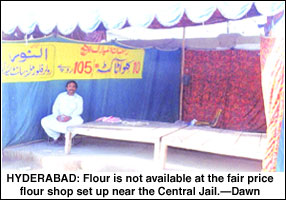 HYDERABAD, Nov 10: The Atta Chakki Owners Association on Monday rejected the food department deputy director’s claim that the small scale flour millers were being supplied quality wheat for grinding.
Speaking at a news conference at the press club, the president of the association, Nawab Ali and other mill owners said they were forced to lift 40 per cent of old wheat crop of 2001-02 and 60 per cent of the new crop 2003 under an agreement signed between the food secretary and the mill owners on Oct 20.
They said the millers were lifting the rotten crop of 2001 at the rate of Rs827 per bag and contaminated wheat (2002 crop), which had been badly affected by rains, at the rate of Rs850 per bag.
They said the 2003 crop which had been stored at godowns of Bulhari was also being purchased at the rate of Rs850.50 per bag.
They said they had protested against the supply of rotten wheat of 2001 crop but it was being imposed upon them.
They said they were being asked to purchase wheat from the market if they did not like to lift the rotten crop.
They also ridiculed the claim of the deputy director of setting up stalls for the sale of wheat flour.
They alleged during Ramazan such stalls were always established to fetch more wheat for sale in black market.
They claimed flour was available at mills of the city at the rate of Rs10.5 per kilogramme during Ramazan although the rate fixed by the government was Rs11 per kg.
They also refuted the claim of the deputy director that the wheat quota of small scale flour mills had been increased by 25 per cent.
They said the quota of roller flour mills had been increased for obvious reasons whereas the quota of the small scale flour mills had been reduced by 15,000 to 20,000 bags per month.
They said only eight roller flour mills were operational in the city but they had been allotted a quota of 164,000 bags which was totally unjustified.
They threatened to move a court to get their quota.
They alleged a large quantity of wheat meant for rural areas was sold in black market by the officials.
They said there was no trace of wheat for 192 grinding stones as wheat was supplied according to the number of grinding stones installed in each mill.


























