



 0
0

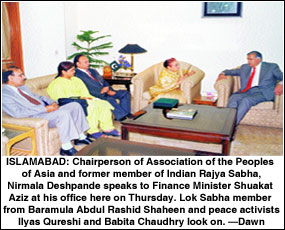 ISLAMABAD, Oct 23: Nirmala Deshpande, an eminent peace activist from India, has termed the Indian government’s 12 proposals for normalization of relations with Pakistan victory of the peace movement waged by the peoples of the two countries.
“Whenever we, the aspirants of peace, glimpse light, no matter how feeble, we must seize on it as the beacon towards our goal. The latest Indian move should, similarly, stimulate us to consider how we can utilize it for accelerating our progress towards peace,” she said while speaking at a meeting of the Citizens Peace Committee here on Thursday.
Ms Deshpande, who is visiting Pakistan as member of an Indian parliamentarians delegation, said most of these initiatives were those which had been broached by a six-member delegation of six Pakistani parliamentarians during their meeting with Birjesh Misra, principal secretary to the prime minister of India.
But, the proposal to start a ferry service between Karachi and Mumbai was in addition to the demands made by Pakistani parliamentarians, one of whom, Chaudhry Manzoor Ahmed, MNA from Kasur, was also present in the meeting. Later, Haq Nawaz Kaira also joined him.
Urging the peace activists to maintain the pressure on their respective governments, Ms Deshpande said tens of millions of people across the world had held rallies to condemn the aggression against Iraq. This had impelled the New York Times to say that the world no longer had a single super power after emergence of the World Public Opinion as the second super power.
“We must strengthen this super power by our relentless struggle,” she said.
Where the peace movement failed was lack of strategy. For this reason, the peace activists could not prevent destruction of Babri Mosque in spite of the abhorrence of ordinary people, belonging to various religions, for such actions.
But, the wind had changed its direction and tables had been turned on the fundamentalists whom “we consider fascists”, thanks to the peace movement, the peace activist said.
“We have come a long way from the moment when we held a protest demonstration at India Gate against the deployment of Indian army along the border.” Peace was, however, a long and difficult road and it was necessary to persist in sustained efforts at the people’s level, she said.
Speaking on the occasion, Chaudhry Manzoor, welcoming the 12-point Indian peace proposal, expressed the hopes that the government of Pakistan would adopt a responsible stance and respond positively to this goodwill gesture.
Referring to the proposal to allow elderly people to walk across Wagah border, he said his colleagues found it particularly painful that while Europeans and Americans could freely move from one side to the other, the peoples of the two countries were denied such freedom.
He said he and his parliamentary colleagues received the warmest response from the people at the grassroots level. Whatever had been achieved now was basically the victory of the ordinary peoples of Pakistan and India who wanted peace and were not interested in the tit-for-tat firing of missiles by their governments.
The common denominators of sentiment on both sides was that there should be more exchanges of delegations. In addition to the parliamentarians, other groups such as those of lawyers, journalists, trade unionists, peasants etc., should visit each other’s country to put effective pressure in favour of peace.
Various members of audience, however, expressed their skepticism on the possibility of peace. While the ordinary people needed peace to solve their basic problems, the ruling elite on both sides could not afford peace, while they knew they could not fight a war.
A former banker, by way of illustration of how they thrived on a state of war, recalled that former prime minister Zulfikar Ali Bhutto had declared removal of all restrictions on trade with India and yet prohibited the banks from opening any L.C.




























