



 0
0

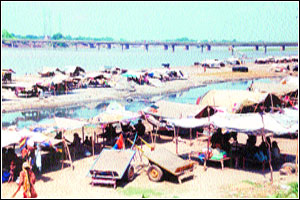 LAHORE, Sept 14: The river Ravi was once a popular picnic point for the people of Lahore and a constant source of fish for them. But, the river and its surroundings are now unsafe for people because of the polluted water and criminal activities.
The river becomes active only during monsoon season since it was given to India as a result of the Indus Basin Water Treaty. During the rest of the year, the thin stream is overwhelmed by untreated sewage and industrial waste of Lahore, which kills marine life and makes the water dangerous for humans, animals and crops. Large turtles are the only survivors but they themselves pose a threat to bathers.
The place is haunted by criminals, and police too are accused of looting the unwary people. There is no proper arrangement to rescue the people drowning in the river or retrieve the bodies.
Of late, unauthorized shanties have been allowed on the riverbed between the New Bridge and the Old Bridge where narcotics are sold and criminals seek shelter.
The shanties are also small factories where nomads make baskets. City’s beggars sleep there at night. The latest product is the rotten meat which is sold on the New Bridge as an offering. The rotten meat is coloured pink and treated with chemicals to give it a fresh look. It is sold to the people who offer it to turtles of the river or crows or kites.
One can find many a young boy selling packets of such meat on the New Bridge. People say they have seen crows and kites dying after eating it. The turtles crowd under the bridge waiting for the offering because of their taste for flesh.
During the pre-Indus Basin Water Treaty era, people used to throng the river for picnicking especially during monsoon season. Boating was fun during the day and a treat during moonlit nights. Morning walks and rounds of exercise on embankments of the river and a dip into its cold and refreshing water used to be a craze among the young and the old. There were no police, drug-pushers, addicts or thugs to harass the people and no fear of turtles dragging them deep into the water. The fish of the Ravi, especially its Rahu and Khaggas, was famous in the city and elsewhere, and anglers used to catch their share early in the morning.
The river was also popular among superstitious people believing in occult arts, and sufis who would perform different rituals in the water or on the embankments. Now the fear of being looted or eaten by turtles keeps a majority of them away.
Those who dare step into the water contract skin diseases. The water is so polluted that it even eats up the costly wooden boats. Boatmen who have been earning their livelihood on the river since time immemorial curse the authorities for turning a blind eye towards the river.
“Boating has been our business for centuries. We have no other way to earn our livelihood or we would not have come to the river because of the prevailing conditions here,” says Mohammad Younas, head of a boatmen’s family offering a ride to visitors.
Mr Younas and his relatives sit on the embankment providing the only recreation available at the place, where the only official arrangement is a parking lot being run under the supervision of the Parks and Horticulture Authority.
There is no drinking water facility nor is there any shed to provide shelter to the visitors in case of rain. The boatmen sit under a thatched roof and pray that no boat capsizes, because it would bring them trouble in the shape of harassment by police and wrath of the families of the drowned people.
“Allah Ditta of Civil Defence is the only life-guard at the river, but he functions after people are drowned,” Mr Younas said. There is no proper arrangement of retrieving the drowning people.
He and others said a few days ago a boy of Chaudhry Park drowned in the river and the search for his body led to the discovery of four more bodies.
“The river falls within the jurisdiction of three police stations, none of whom normally takes the responsibility for retrieving the dead people. In fact, bodies are allowed to move downstream to shed responsibility,” they claimed.
The boatmen said there were less picnickers on the Ravi because of the lack of security arrangements at the place. “You are asking about boating at night whereas people are looted by ruffians even in broad daylight. Police too extort money from the unwary people while frisking them,” they alleged.
They alleged that forest department officials had been allowing establishment of shanties by nomads and criminals against a paltry amount of money and at the cost of peace on the river. “They are minting money and no-one is taking notice,” they said.
The immediate concern of Mr Younas and his comrades is that the disposal of sewage and industrial waste in the river is stopped to save the historic river.
They said the polluted water was costing them dearly as it often damaged their boats. “People can switch to low-cost iron for doors and furniture, but we cannot make a tin boat. A wooden boat costs Rs40,000, but it is damaged before we can recover the amount,” Mr Younas said.
The boatmen wanted that the river should be cleaned for people and the marine life. They asked the authorities to make police behave as protectors of the people, and provide recreational facilities at the river.




























