0
0

 ISLAMABAD: Pakistan at Cancun would stress on the developed countries to scale down their tariffs on imports of agriculture and industrial products from developing countries to help them overcome poverty and related impediments to their progress.
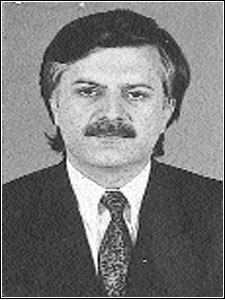
In an interview with Dawn, Commerce Minister Humayun Akhtar Khan, who is leading Pakistan’s delegation to the 5th ministerial conference at Cancun scheduled for September 10-14, said the tariffs on imports of agriculture and industrial products in the developed countries were very high, which created hindrance for developing countries to export their surplus products to the rich markets.
The agriculture tariffs, he said, in the United States and of some categories in Japan, was over 700 per cent.
“Our policy is very clear, we have decided to ask developed countries to reduce tariff, eliminate domestic support and export subsidies,” he said.
With these measures, the minister said, the international market would be accessible for Pakistan’s agriculture surplus products like sugar, cotton, wheat without having to subsidize their export.
He said under WTO regime Pakistan has ‘bound’ its tariff on agriculture products ranging from 5 per cent to 100 per cent. However, the ‘applied’ rates used by Central Board of Revenue (CBR) for duty purposes were much lower at a maximum of 25 per cent.
The minister said the tariffs in Pakistan had been scaled down to 25 per cent because of our commitment with international financial institutions (IFIs) — IMF and the World Bank.
Mr Khan said the Swiss formula — steepest cuts on goods subject to the highest duties, elimination of export subsidies and reduction of domestic support — is very close to Pakistan interest. But, he added, the developing countries should also have the facility of declaring some products as special products (SP) on which there would be minimal reduction in tariff rates. This would help protect Pakistan’s sensitive agriculture products from adverse affects of increased imports, he added.
He said Pakistan would also support the proposal of special safeguard mechanisms (SSM) — timely measures to protect the local farmers in case of huge cheaper imports.
The minister said Pakistan’s position was different from that of India’s regarding agriculture issues. India does not want to open their agriculture market. But, he said, India would no more go for status quo and would join the on-going negotiations like other developing countries have done. Still, India would try to protect its interest, he said.
Agriculture is the fundamental issue at Cancun, he said added, if there is progress in agriculture, the Cancun meeting would be regarded as a success.
“I think the EU and the US would be a bit flexible because they know that if Cancun failed because of agriculture the blame would go to them. They would show some flexibility on AOA,” he said.
He said, “we are not going to sign an agreement. This is the review of Doha development agenda which has a deadline of January 2005.”
So the important thing at Cancun is not to reach a final agreement but to show progress in critical sectors, he maintained. Until now no deadline of Doha agenda has been met, and all indications show that negotiations might go beyond 2005, he said.
The minister said that due to heavy domestic support and subsidies, Pakistan was in no position to export its surplus 0.7 million tons of sugar which costs $275 per ton while the rate was $205 per ton in the world market.
Sanitary and phytosanitary (SPS) is an area, where the government is looking for developing capacity to help the farmers in producing qualitative better agri-products, Mr Khan said.
The ministry of science and technology, he said, was also working on a proposal to develop testing facility in the country for testing the quality of the products which are internationally acceptable. He recommended to the provincial and local governments, who, he considers, could help farmers in creating awareness about SPS.
The minister said the unreasonable non-tariff barriers could be challenged in the dispute settlement body of the WTO.
He said the litigation charges could be easily afforded by every country. But he agreed that legal expertise on these issues developed gradually.
“I recommended to the lawyers community of the country to acquire expertise in WTO rules because there is a lot of scope in this field for them to use their legal skills profitably,” he said.
The US is interested more in TRIPs and public health and if the developing countries do not have the capacity of producing drugs, then they would have to go to third country to have access to vital medicines under the recently reached agreement. This agreement would enable the developing countries and least developing countries to import generic drugs by issuing compulsory licenses to the manufacturers in other countries. He said the agreement was significant for Pakistan in many ways — Pakistan has proved its solidarity with the poor African countries where approximately six million peoples die each year of Aids, malaria and tuberculosis. It would also allow Pakistan to issue compulsory licences to the manufacturers in other countries in case it did not have the capability to manufacture these drugs.
“We may develop the capacity in future so that we can use for own purposes in case of any possible epidemics. We can also use it for commercial purposes by offering to the African countries our capability to produce non-patented drugs,” he said.
He said that Pakistan has an interest in the extension of the scope of geographical indicators from wines and spirits to other products as well. Pakistan could go for Basmati rice and some other type of Mangoes, etc.
Under non-agriculture market access negotiations (NAMA), Pakistan will ask for tariff cuts on the ‘bound’ rates rather than on applied rates. The minister said the developing countries should be given more time than the developed countries to implement these cuts.
It is our general demand that those countries, which have already reduced their tariff, should be given more relaxation under NAMA.
Under NAMA, he said, the Swiss approach would be supported which asks the developed countries to bring their tariffs to zero per cent, while the developing countries would bring theirs to around 10 per cent but he said the demand would bring it down to around 20 per cent.
The negotiations on Singapore issues would be started on the explicit consensus of the member countries. Pakistan would support the developing countries position on this matter.
Discussing the services sector issues the minister said that Pakistan would focus particularly on those areas which related to foreign direct investment (FDI) and major revenue and job generation fields.
The minister said Pakistan’s primary concern was that the manpower movement should be allowed so that our labourer could go abroad and work.
To cope with the post-textile quota regime, the minister recommended to the textile exporters to upgrade technology and pay particular attention to about compliance issues—both environmental and social. These are not duty related issues but are equally important, so the exporters should be concerned about it.
The minister asked the exporters to intensify their marketing efforts and also reduce the cost of doing business so that their products would be more competitive in the world market.
“We will be competitive in certain areas in the textile sector even against Chinese products in the post-quota regime,” he said.
The minister said that there is enough protection currently available to the local industry and it will last for many years to come.