0
0

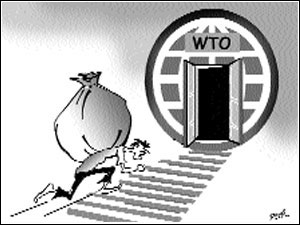 The country’s top foreign exchange earner, the textile industry, would be put to a critical test when the quota curbs will be withdrawn by Europe and the United States from January 1, 2005.
To face the WTO challenges, the industry has to organize production on economies of scale to cut costs and improve quality of value-added textile products to be globally competitive.It means more capital spending for modernization of textile units and big groups with global reach and international marketing network.For this to happen at a rapid pace than hitherto, the industry needs tax breaks and improved tax administration.
With the macro-economic stability providing some fiscal space, the All Pakistan Textile Mills Association (APTMA) has submitted detailed suggestions and proposals to the government for the national budget 2003-04. In a comprehensive representation, APTMA has dealt with various facets of problems relating to all three major taxes,custom duty, income-tax and sales tax. But about half of the 16-page document is devoted to hassles in sales tax payments relating both to policy issues and their faulty implementation.The CBR often introduces new rulings and amendments which disturbs business planning. The industry has complained of delays in refund amounts on account of sales tax input, excessive ST audit, discriminatory nature of ST levy and violations of the very spirit of value- added tax (VAT).
“Unnecessary burden has been placed on the industry to document the economy as the CBR has failed to complete the chain,” says APTMA seeking to get section 73 of the Sales Tax Act, 1990 withdrawn.
To encourage documentation, the industry is of the view that there should be no turn-over tax and sales tax be cut to 10 per cent. All manufacturers should be brought under sales tax registration.
The delay in refund of sales tax on cotton which adds to the financial cost of production, has become a major issue. Under SRO No 575(J) 2002,the procedure for calculation of refund is based on cotton consumption in preceding twelve months in exports only and not on the basis of 12 months total consumption in preceding 12 months.
Most of the mills which have 50 per cent direct exports and the rest with standardized purchase order or otherwise, are not entitled for refund in cotton buying season and get their money piecemeal during the whole year, blocking working capital. The rules do not provide refund of tax input paid on stocks to be used in future for making local supplies. The industry is also not clear whether the input tax related to stocks would be refunded or a registered person will be allowed to carry forward such an amount to subsequent tax period. If so, when and how will it be determined.
Instead of carry forward, APTMA wants major tax inputs including on cotton to be refunded before the payment of tax/filing of return on 15th of next month. In case of delayed verification, it seeks refund of input tax to the extent of 90 per cent to be released on provisional basis to the manufacturer- cum-exporter. The refund should be on the basis of 12 month of total consumption and not on consumption of cotton in exports only as most textile mills are diverting their production to value-added industry instead of direct exports. The Sales Tax Refund Rules may be suitably amended.
Similarly, APTMA has sought abolition of general tax levied at 15 per cent on ginned cotton by an amendment in sixth schedule to be added as under: “ Cotton whether or not subjected to any further process of manufacture.”
Contrary to legal opinion by the Ministry of Law, decisions by the Sindh High Court and Tribunals,the CBR continues to recover sales tax on fixed assets without any legal justification.
Whereas Sales Tax Act entitles a registered person to deduct input tax on taxable supplies, input tax on all POL products other than furnace oil, lubricants and greases have been disallowed. The adjustment on input tax paid on diesel has been exempted. Similarly, SRO 578 of the Sales Tax Act has also exempted certain items which are part of the taxable activity.
Sales tax on man- made fibre was increased from 15 to 20 per cent from July 1, 2001 whereas the output tax remained at 15 per cent.Mills using Polyester Staple Faber(PSF) and Viscose Staple Fibre(VSF) have to pay 33 per cent more sales tax at the time of purchase of raw materials which is adjusted against the output tax of the relevant period. The sales tax on man-made fibre and their yarn outputs should be the same at 15 per cent, says APTMA.
Sales tax is exempted on machinery whether imported or procured locally. An exception has been made for generators. APTMA would like generators also to be exempted whether imported or produced locally.
The textile industry is hesitant to avail incentives under the Duty and Tax Remission for Export Rules 2001 because of irritants which the government has failed to remove despite repeated reminders. Six irritants have been identified by APTMA in the rules. In the sphere of income-tax, APTMA wants that (a)tax payers should have an option to be assessed under normal law or under “presumptive tax.” b) Discretionary power of tax officials, a source of corruption, should go and powers be rationalized. (c) Revenue officials should be restrained from victimising the tax payers to achieve unrealistic budget targets (d) Re- assessment should not be open-ended (e) Revenue officials should be made accountable under section 122 on deletion of demand on appeal.
Honest officials should be rewarded on upheld decisions (f) The declared version of audit by sales tax authorities should be accepted by income tax, central excise and other departments(g) Bad debt write-off be allowed as deduction (h) DFIs, NBFs and leasing companies and investment banks be included in State Bank BPD 29 on settlement of debts. (i) Inter- company loans be exempted from withholding tax.(j) The time limit for deposit of tax may be extended upto 30 days.—JB