0
0

WASHINGTON, May 14: Pakistan’s recent diplomatic overtures to neighbouring countries are motivated by economic necessity, says a survey conducted recently by Stratfor, a US-based private intelligence and analysis agency.
The agency says Pakistan desperately needs the business opportunities and revenue that would stem from reopening its border with India. Islamabad is also discussing border security and counter-narcotics cooperation with Tehran, possibly with an eye towards talks over a proposed natural gas line stretching from Iran to India.
Meanwhile, Pakistan is putting forth greater effort in the US war on terrorism in the interest of securing more financial aid and better access to loans from Washington and multilateral lenders, the report says.
These moves are part of a new emphasis on improving Pakistan’s relations with neighbours and other powers in the region, says the report, adding Islamabad is motivated by many concerns, including its ongoing security issues with India, but economics are the primary driver behind its recent activities.
During US Deputy Secretary of State Richard Armitage’s visit last week, Pakistani officials planned to request $1.8 billion in debt forgiveness from the United States. The request comes in addition to another $1 billion debt write-off and solicitations for a $1 billion aid package — including $400 million in support for health, education and poverty alleviation in 2004, the report says.
Although the nation’s economy has stabilized somewhat mainly as a result of funding from the United States and multilateral lenders, Islamabad is still trying to get back into the black, the report points out.
In order to resolve its debt problems and achieve a sustainable economy, Pakistan is seeking new avenues of trade. India, as the nearest viable economy, would be an obvious first choice, but cultivating trade ties with New Delhi obviously would require the threat of war to be laid aside.
“Although Islamabad has yet to make concessions where New Delhi most would like on the issue of its support for Kashmiri freedom fighters, any progress in smoothing relations with India would significantly improve Pakistan’s attractiveness to foreign investors and its chances of growing its economy internally,” the report says.
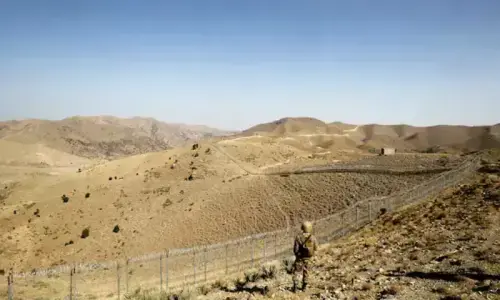
It points out that the Musharraf government is not looking solely to India for revenue opportunities. Islamabad also has begun talks with Iran regarding improved drug interdiction efforts along their shared border. Although Pakistan derives no direct benefits from such cooperation, it could pave the way for communication and negotiations on other issues, such as a proposed natural gas pipeline from Iran to India. If constructed, Pakistan could charge transit fees for the natural gas that passes through its territory, the report says.
However, the proposal for the gas line has been under discussion by Russia, Iran and India for five years: A feasibility study has yet to be conducted and the likelihood of its construction is slim, the report says.