



 0
0

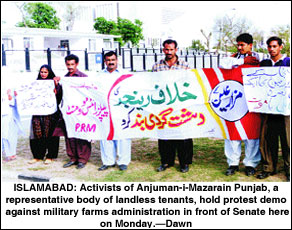 ISLAMABAD, March 31: Representatives of Anjuman Mazarain Punjab (AMP) held a symbolic protest demonstration outside the Senate here on Monday.
A number of women and men from Okara military farms gathered outside the Senate and met senators, as the latter entered the building for a new session.
Members of the People’s Rights Movement (PRM), a confederation of social movements of which AMP is a constituent member were also present.
David Zahid, the general secretary of AMP Okara, said the tenants were in Islamabad to meet with MNAs and Senators in advance of the harvesting season, which was about to start across state farms in the Punjab. He said rangers and local authorities in Okara, Khanewal, Sargodha, and other districts where AMP had established units had threatened to disallow tenants from picking up the wheat harvest, and warned that serious consequences awaited those tenants, who defied the authorities.
He mentioned that rangers were still present in Okara almost eight months after they were initially called in to try and force the tenants into accepting the lease agreements they had been forced to sign in August.
The demonstrators highlighted that the tenants in Okara and indeed the rest of Punjab were unwilling to change their tenancy status and were still completely committed to securing ownership right of the 68,000 acres of land that they had occupied since the start of the 20th century.
The demonstrators asserted that they would not compromise on this issue even if rangers once again resorted to the use of force and harassment. Senators were appealed to raise the issue of landless tenants and once and for all hold those forces within the state accountable for the maltreatment.
Liaquat Ali, the senior vice-president of AMP Okara, urged Senators to recognize that if they did not act soon, serious violence could take place in a few weeks when tenants would take home their harvests. He said if the military establishment was allowed to continue acting against the public interest, the fledgling democratic process in the country would be weakened further, and the chances of the new government completing its full term lessened.
In particular, he warned that if the authorities engaged in violence again and added to the six people, who had already died in this struggle, the blame would fall on the Jamali government and not on the military.


























