0
0

ISLAMABAD, Jan 10: Pious hopes. Determined efforts by “peace activists”, and “well-meaning scholars” in South Asia.
And yet the dream of a friendlier, calmer region seems to be a far cry (if one surveys the landscape, as it were, of the last fifty four years).
“But the effort must continue,” insisted Mohammad Tahseen whose South Asia Partnership, Pakistan, is hosting, what their pamphlet proclaims as the “3rd People Summit” in Islamabad from January 11-13 to share the “collective responsibility to find ways to solve problems that have oppressed our communities for generations”.
At a joint press conference, where delegates from Sri Lanka and Bangladesh and Nepal were also present, it was emphasized that the summit will create an opportunity for the South Asian civil society to meet and discuss the common issues that are being faced by the people of the region. Experts and academics from the region will discuss “the people’s viewpoint and will recommend alternative implementation strategies around the issues that are on the agenda of the Saarc.”
Starling statistics were given to show that the defence expenditure being incurred in this region could educate 190 million children in primary schools, provide safe drinking water to 200 million people, and make 190 million hospitals available. One-fifth of the world population lives in South Asia which unfortunately shares 43 per cent of the global poverty — and 330 to 340 million in this area live in this dismal poverty. As many as 125 million children don’t go to schools, and 375 million people are totally illiterate. 10 per cent of the total population, that is 110 million people don’t get safe drinking water. The necessity for creating new spaces in relations and formulation of new paradigms in place of the stereotypes was what delegates will speak on in the summit. This was contrasted with 14 billion which are spent on arms and ammunition in the name of defence.
No one in his right mind would welcome such horrible statistics. But then the problems that beset the region, don’t allow the atmosphere of peace to prevail, were also put up by some correspondents: “Isn’t the Kashmir issue the biggest hurdle in way of good relations between India and Pakistan?”
“Kashmir is a genuine issue of human rights violations and it should be solved by people of Kashmir on both sides as envisaged in the UN resolutions. Kashmir is not a question of territory. It pertains to the rights of the people of Kashmir”, was the answer.
Mr Tahseen was critical of India for refusing to have a dialogue with Pakistan, and thought that it was all the more important that unofficial channels like this one should continue to meet. The necessity for creating new spaces in relations and formulating new paradigms in place of stereotypes was also emphasized.
He also condemned the American war on terrorism, which he thought was a “war on the poor people of the world and civil liberties.” Any possible attack on Iraq he called “bombing blood for oil”. He said, “the conference also wants to make people aware of the agenda of the IMF and WTO which was sapping the economic energies of the region”.
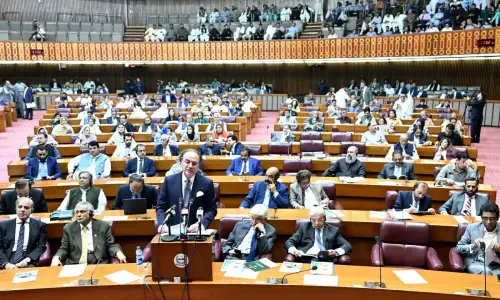
The inaugural ceremony will be held on Saturday at the National Library. More than 500 social and human rights activists, development workers and civil society representatives as well as representatives from some foreign embassies will participate. The remaining programme will be at a local hotel. The summit is open to all concerned individuals, NGOs, students, community-based organizations, trade unions, women’s movements, issue-based networks and CSOs.
The five themes of the summit are, trafficking in women and children, peace and regional cooperation, poverty eradication, social development and governance. Since the Saarc Summit of 2003 has been postponed, the convening of the concerned parties at the Peoples Summit is made all that more crucial in formulating a strong people’s agenda for the Saarc Summit that will take place later in the year.
A total of 30 delegates from Saarc countries are listed in the programme.
Mr Tahseen complained about visas not being granted to some Indian delegates as yet, but also said that one Indian delegate is likely to come. He also condemned the government of India for not granting visas to many Pakistani delegates in the recently concluded SAP meeting in Hyderabad, India.
He thought that our government would have been on high moral ground if they would have given visas to all Indian delegates.
Muhammad Jehangir, Centre for Development Communication, Bangladesh; Punya Khanal, Nepal; Dr Wijaya Jayathilake, Sri Lanka Foundation Institute; Manek Perera and Chamila Thushani, SAP-International also spoke on the occasion.—Mufti Jamiluddin Ahmed