0
0

 KARACHI, Dec 14: As many as 68 graduates were conferred Bachelor of Fine Arts, Design and Architecture degrees at the ninth convocation of the Indus Valley School of Art and Architecture on Saturday.
The convocation was presided over by Justice (retd) Wajihuddin Ahmed, chairman of the board of governors of the school, which was granted an independent charter by the Sindh government in June 1994. The passing-out students were the largest in number since inception of the school.
The 68 graduates included two from the Faculty of Ceramics, 26 from the Department of Communication Design, 20 from the Department of Textile Design and 11 from the Faculty of Fine Arts, including one special student who was awarded a diploma. In all, nine students of the eighth graduating class of architecture faculty were awarded degrees.
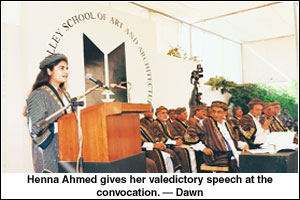
A student of the Department of Communication Design, Henna Ahmed, who graduated with 87.13 per cent marks — the highest amongst the class of 2002 — presented the valedictory speech. Henna was given the academic award as well.
Others who got the academic awards for achieving distinction by securing 85 per cent marks or above included Ayesha Khan (fine arts), Uzma Ismail (textile design) and Ahsanuddin Qureshi (communication design).
The 2002 award for outstanding research and dissertation, instituted in memory of Dr Saleemuz Zaman Siddiqui, went to Najia Alvi of the textile faculty. A newly-established award in memory of Agha Hassan Abedi was given to Uzma Ismail for achieving the highest aggregates in liberal arts courses.
The Founders’ Award was given to Ahsanuddin Qureshi who was adjudged as the best student on the ground of discipline and academic performance.
Noted literary figure Mushtaq Ahmad Khan Yousufi was the chief guest who delivered the keynote address.
The jubilant graduates and other participants of the academic procession wore off-white khadi shalwar-kameez woven at the school. The design of the convocation robes was based on the ceremonial robes of the Mughal courts - Aba - while the headgear was a combination of the Mughal turban and Hunza cap.
The convocation witnessed a few pleasant additions to it. The chief guest delivered his humorous but soul-searching lines in Urdu instead of traditional and direct words of wisdom and advises, as normally come from VIPs at convocations, while on the other hand, there was a theme music, based on Raag Malhar, for the occasion, specially composed by sitarists Ustad Imdad Hussain and his son, Ikhlaq Hussain, and an exhibition of thesis projects by the graduating students at the Nusserwanjee Building, a heritage relocated at the school premises.
In his address of welcome, the executive director of the Indus School, Shahid Aziz Siddiqui, said that since the last convocation the school had seen a continued progress and had emerged as a major educational institution in the city.
He gave a detailed account of faculty development and structural facilities at the various faculties and departments of the institution. Under the visiting artist programmes of the seminar of fine arts, about ten internationally-renowned artists had visited the school during the year, making presentation of their work and lecturing on their areas of expertise, he added.
Talking about the chief guest, Mr Siddiqui, an ex-civil service officer, said that in the great tradition of men of letters such as Sajjad Haider Yaldrim, Rasheed Ahmed Siddiqui and Patras, Mr Mushtaq Yousufi embodied all that which is beautiful in our literary tradition and yet he is something of a paradox.
Mushtaq Yosufi’s address was a good literary piece in Urdu, which earned all applause and approval from the audience of all ages. He talked about the chief guests of convocations and their heavy-worded but traditional speeches, bankers and bureaucrats, works by young artists and architectural heritages in his dominant literary style - all in between the lines.
He recalled that he was very good in handwriting but week in drawings. “Art nurtures on and get strengths from the demonstration and problems of life and it is never like a money plant which manages to grow without soil, fertilizers, seeds or roots and attention,” he observed.
Justice Wajihuddin Ahmed pointed out to the students that they should not go bankrupt — morally or professionally — in their practical lives. “There is a tremendous room and opportunities for laborious, devoted and honest people and you can grasp the opportunities including the faculty positions at your alma mater.”