0
0

KARACHI, Dec 10: Paediatric urolithiasis, related to stone-like concretion in the urine or urinary tract, continues to be endemic in Pakistan.
Children below one year of age to adolescents are observed to be inflicted with renal stone disease (RSD) and bladder stone disease (BSD) in the country. The RSD, however, for the last few years, is registered to commonly afflict all age groups of people, from infants to those above 70.
Record available at the Sindh Institute of Urology and Transplantation (SIUT) reveal that 70 per cent of all stone disease cases reported till 1984 were that related to bladder calculi and only 26 per cent to kidney.
The following years, however, witnessed absolute reverse in the trend, with more than 76 per cent cases pertaining to renal calculi and 20 to 25 per cent to bladder.
Transformation in the disease pattern could be attributed to improved facilities to treat bladder stones at district level besides certain improvement in the dietary habits of the people.
Awareness is also cited to have helped a significant number of people to change their attitude ensuring that a child is also provided with cow’s milk, a rich source of phosphorous which helps contain the formation of bladder stones through little absorption of oxalate.
Improved intakes of proteins may also had helped containing the incidence rate of the BSD. The fact cannot be overlooked that 99 per cent of the children still coming to local hospitals with the BSD either from remote rural areas or urban slums are generally malnourished.
Of the total load of urological diseases registered at the SIUT, 60 per cent were reported to constitute stone related complications. 56 per cent of these RSD and BSD patients belonged to the interior of Sindh and 20 per cent to 25 per cent pertained to Karachi and other parts of the country.
Delayed intervention often exposed patients to end-stage renal disease leaving them with expensive options as dialysis and ultimately transplantation, which still remains a far cry for a large majority.
Keeping in view the fact that the RSD is contributory to a bulk of urolithiasis in Sindh, studies related to etiology of renal stone formation in the local population revealed 60 to 65 per cent of these to be calcium oxalate stones; 15 to 30 per cent uric acid stones and 10 to 15 per cent struvite stones, often infectious in nature.
The research work undertaken at the SIUT again identified diet to constitute a major component of environmental factors for urolithiasis. Low protein and calcium diet with increased consumption of oxalate rich foods as increased intake of tea coupled with refined wheat flour and rice as staple food, and low intake of fluids enhanced vulnerability to the RSD.
The low protein intake causing ammonium acid urate stones formation further aggravates the situation due to low intake of fluids in our population. A quarter of the stone formers reporting at the SIUT had low urinary volumes (below 1000 ml/24 hrs).
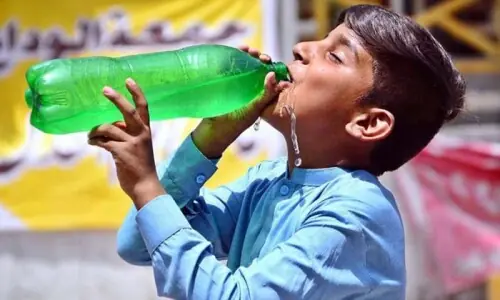
Chronic dehydration due to hot climate and diarrhoeal episodes, often caused by poor availability of potable water, were also among major contributory factors leading to the RSD, more particularly among children.
Although exact figures may not be available as all patients do not necessarily reach hospitals, its peak incidence is registered among those in their thirties and forties in the country.
It is more common among male population as women are provided with natural protection through secretion of varied hormones.—APP