0
0

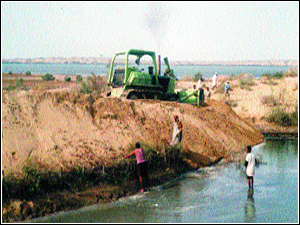 SADIQABAD, Sept 6: About 30,000 acres of agricultural land in Rahim Yar Khan and Sadiqabad, spreading over 50 miles along the Indian border in Cholistan, has been reclaimed following the devastation by salinity and water-logging.
The ‘seepage control measure project’ had been launched on the deserts in the outskirts of Banglow Minthar, Tillu Banglow and areas of Cholistan along the Indian borders with an expenditure of Rs30 million.
The construction of two channels had enabled the authorities concerned to reclaim the land which turned marshy. Corps Commander Lt-Gen Tariq Waseem Ghazi had inaugurated the project a fortnight back.
Tracing the roots to the ills, a Scarp-t project was launched in 1979 to fight the effects of salinity and water-logging in the Punjab. It was completed in a decade and about 90 per cent of the lands were reclaimed.
However, the project also left a disastrous impact on the fertile lands nearby and 30,000 to 40,000 acres were soaked. The villagers protested many times, demanding the construction of drain at least seven to eight kilometres from the green belt towards southern deserts.
In 2001, the mega project was launched with an expenditure of Rs30 million and the construction of two channels near Minthar and Tillu Banglow were sanctioned. The project was designed to pump the saline water assembled due to Scarp-VI drains into the channels and to keep it beyond the green belts spreading over some seven to eight kilometres. The project was completed in six months.
On the completion of the projects, lumbardars said the villagers who were forced to migrate to different places would return in the reclaimed lands. They appealed to the high-ups to ensure provision of irrigation water to these lands.
The channels constructed were marked IB and 7-A. The breadth of the first channel was 50 feet and 212-km long while the second channel was 40 feet wide and 712 kilometres long.