0
0

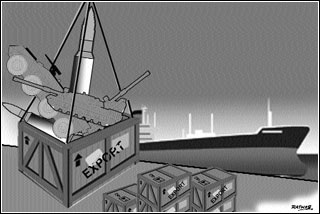 PAKISTAN’S defence manufacturing sector meets the critical needs of its armed forces, and at times, under the most unfavourable conditions. From the inception of the Pakistan Ordnance Factory at Wah, in 1953, the defence manufacturing sector has steadily grown from a limited capability of meeting the basic needs to one which is now capable of supporting the armed forces in a large number of sectors related to quality products and services.
Many external and internal factors played a vital role in achieving this capability. However, foremost amongst these factors was the will of the nation and its armed forces to develop a military industry base and sacrifice in other areas for ensuring our security.
There is no denying that Pakistan’s defence sector has always drawn on a large portion of the national budget. This is of course, a result of the unstable political and security environment in the region. The expansion of the sector was not only motivated by a desire to attain self-sufficiency but by clear awareness that every dollar saved by doing it was a dollar earned. While no such exercise has yet been conducted on a total scale, a cost versus benefit analysis would reveal the massive saving incurred to the national exchequer by the sector. Unfortunately, this contribution so far remains intangible and indirect.
The defence industries have been a major employer in our manufacturing sector and it has supported and given rise to a number of downstream industries. However, its contribution to the mainstream economic activities has been a limited one. To redress this, the government decided to propel the sector into earning valuable foreign exchange through exports. That is not to say that Pakistan was not exporting in the defence field but its value was not commensurate with the investment. An integrated approach to boost the defence exports was essentially required by harmonizing the horizontal and vertical linkages between the defence manufacturers in the public and private sector with government functionaries involved in the export chain.
A number of factors have given the sector the capability of entering the export market. Firstly, the volume of business with the Pakistan armed forces is large enough to create a surplus manufacturing capacity. Secondly, the products and services we provide have the ability to appeal to customer nations and their armed forces, both in high technology and medium technology range. Thirdly, because of our scale of production/volume of services, we can be quite competitive in pricing. Fourthly, our armed forces face a real time threat and cannot afford to compromise on the quality of equipment. As the single largest customer of our defence products and services, and the respect that it enjoys internationally for its professional competence, it creates confidence in the products and services we offer to customer nations. Fifthly, while we abide by all international conventions and the UN embargoes, we do not attach any political strings or conditions to arms sales.
The current volume of annual trade in the global defence export market is approximately $50 billion. Of this, the US is the largest exporter with $20 billion and Russia, the UK and France follow with $10, eight and five billion respectively. They are, to put it crudely, the arms merchants of the world who use the export of weapons as an instrument of policy. However, there are other countries who export arms in an effort to earn foreign exchange and offset their high import bills. Pakistan falls in this category. Realistically speaking, we cannot hope to rival the large arms merchants. However, even if we can achieve one per cent of the global value of the arms trade, it would mean an export earning of $500 million annually.
The first small step towards expanding Pakistan’s exports in the field was taken by the Pakistan Navy, which conducted a Naval Show in Karachi in 1998. Against this background, in 1999 the Joint Chief of Staff Committee under the chairmanship of General Pervez Musharraf, decided to conduct an international defence exhibition and seminar (IDEAS) in Dec 2000 and a coordination cell was established in the JSHQ to execute this project. The exhibition was conducted on commercial lines to reduce the burden on the government and an agreement for was organise it was signed with Pegasus Consultancy Limited. The ministry of commerce and the export promotion bureau (EPB) extended their full support.
For a first time, the exhibition was termed as a success as 43 delegations from 31 countries attended and despite the sanctions, 58 foreign exhibitors displayed their products. However, the biggest gainers from this exhibition were the 65 of our domestic manufacturers. As part of the marketing effort, the value of defence exhibitions amounts to 20-25 per cent. A major effort has to be directed towards intensive marketing, promotion of products, coordinating the efforts of the manufacturers and facilitating enquiries from the customers.
Consequently, as a next stage in its systematic drive towards boosting exports, the government decided to establish a defence export promotion organization (DEPO), in June 2001 in the premises of the Army Museum Building at Rawalpindi where the DEPO has established a permanent display centre, In keeping with the government’s mandate of downsizing, the DEPO has been established with a small budget and through the integral resources of the armed forces and the major public sector defence manufacturing organizations. With limited previous experience in marketing, both the manufacturers and the DEPO are on a learning curve and the organization may grow with more experience. For the present, the government has decided that marketing of products would primarily remain within the purview of manufacturers while DEPO’s role would be coordination, facilitation and promotion.
This mandate of the DEPO along with its organizational structure and terms of reference was arrived at through a strategic planning workshop attended by major stakeholders from the private and public sector including government functionaries. Through a similiar process, a strategy was formulated for synchronizing the role of various agencies. The strategy identified and prioritized the customer nations, categorized our products and services and laid the basis for marketing plans specific to products and regions/countries. To expand this process, marketing committees have been established that develop coordination and implement the plans. This ensures the optimum utilization of resources devoted towards enhancing exports.
To the uninitiated, defence products are arms and ammunition. In actual fact, defence exporting nations exploit a a wide range of products and services associated with the armed forces. Pakistan’s manufacturing sector supports an armed force that is over half a million strong and therefore has a wide range of items that can and to some extent are, being exported. The table below indicates this large spectrum: Table-1
It would be apparent from the spectrum of products that Pakistan has a very strong base for developing its defence exports and has already crossed the $50 million mark. However, to increase this figure into a three digit value requires an increase in the number of products that we can offer to customers and an improvement in the capability of the existing products. A number of steps have been taken towards product diversification and enhancement of life cycle.
A spin-off of our strategic weapon programme is a development of our research and development facilities that are available and directed towards development of products in the field of conventional defence and in the adoption of dual use technology projects for commercial utilization.
While sanctions imposed on and off during the past 30 years have impacted negatively on the induction of new weapon systems into our armed forces, one of the positive effects has been an increased impetus in reverse engineering and indigenous development. The armed forces, with the assistance of the defence manufacturers, have managed to extend the life of many items, particularly missiles and special purpose ammunition at 10 per cent of what would be charged by the OEM and at a fraction of the cost for a new system. With the confidence that the armed forces have in products that have been given a life enhancement, Pakistan is in the position to offer the same to its customers.
Product diversification is also an important aspect in enhancing our range of export and in this area, an innovative and dynamic approach needs to be adopted. For example, the sporting arms and equipments market is a multi million dollar global business and many of the products are closely related to the defence sector. Apart from the more obvious, like small arms and ammunition, sporting equipment includes binoculars, global positioning system, camouflage clothing, tentage, boots etc.
Within the range of small arms and collector weapons, we have an opportunity of not only disposing off our stocks of obsolete weapon like .303 and Lee Enfield M-1 Garand but also selling replicas of these weapons and shotguns etc. In a move to bring the manufacturing capability of Darra Adam Khel (DAK) into the mainstream of legal commercial activity, products of DAK are being introduced into the international market through the internet and international exhibitions. Manufacturers of hunting knives, leather holsters etc are included in the list of products and the DEPO has established a subsidiary organization named, Sporting Arms Export Organization.
Life cycle enhancement has been achieved in many fields, e.g the ‘Baktarshikan’ anti-tank guided missiles, which we are currently exporting, has a tandem warhead developed by Khan Research Laboratories. Apart from marketing it, very successful range of air delivered weapons, the air weapons complex has developed a wide-range of fuses that enhance the capability of these weapons.
Another important aspect in enhancing defence exports, is the role of the private manufacturing sector. Except for a few bold companies, like Alson Industries, Sufi Industries, Daudson Armoury and a number downstream vendor industries, the role of the private sector manufacture in general and export in particular, is limited. However, private manufacturers have certain advantages over the public sector, particularly in the area of marketing.
The government is now actively supporting the private manufacturers for their produces, more so, in the exports of non-traditional products and services.