



 0
0

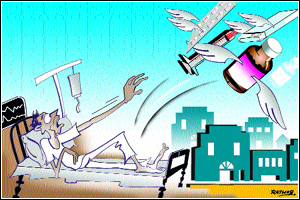 Since the early 70’s, different governments have made certain rash decisions, some of which have resulted in long lasting ill effects in the development of local industry, while others have caused the uncontrolled price hike of drugs, bringing direct misery to the public and indirect loss to the national exchequer.
Most of these decisions have been adhoc and made under pressure. The rationale given for these decisions have lacked an understanding of the overall profile of the situation. Governments over the years, have taken various steps in an attempt to overcome the damage caused by these earlier decisions. However, the resultant damage of these ‘corrective measures’ has been far worse than any of the benefits that have been conferred.
It has been a lack of knowledge of the virtual bond that exists between the government, the pharmaceutical industry and the public, which has stood at the source of these decisions. For example, when the ministry of health at meeting held in July 1999, brought up the rationale of this triangular nexus, the majority of the participants, including senior bureaucrats showed ignorance about it. It took the ministry over 30 minutes to clarify what that relationship was.
Briefly speaking, there is a triangular bond between the pharmaceutical industry, the government and the public. The government plays a pivotal role by creating a delicate balance between the industry and the public. It should play this role by protecting the pharmaceutical industry,— both multinational and local— from its adversaries. Its objective should be to defend local manufacturers from any ill design of the multinationals. Lastly, it should aim to safeguard public interest from any ill intentions of the pharmaceutical industry.
Each angle of this triangle is as important as the other. The widening of one angle causes distortion of the other, resulting in the disfigurement of the triangle. Protecting this triangle from disfigurement is called the rational approach towards drug pricing. This relationship was ignored many times by the decision-makers causing damage to local industry and bringing haphazard price rise.
Starting with the first angle - the industry; It is relevant to mention that Pakistan has a strong pharmaceutical industry comprising of 305 local and 27 multinational units with an annual turnover of Rs45 billion. The path to the promotion of this industry is from packaging to formulation, from formulation to semi-basic and from semi-basic to basic manufacturing. To achieve such goals the transfer of technology and research and development(R&D) are essential components of any good pharmaceutical unit.
In Pakistan, three main adversaries can hamper the progress of this industry if the government ignores taking appropriate protective steps. Those adversaries are; India, the WTO; and the drug importers. Pakistan is a strong competitor of India in the foreign market. She would like to see our industry crushed not just to escape the competition but also to capture the Pakistani market. Theoretically, the MFN clause of the WTO applies to both countries.
Certain articles of the WTO are detrimental to local industry. Multinationals may play an intriguing role in exploiting these clauses at the end of the transitional period in 2005 by withholding the transfer of technology, slowing research and development and applying rigid clauses of TRIPs.
Drug importers would like to see the pharma-industry crushed to facilitate lavish drug imports for their personal gain. In Pakistan, there are a vast majority of importers who have, over the last few decades, made millions through the import of drugs. Most of them have not invested in the building of local pharmaceutical units as promised at the initial and subsequent applications.
The second angle relates to the protection of local industry from its adversaries and its improvement in line with the present concept of good manufacturing practices (GMP). The adversaries which may damage local industry are; the multinationals, doctors, some NGOs, and yellow journalism.
In the past, there was only one spokes-body for the pharma-industry called the Pakistan Pharmaceutical Manufacturers Association (PPMA). That body worked for the welfare of both the multinationals as well as the locals. Their ways parted however, when the multinationals realized that their interests, aims and philosophy did not coincide with the locals. Not only did they look down upon local industry but they also took an active part in negative propaganda against it, through doctors, certain NGOs and uninformed journalists. With their help, they promoted their brands through cutthroat techniques — techniques practised by their parent industries abroad. They called their spokes-body the Pharma Bureau. Very soon, the PPMA and the Bureau drifted apart to a point where they lost the ethical difference between positive and negative promotional propaganda. The multinationals, being more resourceful, had the upper hand in this tussle.
There are 86,500 registered doctors in Pakistan, out of which nearly 10, 000 are registered specialists. If we take 25 per cent of these specialists as living abroad or deceased, the number comes down to 7000. Out of these, around 35 per cent of the specialists are known professionals with remunerative practices in the communities and so the number is brought to about 3500. It is not difficult for the MNCs to target such a small number against a population of 135 million.
The easy way to negate the sale of any drug is to challenge its quality and the best way to propagate this is through the prescriber (the doctor) who is the provider of the prescription for the end user (the patient). The terminology for this allegation in layman terms became known as “No. 2”. Unfortunately, this allegation is applied in an irrational way without any scientific proof. Over the years, through repeated propaganda this concept has become engraved in the minds of the public at large. Today, most of the public believes that medicines produced locally are substandard. This is not true in the vast majority of cases.
Most of the NGOs working in the social sector are funded by foreign sources, closely linked to major MNCs abroad. These NGOs use the motto of rational use of quality drugs to propagate and degrade locally manufactured drugs and have been fairly successful in their efforts thus far.
Lastly, We have a majority of outstanding journalists who are thoroughly professional. At the same time, some among them have become easy targets for the multinational companies.
The third angle is related to the protection of the public from the ill designs of the pharma-industry. Like any other industry, this industry has to make profits in a businesslike way, and like any other business, profits are sought in a ruthless manner. They will go to any lengths to increase profits even if it brings misery to the public, hence the demanding of regular price increases. Since the early seventies ten irrational decisions were taken by the government a few of which resulted in a rapid price hike.
In such circumstances, when the public, the local industry and multinationals are all in danger from their adversaries, it becomes the duty of the government to take rational steps to convey a clear message to the public that they are safe, to the local industry that their needs are protected and to the multinationals that their interests are guarded. In addition it should send signals to international financial institutions that their investments in Pakistan are sound (remember IPP) and to the WTO that their articles are not being violated.
These objectives can only be achieved if the policy makers chalk out balanced programmes through professionals whose overall knowledge about the subject is extensive and whose moral integrity is above board. Unfortunately, committees tend to be headed by either bureaucrats or politicians and the opinions of the technical members are ignored or marginalised. In such committees, personal likes and dislikes take precedence and sometimes TORs are ignored. Lastly, the final recommendations are trimmed to suit the wishes of the policy makers.
Market studies have shown that drug prices are so irrational that they are ridiculously low in some cases while exorbitantly high in others. To solve this problem, a ministerial committee was formed in 1999 having three ministers as its members. Representatives of the PPMA and the PB were also accommodated in the committee. Drug prices were frozen till the outcome of the committee’s recommendations. The aim was to solve the issue by framing a policy that would result in the increase in price of some drugs, the reduction in the price of others and no price change in others yet.
The plan was to categorize and list the drugs into three groups; drugs which were too low in price; drugs which were moderately priced; and drugs which were excessively priced. Such a list could be devised by asking firms to provide break-even graphs of the drugs they have marketed in Pakistan. The industry was asked six pertinent questions related to the concept of the international quality of raw materials, their patent periods, their availability in the international market, and provision of proof of their raw material being superior to a similar other raw material etc. It was decided in principle to get internationally accepted business profit charts made according to the rules of business, based on the ratio between break-even points and the outlet prices.
Based on the information, the price chart of drug units would be made which would have been compared with the prevailing drug prices in the market. The comparative charts would have put various drug units in the respective three columns of pricing mentioned above. It was also planned that the minimum price of a drug unit should not be less than the smallest circulating coin. This would have automatically increased the price of those essential drugs, which were constantly in short supply in the market due to their ridiculously low prices, such as 7 paisa per tablet. It would not put a real burden on the public. These drugs were regularly smuggled out to the countries as far away as South East Asia.
With the help of the list based on the break even graphs and business profit charts, it would have been scientifically possible to re-arrange the prices of drugs in the most rational and transparent way, resulting in the price increase of some drugs, decrease in others and no price change in the remaining drugs. This action would also have sent a clear message to international donors and investors about the credibility and transparency of the procedures adapted by the government. The past experience of the IPP put us in an awkward position internationally. The incumbent government can take the pieces left behind by the previous committee and constitute a new committee on similar TOR to once and for all settle the problem of irrational drug prices.






























