0
0

LAHORE, May 21: The Punjab University Academic Staff Association has urged the steering committee of the president’s task force on higher education to work on a criterion for the appointment of a vice-chancellor of a university.
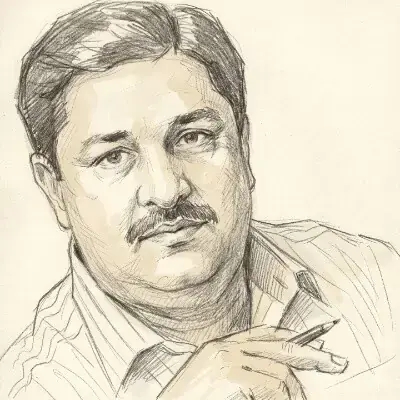
In a letter written to the steering committee, PUASA president Prof Dr Haris Rasheed said that a VC must be selected on merit and not through political lobbying or on the basis of personal liking.
He said the VC of a university should be an academician with PhD and should have served a university for about 25 years. “Being familiar with the university culture and atmosphere, such a person can better run the campus,” he said.
During a recent meeting of the steering committee with the PUASA and students’ representatives and teachers on the university syndicate, Prof Rasheed said that it had been noted that various shades of the academic society considered the present system and structure satisfactory.
“If syndicates, senates and academic councils meet regularly and work under the provisions of the University Act, they can play a significant and satisfactory role in the running of a university,” he asserted.
Prof Rasheed said it was significant that during the meeting neither the members of the steering committee nor the vice-chancellors opposed the present structure (of the universities).
It may be added that the task force on the improvement of higher education had recommended earlier this year replacement of syndicates and senates with “strong and independent” governing boards.
It had resolved that universities were the pillars of the higher education system but there was a lot of confusion in their governance and management. It had also recommended that the universities should have small but functional bodies to exercise autonomy from political and other extraneous influences to govern and manage the academic functions of education and research.
Identifying objectives behind the move to change the university structure, Prof Rasheed alleged that some multi-millionaires had jumped into the ever-expanding education industry. “They wanted to destroy the present democratic structure of universities to concentrate powers in a single person or non-academic and undemocratic bodies to rule and run universities according to their own wishes and whims.
“These people do not believe in the values which are dear to the public universities as well as essential for the development and progress of any university,” he said.
Each step, he said, should be taken to avoid the creation of a situation which might harm the society and the country.
Prof Rasheed also disputed claims by certain quarters that the private institutions like LUMS had been delivering better as compared to public sector universities. He said that there were several examples when assistant and associate professors of the Punjab University were hired by so-called institutions like LUMS, ILM, Lahore University and Punjab Group of Colleges.
“If reasonable salaries and facilities are extended to teachers and required infrastructure is provided to the public universities, their performance can be compared with known western and American universities.”
According to Prof Rasheed, universities were recognized through their research contributions to the international pool of knowledge. He said that universities not contributing significantly to research were very low in ranking and it was a known fact that private institutions did not have any research contribution to their credit. He emphasized that the real strength of foreign universities lay in their excellent salary structure and facilities for the faculty besides the observance of democratic principles.
He urged the steering committee to recommend significant enhancement in the emoluments and facilities for teachers to improve teaching and research in universities. He also called for increase in annual budgets of universities before demanding research contribution at par with foreign universities. He, however, regretted that on all previous occasions the financial part of the recommendations had never been implemented.
In the end, Prof Rasheed said if the government was really interested in the progress and development of universities it should give top priority to the welfare of teachers besides accepting their role in policy and decision-making. “This can only be done only if the democratic process of elections of teachers to the decision and policy-making bodies like senates, syndicates and academic councils is retained,” he said.