



 0
0

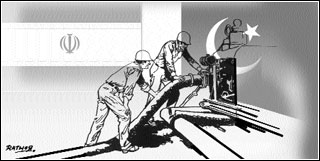 LAST month Pakistan and Iran signed a memorandum of understanding for a pre-feasibility study on the proposed gas pipeline from Iran to India through Pakistan.
Australian resources giant BHP would conduct the study for the proposed 2,500 km pipeline. It is a reiteration of an earlier resolve for implementing the titanic project envisaging construction of 1,600-km gas pipeline from southern Iran to Sindh in Pakistan, linking it with another 1,000 km pipeline to India.
Described as a vital step towards the much-debated project, the study would be completed by the end of the current year. The initiation of such projects, though necessarily preceded by pre-feasibility and feasibility studies, could open a vast field of regional cooperation in the energy sector.
The project has the potential of ushering in an era of joint efforts for regional economic development. The project stems from the prospect of sale of Iran’s enormous surplus gas to India on a long-term basis via overland Pakistan route as most economical for both the selling and buying countries.
The pipeline laid overland will bring Pakistan royalty around $700 million on an annual basis. It will also make additional gas available to consumers in Pakistan. Pakistan’s readiness to support the pipeline being laid through its territory suggests that the project has received a much-needed green signal.
The project has three distinct aspects—political, economic and tactical. The first phase of the project, which involved political commitment, has been completed. Further action on the proposed pipeline project could now go apace. The total cost of the project would be over $4 billion, which would require engaging a consortium of international banks and financial institutions for the provision of funds. Talks with these institutions could also be commenced.
However, notwithstanding the uniqueness of the project, it has remained on hold rather too long in view of India’s well-known qualms, which hardly need elaborating in view of its unfriendly attitude towards Pakistan.
Needless to point out, exactly for the same reason, Pakistan could have been expected to come out with a plethora of exacting demands before consenting to participate in the grand project.
However, viewing the proposal purely on its economic merit, as also encouraged by ideas of promoting aims and aspirations of the Economic Coopertion Organisation (ECO) of which Pakistan and Iran happen to be founding members, it readily responded favourably to the idea from the approach of enlightened self-interest.
After the time-consuming pursuit of alternatives to involvement of Pakistan in the project at India’s instance, the idea has come to be mooted again following Iran-India talks, surprisingly in the midst of a severe threat to Pakistan from concentration of combat-ready Indian troops along the borders.
This may be an indication of India beginning to return to sanity, at least, on the economic front. Be that as it may, the revival of interest in the gas pipeline project as part of Iran’s pursuit of more gainful mutual co-operation with Pakistan, under the fast changing political and economic situation in the region, carries with it an understandable appeal for Islamabad, which has given top priority to investment in the oil and gas sector.
The Iranian Petroleum Minister, Bijan Namdar Zanganeh, rightly maintained that the gas pipeline would also mean cheaper gas to this country besides the benefit of transit fee.
Pakistan and Iran have also agreed to study the possibility of Iran importing motor gasoline from Pakistan and Pakistan enhancing the import of crude from Iran. Pakistan offered its expertise to Iran in establishing a CNG industry there for vehicular use.
The two sides also agreed to establish a coastal refinery in Pakistan as a joint venture project. These are the areas to expand further bilateral cooperation between the two countries and these could be of considerable economic benefit to Pakistan. In the meantime, the country should continue focussing on exploration of its own energy resources. The energy strategy has to concentrate on developing domestic energy resources and encourage bilateral cooperation. The newly-introduced concept of regional cooperation in this regard could be pursued in everybody’s larger economic interest.
Pakistan is also working on several other regional gas pipeline projects to meet its spiralling energy needs. President Pervez Musharraf and Afghanistan’s interim leader Hamid Karzai on February 8 have agreed to revive a plan for a trans-Afghan gas pipeline from the Central Asian state of Turkmenistan to Pakistan.
A consortium led by US oil firm the Unocal had originally aimed to build a $1.9 billion, 1,400 km pipeline to run from gas-rich Turkmenistan via northern Afghanistan. But in August 1998 the Unocal halted development of the project after the US forces fired missiles at guerrilla camps in Afghanistan after bomb attacks on two US embassies in Africa. Under the plan, a 740 km stretch of the pipeline would run across northern Afghanistan.
Pakistan is also in the process of holding talks with Qatar to resurrect a dormant $5 billion gas project to supply 1.6 billion cubic feet a day (cu ft/d) of Qatari gas to Pakistan by pipeline. The project would be implemented by the private sector and a consortium would be formed to fund it.






























