0
0

NEW DELHI, March 3: The speaker of India’s lower house of the parliament, GMC Balayogi, was killed in a helicopter crash on Sunday, triggering fears of further instability for Prime Minister Atal Behari Vajpayee’s fractitious coalition, already coping with a menacing right-wing Hindu upsurge from within his own supporters.
The private chopper crashed around 8 am in the speaker’s home state of Andhra Pradesh, killing Balayogi, his security officer and the pilot. He was returning to the state capital of Hyderabad from Bhimavaram in west Godavari District after an overnight stay.
Balayogi, 51, was India’s first speaker from the lowest Hindu caste of Dalits, the erstwhile untouchables. He is survived by his wife, three daughters and a son.
Balayogi’s body will be flown to Delhi on Monday morning to enable MPs and other leaders to pay their last respects.
President K.R. Narayanan, Vice-President Krishan Kant, Prime Minister Atal Bihari Vajpayee and a host of other leaders have expressed deep shock over his death.
“ His influence over the troubled parliamentary politics of our time was constructive and decisive,” Narayanan said in his message.
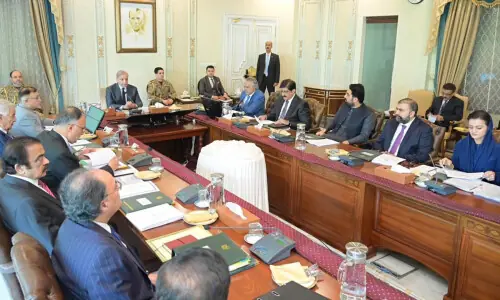
Prime Minister Vajpayee, who convened a special meeting of the Union Cabinet hours after news of Balayogi’s death, said:” He would always be remembered for the able stewardship of the 12th and 13th Lok Sabha. Despite not having any previous experience, he left an indelible impression by conducting the House through his talent, hard work and farsightedness, taking everyone along with him.”
Congress President Sonia Gandhi said: “ Balayogi earned the respect of the House, and his initiatives in bringing orderliness in our deliberations won him universal respect”. His capacity to iron out differences among various political parties was exceptional, she added.
Ganti Mohanachandra Balayogi’s rise was meteoric when be became the speaker of Lok Sabha in 1998, at the age of 47 years— the youngest to occupy the post. His principled position as speaker was not always helpful to the government, as Vajpayee learnt when his brief rule was toppled by a single vote in 1999 shortly after the Lahore visit.
That vote was tilted by a controversial but constitutionally valid decision by Balayogi to allow a chief minister of a Congress-party-ruled state to cast his vote against the government as he was still a member of the parliament, and had not yet been elected to the state assembly.
Balayogi’s death has come after a similar tragic loss of another important national figure, Congress deputy in the Lok Sabha, Madhavrao Scindia. Scindia also died when his private aircraft crashed in bad weather. Shortly before Scindia’s death, Congress leader and Lok Sabha MP Rajesh Pilot met with an unnatural death in a road accident.
Scarcely hours after Balayogi’s death new political possibilities were being unleashed, analysts said. For one, Vajpayee’s own right-wing Hindu supporters, who are posing a challenge to him in a communal stand-off in Gujarat and Ayodhya, would be required to vote with the government to elect the next speaker.
But there is also a view that Balayogi’s death might well set off a chain of events leading to a major change in power equations at the centre. Some consider this to be an extreme view as Balayogi’s Telugu Desam Party (TDP) had only 12 MPs in the House of 514. But this view has already gained some ground in political circles in the capital.
Politicians influenced by this view were already talking about the possibility of the TDP withdrawing support from the Vajpayee government over the Ayodhya and Ahmedabad incidents. However, the strong statement against rioting by Prime Minister Vajpayee may have doused any such hopes of TDP action.
Still Balayogi’s death has led to the revival of talks of a possible TDP-NDA hostility. It rests on the scenario that if the BJP decides to give speaker’s post to itself, or to the Congress, and not to the TDP, then the latter might either withdraw support, or in the least, change its unconditional support to a conditional one.
This section believes that the prime minister should give support of BJP for election of TDP leader Yerran Naidu to be the new speaker, analysts said.