0
0

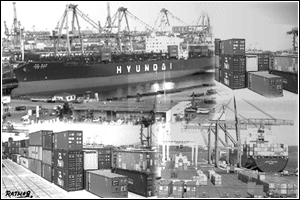 The Karachi Port seems to be poised for a major breakthrough in view of its ambitious plan code-named, “KPT Visions” which aims at transforming the port into a modern, competitive and user-friendly port in the region.
The plan is to exploit the immense under-utilized potential of this strategically-located port and the authorities are out to achieve this objective.
“The development plan for the port focuses on national trade requirements”, reliable sources say, adding, “swift transitions in regional shipping trends and global economic conditions call for repositioning of the port services”.
How to claim Pakistan’s share in the rising global volumes of the containerized trade is one of the challenges before the KPT management which has already taken some corrective steps including the computerization of port operations and installation of electronic aids to monitor the operational activities. Tariffs are also being revised to enhance cost- efficiency.
The Karachi port is the first choice of trade and industry owing to its proximity to the city, and it handles 70 per cent of the total sea-borne trade of the country as it provides round- the-clock safe navigation to modern container vessels including “mother ships”, and oil tankers up to 75,000 dwt.
Having 30 dry cargo berths and three bulk oil piers, including a container terminal, the port handles 14m tons of liquid cargo and 12 million tons of dry tonnage including more than 0.650m teus, as the figures made available by the KPT reveal.
A look at the last six month’s figures shows a major change compared to the corresponding period of the last year as more cargo was handled, more ships arrived, half yearly income rose and there was a drastic cut in expenditures.
For implementing this strategy, trans-shipment has been made a major revenue-earning source for the port. In this regard, the first step is to deepen the channel for accommodating bigger vessels.
Increased traffic and higher volumes would require faster cargo handling. New container terminal at berths 6-9 and the installation of gantry cranes at berths 4 and 5 is another endeavour in the same direction.
Deep draught berths at Keamari Groyne are being planned to enable swift and effective cargo handling. Computerization and acquisition of new crafts and equipment is on the anvil.
The channel is initially being dredged to 13.5 m depth for accommodating container vessels with 4500 TEUs capacity. In phase II, 16.5 m depth is planned.
The project for reconstruction of the oil pier II to a depth corresponding to phase II channel is under way. The liquid products handling activity is envisaged to enhance to 26 million tons from the current 18 million tons. Bulk cargo handling terminal is planned at berths 24-26 on West Wharf with conveyors, along with bagging system and buffer storage area.
The port is an operating port in the sense that its major operations—development and maintenance— are undertaken by the port itself. Its dredging flotilla maintains the annual requirements of about 1.5 million cum through its adequate fleet of tugs, and pilot boats.
However, the private sector participation in port operations is being encouraged and as such mobile and gantry cranes at the East Wharves, and a container freight station outside the port area have been given to private sector for efficient operations and better revenue generation.
The port employs a staff of 8,995 personnel. Apart from this. the port provides livelihood to millions of others in one way or the other.
Cognizant of its responsibilities towards development of Karachi, the KPT has been contributing towards infrastructure development of port-related projects which fall beyond the domains of trusts’ direct obligations.
The construction of bridges over river Lyari on Mauripur Road, Jinnah Bridge with rotary and fly-over connection to Mauripur Road and the Mai Kolachi by-pass has eased congestion in the port vicinity and provided a great relief to commuters as well.
The port is a vibrant organization which keeps pace with the changing economic and market scenario in the region by its agile repositioning to suit the shippers’s demands, serving the industry and the nation at the same time.