0
0

Now when the Paris Club has rescheduled Pakistan’s $12.5 billion debt for 38 years, and the IMF, the World Bank and the Asian Development Bank (ADB) are jointly providing about $4 billion during the next three year period, apprehensions are being expressed that the real task of improving resource mobilisation position may not be taken very seriously.
There are four issues which need to be addressed by the government to ensure better funding situation as well as helping in setting up the long-awaited small and medium enterprises. And these include, levying GST on the remaining untaxed sectors, curtailing undue expenditure and checking smuggling effectively.
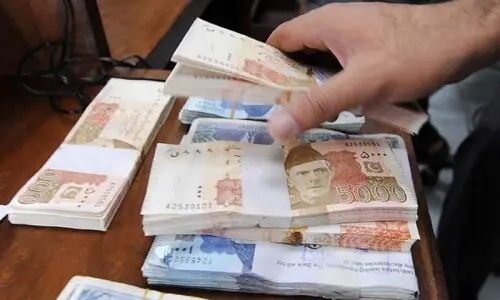
The immediate benefit Pakistan got from the exceptional debt re-profiling is the saving of $1.1 billion for the current financial year which otherwise was to be spent on debt servicing. The total saving of $2.7 billion for three years on account of debt servicing will provide fairly large resources to do any meaningful work for improving the social indicators.
However it is feared, even by some officials in the ministry of finance and the economic affairs division (EAD) that while there are chances for misuse of funds, the real task of improving resource mobilisation through increased revenues and exports may not be taken seriously.
The efforts of the government to improve resource position have already been marred by over 30 per cent reduction in imports that are likely to reduce Rs100 billion in revenues during 2001-2002. The Central Board of Revenue (CBR) has already been allowed to revise downward the revenue collection target from the original Rs457.7
billion to Rs430 billion. And since the situation does not seem to be improving, the CBR is expected to further slash the new target.
Under these circumstances, it is being said that the concerned officials instead of calling for improving resource mobilisation, have started advising the government to remove ban on recruitment on the plea that a substantial amount has been saved because of not paying any thing on account of debt- servicing.
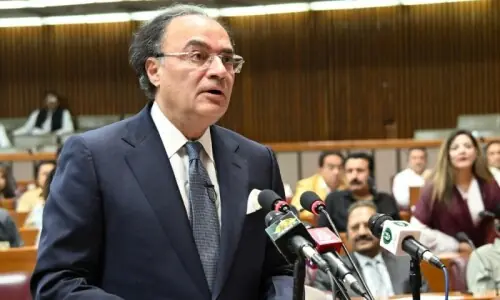
“If that happens, I am afraid that our fiscal deficit will further increase and it might force the donors to review their decision of offering such a generous favour, first by the IMF and then by the Paris Club”, said a concerned official. He added that unless the government gets tough and uses foreign funds judiciously, things are not likely to improve. Finance Minister Shaukat Aziz had admitted during a news conference on arrival from Paris before Eid that the donors would withdraw their financial support in case Pakistan did not implement reform agenda and failed to use the new funds in a better manner.
In view of the accelerated flow of foreign resources, on the one hand, revenue mobilisation efforts are likely to be slacken, and on the other, businessmen have begun seeking cut in sales tax rate. Can the CBR afford to do that, specially when the government has already planned to extend the GST to all services and agriculture inputs?. The IMF and the World Bank would not allow the government to reduce the sales tax rate.
The most important task for the government would now be to facilitate the setting up of small and medium enterprises. This requires rationalisation of taxes, if not from the current financial year, certainly from 2002-2003 by removing the existing anomalies.
The anomaly committee is said to have been rendered useless as it is not giving decisions on various irritants raised even by many government organisations, including the Pakistan Steel Mills. The PSM authorities had told President Pervez Musharraf immediately after the announcement of the current year’s budget that the PSM would not be able to show increased sales and profits as was done last year due to the anomaly created in tariffs at the behest of the officials of the ministry of commerce. According to both, public and private sectors, there exist many anomalies which need to be removed to help setting up small and medium enterprises.
“The government must offer certain special facilities for new private investment”, said an official. He added that high tech industry should particularly be offered differential in tariff rates.
Side by side the government needs to cut its expenditures. Questions are being asked as to why the government is allowing opening of more offices which perform the same functions. Also why should the government offer M-I, M-2 and M-3 hefty packages to some individuals, both military and civilian, someof whom are paid over Rs200,000 per month. This is not only increasing the expenditure but is demoralising the honest and capable government officers who do the job equally good.
Lastly the issue of smuggling continues to harm the local industry as the menace has not been removed despite tall claims made by all the successive governments including the present administration. These are serious issues and unless the government finds their solution, the prospects for establishing small and medium enterprises might not be materialised.