0
0

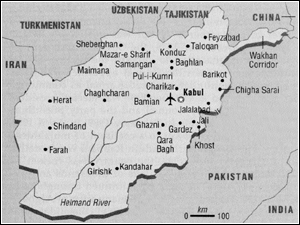 ISLAMABAD, Dec 21: As the interim government under Hamid Karzai takes over reins of power in Kabul on Saturday in the backdrop of new emerging realities, expectations of reconstruction of devastated infrastructure and above all destroyed agricultural economy of Afghanistan fly too high.
The Pakistan government is also preparing its own set of recommendations/proposals for the revival of agriculture in Afghanistan under both long-term as well as short-term planning. The government has already expressed its willingness to provide all possible assistance in improving the agricultural sector of Afghanistan with technical as well as inputs like seeds and insecticides, etc., official sources have told Dawn.
The international donors community which held a conference on Afghanistan’s reconstruction on November 27-29 last in Islamabad under the aegis of World Bank has prepared its recommendations on almost all the sectors of the rehabilitation of Afghan national life.
However, it fell short of deciding on the estimated quantum of resources required for the long term planning. Earlier, a number of such conferences have been held and gave their recommendations on various aspects of social sector development in Afghanistan but due to political instability none could be implemented.
The World Bank last year facilitated inter-agency working group to develop a medium term operational food security strategy for Afghanistan. However, persistent drought exacerbated the broader impact of protracted conflict on agriculture, the erosion of agricultural production base, loss of irrigation and other infrastructure and declining non-agricultural income generation opportunities.
Afghanistan, a landlocked, mountainous, geographically remote, sparsely populated, ethnically diverse, yet geopolitically important country is faced with gravely low economic growth in last two decades due mainly to the destruction of its agricultural edifice, for, more than 85 per cent of its population depended on agriculture before the start of war in beginning of the last decade.
Formal establishment of Hamid Karazai’s consensus interim government in Kabul after twenty years of war
marks beginning of a new era in the region. Is it wise to get swayed by skeptics alone? For trade and
industry in Pakistan it is not a matter of choice, they are bound to be affected by happenings in neighbouring Afghanistan, with which we share historically close relations and 2,430 kilometres of border
The business team of Dawn investigates and explores the level of cognizance in both public and private sector regarding
the challenges and opportunities that a peaceful Afghanistan might offer to economic actors in the country
The economy of Afghanistan is in a state of collapse due to three years drought and resulting famine situation, then the recent ban by the Taliban on opium production coupled with choking of trade via Pakistan and massive displacement of population have exhausted what coping capacity was left among the families and civil society.
Along with destruction of all key economic institutions of state namely banking, treasury, tax collection, civil services, law and order, the basic infrastructure, roads, bridges, irrigation, canals electricity, etc., have also been destroyed or oriented toward the war effort.
Afghanistan’s pre-war economy was mainly based on agriculture and animal husbandry. The country has low population density due to difficult topographical and climatic conditions (high mountains covering most of the country, extremes of temperatures, and arid to semi arid climate).
Most interestingly, in 1978 the last year of peace, Afghanistan was largely self-sufficient in food and was a significant exporter of agricultural products. Agriculture was largely concentrated in narrow river valley and plains where irrigation water from snow melt was available, according to a World Bank report.
By the mid-1990s most of the country’s limited modern infrastructure was destroyed and with it traditional irrigation systems greatly suffered from destruction and lack of maintenance. As a result the irrigated agriculture went down and down sharply, livestock herds were depleted as millions of Afghans became refugees in neighbouring Pakistan and Iran, and to a lesser extent elsewhere.
Although the external population continued to play an important role in supporting Afghanistan’s economy through remittances, still the agriculture at home did not pick up due to shortage of manpower and as well as sufficient peace around.
There was a modest economic recovery through agricultural activities revival in mid 1990s in areas that became largely free of conflict. Agricultural production increased, livestock herds sharply rose in numbers taking advantage of widely available unutilised grazing lands, and horticultural production also grew on restoration and expansion of orchards and vineyards.
Substantial number of refugees returned to their homes with international assistance. However this economic recovery was concentrated in areas taken over relatively early by the Taliban.
The unofficial exports to Pakistan were roughly estimated to have exceeded $2 billion in 1996 and by the late 1990s Afghanistan had become largest producer of opium in the world. The falling in this category of economic activity was uncontrolled exploitation of natural resources i.e. timber, gems, marble and granite, etc., which resulted in extensive deforestation and resulted in environmental degradation.
Most recently, Afghanistan was hit by a severe, protracted drought, which started in 1999 and has lasted until present crop production has been halved and livestock herds heavily depleted, more than raising the modest gains of the early and mid-1990s. Large and increasing number of people have lost their means of livelihood and have become displaced, either internally or to neighbouring countries. This situation couple with the vast lands coming under mines, the agriculture in the country has almost destroyed.
The economic situation of Afghanistan has significant regional spill-over effects through unofficial trade, narcotics, terrorism and extremism, financial flows and movements of people. These spill-over effects tend to undermine every administrative activity but mostly agricultural sector has been hit.
In this scenario, the total international assistance to the country stood at $200 to 300 million annually in recent years, which too going for humanitarian relief purposes, much of it in form of food and other in kind assistance. The UN sanctions on Afghanistan also restricted donors from providing funds for explicit development purposes without a legitimate and recognised government.
The planners propose an explicit strategy, backed by concrete actions, to mobilise Afghans for full participation in her construction effort including maximising Afghan staffing both in reconstruction agency and Afghan government departments.
They propose for the return of millions of Afghans who were now involved in all kinds of wage labour in Pakistan, Iran and the Middle East.