0
0

RIYADH, Dec 10: Saudi Arabia has ruled out foreign borrowings to meet the SR45billion ($12 billion) deficit projected in the budget for the year 2002 in which revenues were projected at SR157 billion ($41.9 Billion) and expenditures at SR202 billion ($53.9 billion).
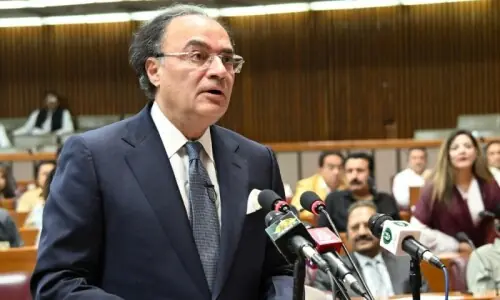
“Saudi financial establishments and national reserves are capable of meeting the shortfall. We will not resort to foreign borrowing to meet the deficit. The position of our banks is excellent,” the Saudi Minister of Finance and National Economy Ibrahim Al-Assaf told a post-budget press conference here.
The deficit is the largest since 1998, when average oil prices went down to almost $12 a barrel and the output was 8.3 million barrels per day. The minister said the new budget has been prepared ‘under extreme conditions marred by difficulties and challenges as a result of the direct decline in oil prices, which led to lower revenue and hence considerably lower expenditure projections than those of last years.
Saudi internal debt at the end of off 2001 was expected to exceed SR630 billion, just under the Kingdom’s gross domestic product (GDP) of SR668 billion. The debts obtained from local Saudi banks and financial institutions was tipped to rise next year as the deficit increases. Al-Assaf said there was sufficient capacity “to cover the budget deficit either through issuing bonds or through (internal) borrowing. He also disclosed that the amount returning from abroad exceeded remittances from here.
The minister said that the local farmers would continue receiving SR1 billion a month and schedule of payments to farmers would not be affected by a cut in expenditures in the new budget. It would continue as in previous years, he reiterated.
Al-Assaf denied that the government is indebted to any parties in the private sector other than farmers and that payments to contractors are usually settled on the spot, except those involved in litigation.
He said the Kingdom would continue with privatisation plan for electricity, telecommunications, Saudi Arabian Airlines, sewage, water desalination and other sectors.
The Saudi cabinet has also decided a freeze on new jobs, other than those already approved in the budget. More than 86,000 jobs for both male and female teachers have, however, already been sanctioned in the new budget. Under the current development plan (2000 - 2005) the government was planning to employ more than 817,000 Saudis by replacing 488,600 foreigners and creating 328,000 new jobs mostly in the private sector.
Current expenditure normally accounts for more than 85 per cent of total expenditures, with capital spending taking the remaining 15 per cent of the national budget. This is regarded as a major structural distortion in the Saudi economy. The minister said wages account for 55 per cent of the budget allocations and with additional expenses the figure is anticipated to exceed the 60 per cent mark.