0
0

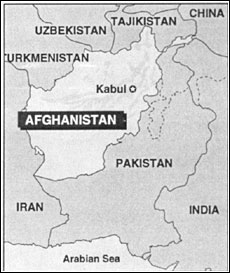 PAKISTAN’S front-line status vis-a-vis the happenings in Afghanistan is likely soon to change in character from being war- oriented to being overwhelmingly economically-directed.
With the prospect of peace returning to Afghanistan becoming ever brighter, the US is likely to eye the $5 trillion oil and gas reserves of the Caspian Sea region with considerable interest. And while contributing to the reconstruction of Afghanistan, the US in its own interest is also likely to come in strongly to create safer and cheaper routes to exploit the Caspian sea wealth to its own economic advantage. And Pakistan is likely to serve as the main bridgehead as the US seeks to corner this wealth.
However, in one sense at least Pakistan has to begin at the beginning once again. Misfortune piled on misfortune as it failed to have the $2 billion Pak-Turkmen gas pipeline put in place in time to harvest its economic benefits despite having backed the Taliban in Afghanistan for about half a decade. It has to be seen, however, whether or not and to what extent, Pakistan, being a frontline ally of the US, could get its trade and economic share out of the anticipated development and construction work particularly the exploration activities, petroleum pipelines, railroads, highways, airports, ports and telecommunication and allied small industries. What is extremely worrying is that Pakistan has to develop relations with Kabul from zero, while Iran and India - both having old friendly ties with the Northern Alliance - have already landed in Kabul to establish their economic foothold.
The United States with interests in controlling the $5 trillion oil and gas reserves of the Caspian Sea region is likely to contribute to the development of not only Afghanistan but also the central Asian States. Hence the network of pipelines, railroads, highways, ports, airports, and telecommunications are now seen by Americans as a key to the revival of the “Silk Road” trade route to link East and West in the third millennium. The Silk Road in the 16th century used to be part of caravan routes from China and India through Central Asia’s Samarkand and Bukhara to Western Europe.
Azerbaijan, Kazakhstan, Turkmenistan and Uzbekistan jointly hold around 15-30 billion barrels of proven oil reserves in the Caspian Sea Region. At last year’s market rate, these reserves were estimated at $4-5 trillion, according to independent studies. Some studies suggest unproven oil reserves in the region ranging 60 billion to 140 billion barrels. By comparison, total proven oil and gas reserves in the Caspian Sea Region are around 3 per cent and 7 per cent respectively of the total proven world oil and gas reserves. Middle East and South American hydrocarbon reserves constitute around 55 per cent and 8 per cent respectively of the world proven reserves.
The emerging Afghan situation has already started giving new dimensions to the petroleum politics across the world. The US has the underlying interest to increase its influence in the international oil and gas business and pricing to its benefit. Other players like Russia, Iran, China and Middle East are gearing up to safeguard their own respective economic shares in this new booty.
In a week’s time, three major events in quick succession are seen in the same context. First, Qatar and Abu Dhabi finalized a deal worth $3.5 billion to transport Qatari gas to the UAE under the inter-Gulf Dolphin gas project following years of protracted negotiations. The sponsor, Dolphin Energy, has plans to extend the same pipeline to Pakistan and then probably to India as second part of its ambitious investment plan. Second, Russian and Gulf oil ministers agreed to form a “Caspian Pipeline Consortium” involving Lukoil of Russia and Chevron Texaco of the US to supply one million tons of oil from Kazakhstan to the world markets. Russia, Kazakhstan and Oman hold 24 per cent, 18 per cent and seven percent respectively in the $2.5 billion 1,500 Km pipeline followed by private energy firms.Third, in the same context, is being seen the revival of interest among Iran, Pakistan and India for laying a Trans-Pakistan gas pipeline from South Pars fields of Iran to energy hungry India. Teheran and Islamabad agreed last weekend to carry out feasibility study of the pipeline. A similar study, sponsored by India and Iran, is separately underway on the same project.
A draft agreement prepared by Sharjah-based Crescent Petroleum for another pipeline from Qatar to Pakistan and then to India is currently being examined by the Pakistan government. Despite the fact that it does not require imported gas during the current decade in view of sufficient domestic discoveries, these pipeline options place Pakistan in a comfortable but equally tricky situation to negotiate better financial benefits. From the Iran pipeline alone Pakistan hopes to make a profit of $14 billion in 30 years.
Some energy experts in Pakistan believe that as the United States launched the Desert Storm operation in the Gulf in early 1990’s to take hold of Arab reserves, the same pattern is being followed in Afghanistan to put its foot in the Caspian Sea Region. These analysts believe that a peaceful Afghanistan can play a role of connecting pipelines from Central Asia to international markets of Europe and South Asia besides its own large oil and gas deposits that remained untapped because of unending war for over two decades. In 1998 the US-based Unocal withdrew its leading role from Centgas consortium which had signed an agreement with Pakistan for laying a 1300-Km pipeline from Daulatabad in Turkmenistan to Multan in Pakistan through Afghanistan. Another $600 million investment could have linked this pipeline to India. But before withdrawal, officials of US-intelligence agencies made comprehensive surveys of the prospective zones and pipeline routes. Many in the petroleum ministry in Islamabad suggested that pipeline tariff finalized in this agreement was so low compared to what was being worked out by other competitors from Iran and Qatar that they saw it with skepticism. Interestingly, despite pulling out its over 46 per cent share in the Centgas in 1997, Unocal still continues to maintain its office in Islamabad without any other apparent business interest here.
It is suspected that Indian motives in extending its continued support to the Northern Alliance and its decision after September 11 to invite itself to the US-led Coalition without being asked actually had their origins in New Delhi’s interests in the Caspian Sea hydrocarbon reserves. A visit of top level delegation of Gazprom, the Russian energy firm to Pakistan was cancelled at the last moment last year when it was to fly from New Delhi to Islamabad. New Delhi had asked Russian president, who was in India at that moment, that it was embarrassing to see a high profile investor delegation in Islamabad when Russian President was holding talks in New Delhi. Reports also suggest that senior George Bush had assets invested in the Washington-based Carlyle Group, a $12 billion private equity firm having interests in Saudi Arabian oil industry.
In a study, “Building a new ‘Silk Road’ to Economic Prosperity”, senior policy analyst Ariel Cohen said that oil and gas reserves of Eurasia’s Caspian Sea region could provide the United States with a solution to the challenge of securing adequate access to oil and natural gas reserves in the first half of the 21st century. They are an abundant resource, second in size only to those in the unstable Middle East. The Caspian Sea reserves have been estimated to hold 100 billion to 200 billion barrels of oil. The region’s reserves of natural gas are similarly enormous—larger than those in all of North America, he reported. A new Russian empire conceivably might seek to gain exclusive control over the region’s pipelines and limit U.S. access. Furthermore, the radical Islamic regime in Iran could move to turn Central Asia into its strategic rear, viewing the Islamic states of Central Asia as a potential sphere of influence. Even China has the potential to become involved, the study suggested.The United States has an overarching interest in encouraging the economic prosperity of the southern Caucasus and Central Asia. Economic growth would secure the sovereignty of the New Independent States (NIS); it would be effective in countering the radical Iranian influence; and it would provide lucrative markets for US goods and services.
The valuable oil and natural gas reserves of the Caucasus and Central Asia are likely to make the new Silk Road a trade and investment engine to power unprecedented economic growth. The Silk Road would connect China, Russia, Eurasia, and Western Europe, providing business opportunities for American companies and, ultimately, jobs for American workers.The report said that Russia, Iran, Turkey, and the United States compete over exploration, drilling rights, and the directions of pipelines in Central Asian and the Caucasus. These states understand the importance of controlling both the development and the transport of the region’s resources. Their companies, however, face competition from the oil and gas companies of China, Japan, Pakistan, India, and Korea; this competition is certain to increase, as the scope of the resources available becomes clearer.
The United States has major economic and strategic interests in this region. First, it wants access to the oil resources of the Caspian Sea and their secure transportation to Western markets. Western companies like Amoco and British Petroleum lead the Azerbaijan International Operating Company (AIOC) consortium, the main Caspian Sea drilling contractor; Chevron is developing a giant field in Tengiz in western Kazakhstan; and the Atlantic Richfield Company is a shareholder in the Russian oil giant Lukoil, another major player in the region. The people of the Caucasus and Central Asia, as well as American companies, understand that they will benefit from the growth of pipeline, port, airport, railroad, and telecommunications facilities in the region. Russia’s pipeline system is overflowing with oil, but its reliability, security, transparency, tariff structure, and access do not satisfy either the needs of Western companies or those of NIS governments.
Western companies therefore will need to overcome formidable challenges in order to transport the oil to markets in the West. These challenges include limits to navigation in the Black Sea and Turkish Straits and the conflict surrounding the legal status of the Caspian Sea. The oil terminal in Supsa, Georgia, which will be important in transporting early shipments of Caspian Sea oil, is unfinished. Even when the terminals are constructed, the flow of oil coming across the Black Sea is likely to be limited because of a bottleneck at the Turkish Straits. Clearly, alternative distribution points, processing facilities, and petrochemical industry plants must be developed around the Black Sea in Ukraine, Turkey, Bulgaria, and Romania. Ukraine’s only oil terminal in the port of Odessa has yet to be completed, and the large Rumanian refinery at Midia near the port of Constanta needs to be made fully operational. Caspian Sea oil from terminals in the Black Sea must pass through the narrow, congested, and ecologically sensitive Turkish Straits—the Bosphorus and the Dardanelles.
One of the busiest water arteries in the world, it is only 700 yards wide in some places and is spanned by a bridge connecting Europe and Asia. The report said that Russia and Iran were attempting to block oil and gas development in the Caspian Sea by claiming that it is a lake and, therefore, that the Law of the Sea—which allows for national sectors on the continental shelf—does not apply. Russia is willing to recognize 45-mile exclusive zones, which would leave most of the Kazak oil in the hands of Kazakhstan but would transfer Azerbaijani oil to the collective ownership of the littoral states. The US think tanks believe that Iranian domination would prevent the successful flow of oil to the West as well as the involvement of American companies in the economic development of the new Silk Road. . Because of political roadblocks, a major pipeline for Caspian Sea oil has not been constructed. Kazakhstan and Azerbaijan are using such intermediate solutions as transportation by barge and rail to Iran, the Black Sea ports, Finland, and Ukraine.
Several pipelines in a north-south direction are feasible. Ultimately, pipelines may be built from Turkmenistan and Uzbekistan to Pakistan. Unocal (US) and the Delta Oil Corporation (Saudi Arabia) were named as consortium leaders for a gas pipeline by the government of Turkmenistan in October 1996 and project is still intact. Russia’s natural gas monopoly (Gazprom) and a Turkmen-Russian government oil company (Turkmen RosGaz ) also were part of the consortium. The most ambitious project under consideration is a gas pipeline in the eastern direction, from Chardzhou in eastern Turkmenistan to the pacific coast of China. If built, this would be the world’s longest pipeline at 3,700 miles. It is being considered by a consortium that includes Esso China (Exxon), Mitsubishi (Japan), and the China National Petroleum Company.
An oil pipeline from western Kazakhstan along the same route is also being considered. Turkey is desperate to diversify its sources of natural gas away from Russia, which currently supplies 85 percent of its fast-growing needs, and would like to import 10 billion cubic meters of natural gas per year over 23 years from Iran. As a part of its multi-route strategy, the United States supports Turkey in providing its territory with a pipeline that would terminate at the existing oil port of Ceyhan. Turkmenistan could have been an alternative for Iranian gas. The people of Georgia, Armenia, Azerbaijan, Kazakhstan, Turkmenistan, and Uzbekistan desperately need the revenues from such oil transit and “downstream industries” as petrochemical refineries. Oil-driven development provides them with opportunities to propel their poor societies toward prosperity in the 21st century. US policy makers believe that the new Silk Road could become an important connection between the West and the southern Caucasus and Central Asia that must cross the Black and Caspian Seas, and its corridor of pipelines, transportation, and communications networks must stretch from Kazakhstan to Georgia and into Europe.