HE cynic has a point. Mubarak, the tyrant, may have gone but Mubarakism hasn’t; it’s still holding sway over the Egyptians, notwithstanding their 18-day miracle.
The pointers on the ground bear out the cynic. Look at all those symbols of governance that made Mubarak such a formidable foe for the Egyptian people to confront with. They are still intact. The army, which has ruled Egypt since the overthrow of the monarchy in 1952 in the thin guise of democracy, is still in charge. In fact, it has cleverly manipulated its erstwhile role as the power behind Mubarak’s throne to morph, most say for the sake of convenience, into a partisan of the Egyptian people’s rights.It’s not only the habitual Cassandras suffering from a bout of diffidence at this shedding of skin by the half-million-strong armed forces of Egypt, the 10th largest in the world. Those priding themselves as pragmatist observers of the scene are also saying, though in subdued undertones, that the people’s impressive and ground-breaking ‘revolution’ that has seen the back of a dour dictator with such alacrity, may be in danger of being hijacked by the armed forces.
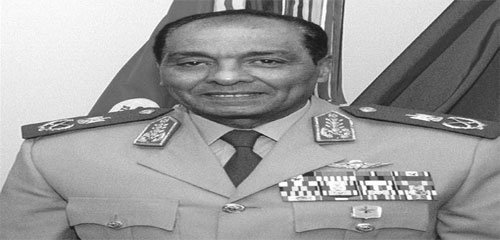
Field Marshal Mohammad Hussein Tantawi, the head of the Supreme Military Council, is the stop- gap leader that has stepped into the breach to assure Egyptians and the world that a smooth transition will be his topmost priority. He was Defence Minister and Chief of the Egyptian armed forces under Mubarak for 15 long years.
Mubarak leaned on Tantawi for the army’s continued loyalty and support to the ‘pharaoh.’ Tantawi is said to have little or no political ambitions.
But the fact that he was among those Mubarak trusted most is sufficient evidence for those doubting his credentials as an untainted and fair referee.
They buttress their doubts by alluding to the fact that Tantawi had been named Deputy PM in the symbolic and vacuous change of cabinet Mubaraktried to foist on the Egyptians in the first few days of the January 25 uprising.The interim setup has so far done little to remove the cobwebs around its agenda or intentions forming in the minds of the Jeremiahs. Yes, it has suspended the constitution and sent the National Assembly, which was a den of Mubarak flunkies and loyalists, packing. That could be some morale booster provided other, long-simmering, causes of popular discontent against Mubarak’s draconian rule were also addressed in tandem. But they haven’t, at least not so far.
The most hated instrument of power wielded by Mubarak’s ancien regime was the state of emergency that has been in force since the day Mubarak’s predecessor, Anwar Sadat was gunned down in Cairo on October 6, 1981. The ‘emergency’ was a weapon of mass torture and terror in the hands of the tyrant and he wielded it savagely. The interim government, if only it’d its ears plugged to the ground, should’ve lifted the hated emergency as its first initiative in office. But the emergency stays, giving the people every reason to suspect malicious intent on the part of those calling the shots after Mubarak’s demise.
Likewise, setting those thousands of political prisoners who have been in jail for years free would’ve rolled out a mat of grateful appreciation for the interim rulers. Egypt, quite easily, had the largest number of political prisoners in the world under Mubarak. That, of course, didn’t rattle the conscience of Mubarak’s fawning mentors in the western world who’d otherwise shed big tears if the culprit government happened to be that of China, Iran or any other on their enemy list. By keeping them still locked up, the interim government isn’t doing any favours to itself.
In short, the vestiges of the Mubarak era are still there aplenty, and should be a cause of concern, if not exactly alarm, to the Egyptian people who, without any doubt, have written an unparalleled contemporary history. For once Obama is right in describing their impressive triumph as ‘a moral force without violence.’ It looks all the more impressive to those familiar with Egypt and its mercurial people not known, before this epochal moment, for being so patient and forbearing.
But, having achieved such spectacular results in their 18-day miracle, the Egyptian people have sound reason to be wary of what lies ahead for them. There is no gainsaying that their mission is only half-accomplished. Quoting Obama, once again, “many questions remain unanswered” for the Egyptian people and the interim setup, made up of people who served their tormentor for so long with such devotion and fealty doesn’t quite inspire their confidence.
By the same token, it wouldn’t be wrong to argue that what remains to be accomplished is, perhaps, the more difficult part of the equation.
What might give fright to the Egyptians is the cupidity of their leaders for power — a common weakness and malady of the Arab rulers since the last century.
Six months that the interim leadership has asked of the Egyptian people to give for a US-friendly ‘smooth and orderly’ transition is, after all, still a long period of time, especially with the experience of Arab rulers’ vulnerability to succumb to the lure of unbridled power. Power is contagious and its heady wine is too intoxicating to resist.
The Egyptians would do well to recall the experience of us poor Pakistanis nauseatingly taken for a ride by swaggering generals. There was, for one, this pious and ‘god-fearing’ General Ziaul Haq who came in for just 90 days and stayed on for 11 long years.
The promises being made and commitments given to the Egyptian people are impressive, no doubt, such as coming up with constitutional amendments within the next two weeks and holding a referendum on them within two months. However, once that Rubicon is crossed, there’s a void, a blank, which could tempt a Bonaparte seeking absolute power to derail the process and foist himself on the people. Are the Egyptians ready to face such a gauntlet thrown at them?
Added to this is the meddling of outsiders into what’s still a very fluid situation in constant flux.
The interim regime has done well to reassure Israel and its powerful western allies that it has no intent to trifle with the peace treaty that Anwar Sadat signed and Mubarak lived by. That should bring down the angst level in Tel Aviv, Washington and Israel-friendly European capitals.
However, that doesn’t guarantee that these pesky actors, with their history of finger-poking into every Arab pie, will keep their hands off Egypt in its period of transition to democracy.
Egyptians should be wary, from experience of other harassed peoples in the Middle East, that western ‘commitment’ to democracy for the region isn’t only skin deep; there’s also a damning western fetish for ‘designer democracy’ to suit their designs and agendas.
This fantasy for ‘designer democracy’ is focused on two pre-requisites: one, it should be ‘friendly’ to Israel and, two, it should be run by those who are ‘moderates’ in the western book. For illustration, take the horrible example made of the Palestinians who elected the ‘wrong’ party, Hamas, to lead them. They have been consigned to the ghetto of Gaza because of their sin in picking up a party that refuses to be servile to Israel and is not moderate according to the western definition of a boot-licking Muslim.
Israel’s war-monger Netanyahu is already beating his chest about the dooms-day scenario of Ikhwan ul-Muslimeen ( the Muslim Brotherhood) ‘hijacking’ the great movement of the Egyptian people; his Zionist and neo-con cohorts in the West are beating their chests, too, in sync with him.
The Ikhwan are already giving them sleepless nights.
The saner western pundits are labouring, apparently with little success so far, at reminding their chest-thumpers that in the last Egyptian elections, in 2005, the Ikhwan did no better than garner just 20 per cent of the vote. But, argue back the knee-jerk chest-beaters that resulted when the total turnout at the polls was only 25 per cent. Wouldn’t the Ikhwan sweep the polls, or at least take the lion’s share, if there’s massive participation at the promised poll without Mubarak’s thugs and goons keeping the Ikhwan supporters at bay?
That’s the biggest challenge for the Egyptian people to tackle in the weeks and months ahead until the dawn of genuine democracy, made in Egypt for its people, by its people.
They will have to make sure, at the same time, that there’s no General Zahidi — the western tout in the ranks of the Iranian army of the ’50s whotoppled Dr Mosaddaq to install the loathed Shah of Iran back on his throne — ready to bite a western or Israeli bait to rob them of the fruit of their labour. No wonder that some of the protestors, with a keener sense of history, sound determined to keep the pressure on the military brass by turning up at Tahrir Square regularly in order to keep the fire of the freedom flame burning.
For the moment, though, kudos to the Egyptian people for doing what would’ve been dismissed as just a fantasy two months ago. They took the torch from their Tunisian brothers and lit a trail that now seems to travel to every part of the Arab world. Algeria, restive and cheated for two decades, is rumbling. Yemen, with its own Mubarak in Ali Abdullah Saleh, is getting all too excited and ready to implode like Egypt. Libya, under the thrall of Qadhafi for well over four decades, is up in arms. And, lo and behold, even the tiny Bahrain, supposedly safely tucked into the Saudi sleeve, is stirring up for a determined show-down with the forces of status quo.
The Arab rulers’ moment of truth, which they have been avoiding for so long with the active connivance and help of their western mentors, is knocking at their door. Are they ready to listen to the youthful voices of their people? Or would they still treat them as ‘subjects’ and not ‘citizens’ of state, and try to use the western-supplied munitions to silence their protest? The fall of the Egyptian pharaoh should open their eyes. Egypt is once again setting the Arab agenda, at the people’s level. And that’s just the beginning.K_K_ghori@yahoo.com