EU wants Pakistan to show tangible progress on rights
ISLAMABAD: The European Union (EU) on Monday pressed Pakistan to demonstrate measurable progress on human and labour rights and governance reforms as the two sides discussed Islamabad’s eventual transition to the bloc’s new GSP+ trade regime, which will require fresh and potentially stricter compliance commitments beyond 2027.
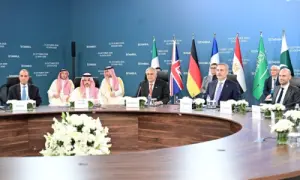
The issue figured prominently during the eighth Pakistan-EU Strategic Dialogue, where EU High Representative for Foreign Affairs and Security Policy and European Commission Vice-President Kaja Kallas underlined that continued preferential access to the European market would remain tied to implementation of international conventions covering human rights, labour standards, environmental protection and good governance.
Co-chaired by Deputy Prime Minister and Foreign Minister Mohammad Ishaq Dar and Ms Kallas, the dialogue is the highest level institutionalised platform for political engagement between Pakistan and the EU under the 2019 Strategic Engagement Plan, covering cooperation in trade, investment, governance, security, migration, climate and regional affairs.
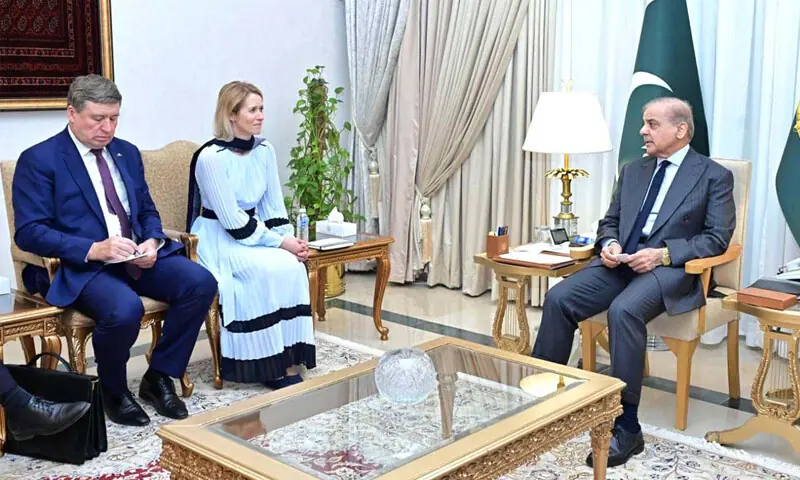
The EU top diplomat also called on Prime Minister Shehbaz Sharif. The PM expressed satisfaction at the 8th round of the EU-Pakistan Strategic Dialogue and told the European delegation that Pakistan was keen to further strengthen the multifaceted partnership. He also reaffirmed Pakistan’s commitment to enhancing cooperation with the EU in trade and investment, climate change, security, migration, sustainable development, and connectivity.
Kaja Kallas calls Islamabad key partner for Europe, highlights importance of GSP+ status to bilateral economic ties
In a joint communiqué issued after the talks, both sides reaffirmed “the importance of promotion and protection of human rights and fundamental freedoms, as enshrined in international obligations”, while agreeing to continue working together across a broad range of political, economic and security issues.
Addressing a joint media conference, the EU Foreign Policy chief described Pakistan as “an important partner for the European Union” and highlighted the importance of the Generalised Scheme of Preferences Plus (GSP+) to bilateral economic ties.
“The European Union remains, by far, Pakistan’s largest export destination,” she said, noting that Pakistan was also “the world’s leading beneficiary” of the bloc’s trade preferences.
But she stressed that continued access to the scheme was conditional.
“GSP+ has clear conditions. Continued preferential access to the EU market depends on progress in implementing the international conventions underpinning the scheme. This includes good governance, environmental protection and particularly labour and human rights. We look to Pakistan to demonstrate the tangible progress on these issues.”
Pakistan is currently the largest beneficiary of the EU’s GSP+ arrangement, which grants duty free or preferential access on roughly two-thirds of tariff lines in return for effective implementation of 27 international conventions relating to human rights, labour standards, environmental protection and governance.
The scheme has become central to Pakistan’s export sector, particularly textiles and apparel. In 2025, Pakistan exported goods worth about €8.7 billion to the EU, with nearly €7bn entering under GSP+ preferences.
While acknowledging legislative and institutional progress in several areas, the EU has continued to raise concerns over implementation gaps involving enforced disappearances, torture prevention, freedom of expression, minority rights, labour inspections, collective bargaining, child labour, judicial independence and corruption.
Many of these concerns resurfaced during the GSP+ Monitoring Mission’s visit to Pakistan in November 2025, and at the subsequent 15th EU-Pakistan Joint Commission meeting held in Brussels on Dec 17.
The EU had then welcomed progress in implementing the 27 conventions but called for both immediate and long term reforms, particularly in the areas of human rights and labour protections. It also noted concerns regarding labour inspections, minimum wage enforcement, women’s participation in the workforce, low trade union membership, freedom of expression, enforced disappearances, judicial independence and minority rights. The issue assumes added significance because the existing GSP+ arrangement is set to expire by the end of 2027, while a revised EU GSP regulation, carrying stricter requirements and an expanded set of international commitments, will govern the next cycle.
The joint communiqué said Ms Kallas briefed the Pakistani side on the new regulation and Pakistan expressed its interest in joining the future scheme. “Both sides agreed to continue working closely to fulfil the relevant conditions in this regard,” the communiqué said.
Beyond trade, the two sides identified climate resilience, digital infrastructure, clean energy, migration, labour mobility and education as areas for deeper cooperation.
They also agreed to continue implementing the Pakistan-EU Talent Partnership Roadmap and strengthen cooperation against migrant smuggling and human trafficking. Human trafficking has lately been a bigger concern for EU, but at the same time bloc has acknowledged the actions taken by Islamabad to curb the problem. The dialogue additionally reviewed cooperation on counterterrorism, multilateral diplomacy and regional security.
US-Iran talks
The EU side commended Pakistan’s role in facilitating diplomacy between Washington and Tehran during the recent Gulf crisis.
In the joint communiqué, the EU also acknowledged Pakistan’s “constructive and meaningful role” in mediation efforts between the United States and Iran, including hosting the Islamabad Talks. She described Pakistan as a “a major regional power”.
Ms Kallas said Pakistan’s diplomatic engagement had helped prevent a return to wider conflict. “Your diplomatic efforts have helped to prevent a return to full blown war on several occasions, and these efforts are much recognised and appreciated across Europe,” she said.
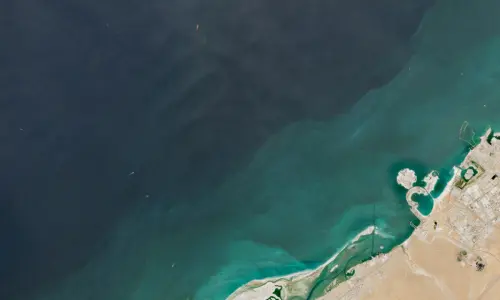
Both sides emphasised the importance of pursuing a negotiated resolution to outstanding issues involving Iran and ensuring freedom of navigation through the Strait of Hormuz.
They also exchanged views on Afghanistan, where they reiterated concerns about the presence of terrorist groups and the deteriorating human rights situation, particularly restrictions affecting women and girls.
Referring to recent tensions between Pakistan and Afghanistan, Ms Kallas said Pakistan had the right to defend itself in accordance with international law but urged restraint. “Dialogue, not air strikes, are the best off ramp in this situation,” she emphasised.
The talks also covered the situations in Ukraine, Jammu and Kashmir, Gaza and Lebanon, with both sides reaffirming support for peaceful settlement of disputes through dialogue and diplomacy, adherence to international law and the principles of the UN Charter.
With input from Syed Irfan Raza
Published in Dawn, June 2nd, 2026