Training launched to empower Chitrali women, boost climate resilience
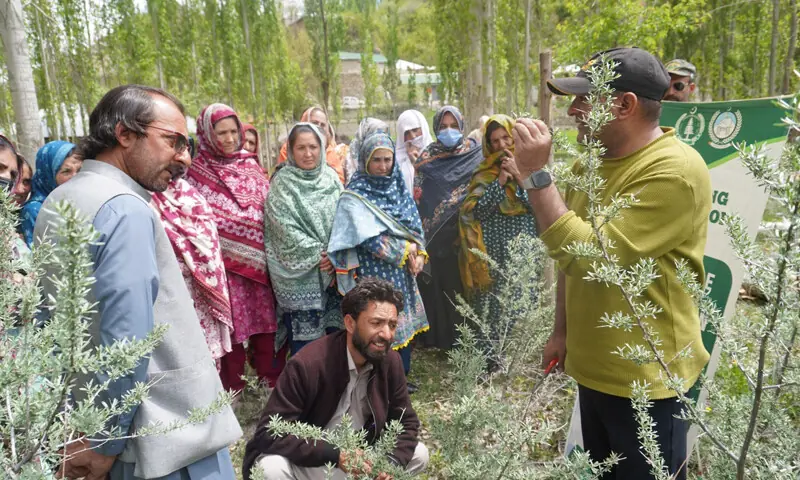
CHITRAL: The Directorate of Non-Timber Forest Products (NTFPs) of the Khyber Pakhtunkhwa Forest Department has launched a major capacity-building initiative to empower local women and enhance climate resilience through the sustainable use and conservation of NTFPs in Upper Chitral.
Under the initiative, over 1,000 women from different villages have been trained in sustainable harvesting techniques, conservation practices, and value-addition of various NTFPs found in the region, and eco-friendly harvesting toolkits have also been provided to them.
Addressing a certificate and toolkit distribution ceremony in Booni, NTFP Chitral Assistant Director Ajaz Ahmed said that the programme was designed to strengthen the capacity of local communities, particularly women, by creating alternative livelihood opportunities while reducing pressure on forests, fragile mountain ecosystems and glacier habitats.
He said that Chitral was home to more than 450 glaciers, making it one of the most climate-sensitive regions of Pakistan, while in the upper parts of Chitral, where forests are scarce, NTFPs and high-altitude medicinal plants act as major carbon sinks and play an important role in maintaining ecological balance.
Official says over 1,000 women trained in sustainable harvest techniques of non-timber forest products
Mr Ahmed said that these plants help regulate local temperatures, provide a cool environment for glacier and highland habitats, and help slow glacier melting caused by climate change.
He said high-altitude medicinal plants and other NTFPs were critical natural resources that contributed significantly to habitat conservation and glacier protection, and with this in view, the Khyber Pakhtunkhwa government had approved a special project titled “Enhancing Women Resilience to Climate Change through Conservation and Sustainable Use of NTFPs in Chitral.”
“The project aims to improve the resilience of local women to climate change through restoration, conservation and sustainable use of NTFPs while also providing livelihood opportunities to communities dependent on highland resources,” he added.
Dinar Wali, a local collector and trader of NTFPs in Chitral, said the resources were vital for the livelihoods of mountain communities. “Our earnings largely depend on NTFPs. Every season we collect these resources and sell them to support our families,” he said, adding that overharvesting and lack of awareness regarding proper collection methods had caused the decline of several valuable species.
He added that Chitral was among the districts most vulnerable to climate change, and nature-based solutions through the conservation and sustainable use of NTFPs could serve as an effective strategy for climate mitigation while also ensuring eco-friendly livelihood opportunities for local communities.
Taj Bibi, one of the women participants from Upper Chitral who received training and harvesting toolkits, said the initiative would greatly benefit local communities and would enhance her household income remarkably.
Published in Dawn, May 30th, 2026