NEW DELHI: Iran warned the United States on Monday that any attack would be met “ferociously” in response to President Donald Trump’s threat of limited strikes, while students in Tehran staged protests against the government.
Tehran and Washington’s threats came as both sides worked to reach a deal in indirect talks due to restart in Switzerland on Thursday.
On Monday, the United States ordered non-emergency personnel to leave its embassy in Beirut as soon as possible. “This is a temporary measure intended to ensure the safety of our personnel while maintaining our ability to operate and assist US citizens,” a senior State Department official said.
As Iran grappled with US pressure backed by a buildup of military force in the Middle East, university students started a new semester with anti-government protests, reviving slogans from nationwide protests that peaked last month and which were met by a deadly crackdown.
Washington directs non-essential personnel to leave Beirut embassy; India advises citizens to leave Iran
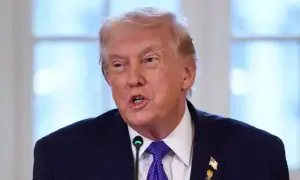
Trump said last week he was weighing a limited strike if Iran did not cut a deal, but Tehran’s foreign ministry reiterated that any strike, even limited, “would be regarded as an act of aggression. Period”.
“And any state would react to an act of aggression as part of its inherent right of self-defence ferociously so that’s what we would do,” ministry spokesman Esmaeil Baqaei said at a briefing in Tehran.
Iran has been working on a plan for an agreement on its nuclear programme, and said it would be ready to deliver a draft proposal to mediators in coming days.
Iran insists its nuclear programme is for civilian use, but the West alleges it is aimed at building an atomic bomb.
And while Iran has insisted the talks with the US focus solely on its nuclear programme, Washington also wants to discuss Tehran’s missiles and its alleged support for militant groups in the region.
Trump said on Thursday Iran had at most 15 days to make a deal, suggesting the United States would attack if it did not do so.
Diplomatic solution
The two countries concluded a second round of indirect talks in Switzerland last week under Omani mediation and were due to continue on Thursday, a schedule confirmed by Iran and Oman but not yet by the US.
In an interview with Fox News broadcast over the weekend, US negotiator Steve Witkoff said Trump was wondering why Iran has not “capitulated” in the face of Washington’s military deployment.
Baqaei responded by saying that Iranians had never capitulated at any point in their history.
The European Union, which has been sidelined in mediation on Iran, called for a diplomatic solution ahead of the talks.
“We don’t need another war in this region,” EU foreign policy chief Kaja Kallas said. “It is true that Iran is at its weakest point that they have been. We should be really using this time to find a diplomatic solution.” Iranian authorities have faced recent steep challenges, including the recent mass protests and last year’s 12-day war with Israel.
Indians advised to leave Iran
Concerns over a conflict have prompted several countries to urge their citizens to leave Iran, with India joining Sweden, Serbia, Poland and Australia in calling for its citizens to leave.
“In view of the evolving situation in Iran, Indian nationals who are currently in Iran... are advised to leave Iran by available means of transport, including commercial flights,” the Indian embassy in Tehran said in a post on social media.
India’s foreign ministry estimates there are around 10,000 citizens in Iran.
“All Indian citizens and PIOs (people of Indian origin) should exercise due caution, avoid areas of protests or demonstrations, stay in contact with the Indian embassy in Iran and monitor local media for developments,” it added.
Published in Dawn, February 24th, 2026