What went down in Muridke?
Even before the volley of gunfire shattered the peace of the night, a sense of foreboding had gripped the sleepy town of Muridke in Punjab’s Sheikhupura district as residents observed the quick buildup of security forces in its streets.
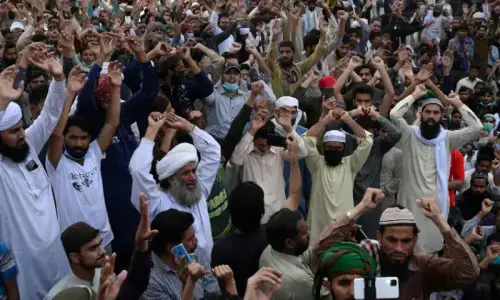
A day earlier, hundreds of supporters of the now-proscribed Tehreek-i-Labbaik Pakistan (TLP) had arrived in town, en route to Islamabad, where they planned to stage a demonstration in support of Gaza and Palestine outside the US embassy. As they reached Muridke, roughly an hour’s drive from Lahore, where they had started the march, the protesters found there was no way to move forward as the police had dug trenches along the main roads.
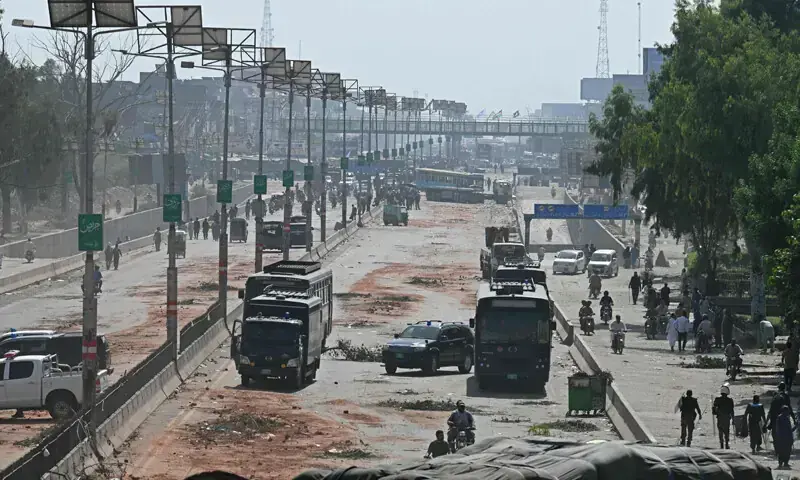
Unwilling to turn back, the protesters had set up camp for the night on GT Road — the main artery linking Lahore to Gujranwala — intending to strategise on the next move in the morning. Before dawn, however, all hell broke loose.
The buildup
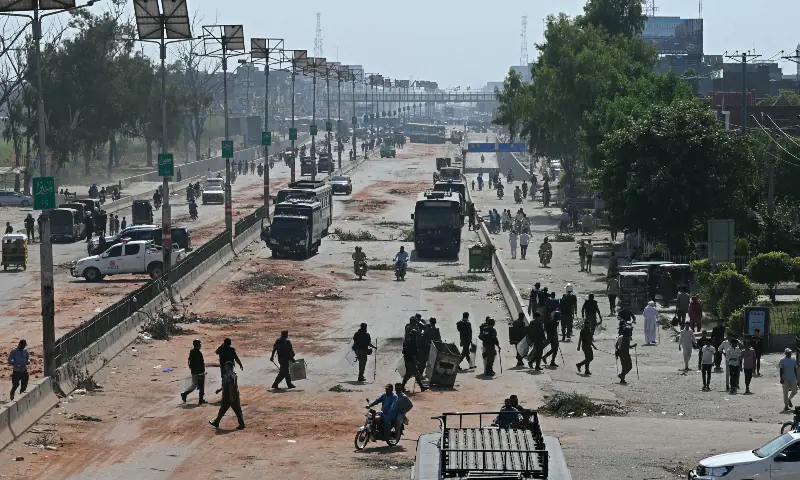
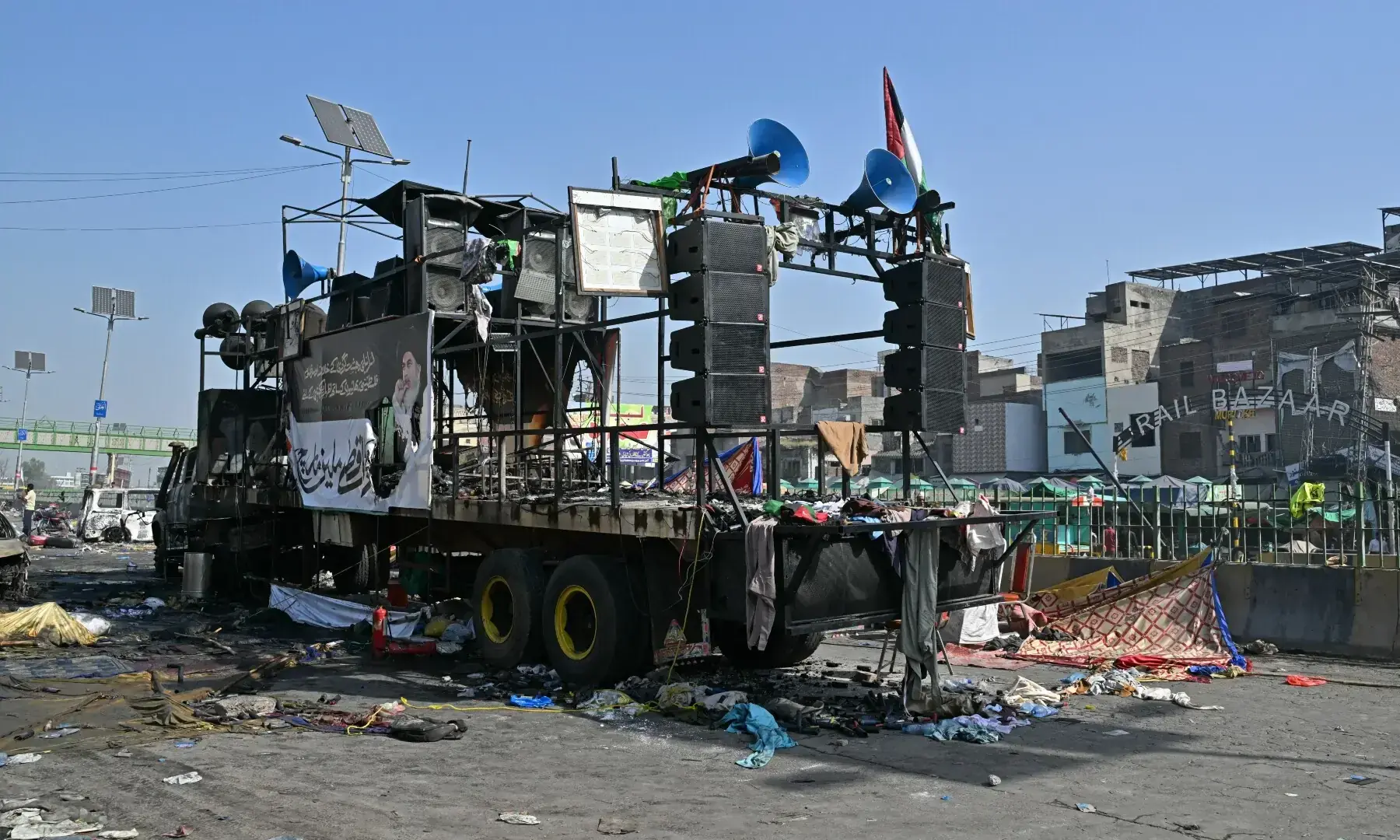
Even a week after that fateful night between Oct 12 and 13, the almost one-kilometre stretch of GT Road, where the TLP had set up camp, bore marks of the deadly scuffles between the protesters and law enforcers. For the purpose of this report, Dawn spoke to a number of residents on both sides of GT Road, traders who run shops in the area and local correspondents affiliated with newspapers and TV channels.
On Oct 12, the local correspondents, who seldom find their news reports broadcast on national TV, suddenly found their phones buzzing nonstop as reports of law enforcers making their way to the town to take on the TLP protesters started surfacing. For residents, the thousands of law enforcers, including the Punjab Police, FC and Rangers, taking up positions in adjoining streets and corners was a worrying sight.
“We saw for the first time over 3,000 personnel of the FC and the Pakistan (Punjab) Rangers in the streets of Muridke on October 13,” a local trader, who runs a grocery shop in Malkan Wala Bazaar, told Dawn.
The trader, A*, lives with his five-member family in an adjoining street of the same bazaar and witnessed the entire saga unfold firsthand.
“Muridke city is home to three major bazaars — Malkan Wala, Tanki and Service Bazaar — on both sides of GT Road, and this is where the TLP protesters and police forces clashed early on October 13,” he reminisced.
As the night wore on, A* narrated, many of his friends and relatives who lived in the area exchanged messages with each other on what was going on in their respective streets and lanes. But communication wasn’t smooth either, likely due to the jammers activated by the law enforcers before they launched the crackdown, said A*.
“Some of my relatives and friends narrated that they saw unusually heavy movement of security forces in their respective streets and mohallas,” he said.
At around 3:30am, he continued, all hell broke loose. It started with what sounded like small explosions as police fired tear gas shells, followed by the sound of heavy gunfire. The streets echoed with the clackety-clack of boots as the law enforcers advanced toward the TLP camp. “All my family members were terrified,“ recounted A*. “We switched off all the lights in the house and kept listening to the cries outside the house,” he added.
A pitched battle
This next part of the saga has been stitched together from the accounts of local correspondents, traders and residents of Muridke, as well as corroborated by senior officials of the Punjab Police.
According to senior police officials and representatives of Muridke’s traders’ union, over 10,000 personnel of law enforcement agencies, including the Punjab Police, participated in the large-scale ‘cordon-and-search operation’. Units of FC and Rangers had reached Muridke earlier in the day from Rawalpindi on a special train, as the roads had already been dug up by the authorities.
By late evening, the law enforcers had mapped out all the streets and neighbourhoods near the protest camp through surveillance drones. The forces were then split up and deployed at the identified points with the aim of launching an operation from all four sides. In previous encounters with the police, workers of the religio-political outfit have used smaller streets and bazaars as hideouts to regroup and launch counter-attacks on law enforcers.
“This time, the authorities came up with a new strategy: they blocked all the streets and bazaars by deploying hundreds of law enforcers an hour before launching the final operation,” explained a local correspondent, B*, of a TV channel. Meanwhile, elite police units were put on high alert for hostage rescue, in case the situation took a turn for the worse.
B* added that the Tehsil Headquarter Hospital (THQ) Muridke was converted into a ‘temporary headquarters’, wherefrom senior officials of the federal and Punjab governments, including Interior Minister Mohsin Naqvi, Punjab Police chief Dr Usman Anwar and the head of a federal security agency, supervised the operation.
A few minutes before the operation officially commenced at 3:30am, the law enforcers gave a final warning to the protesters to surrender themselves. The TLP leadership, however, ignored the warning and responded with threats of “a befitting response”.
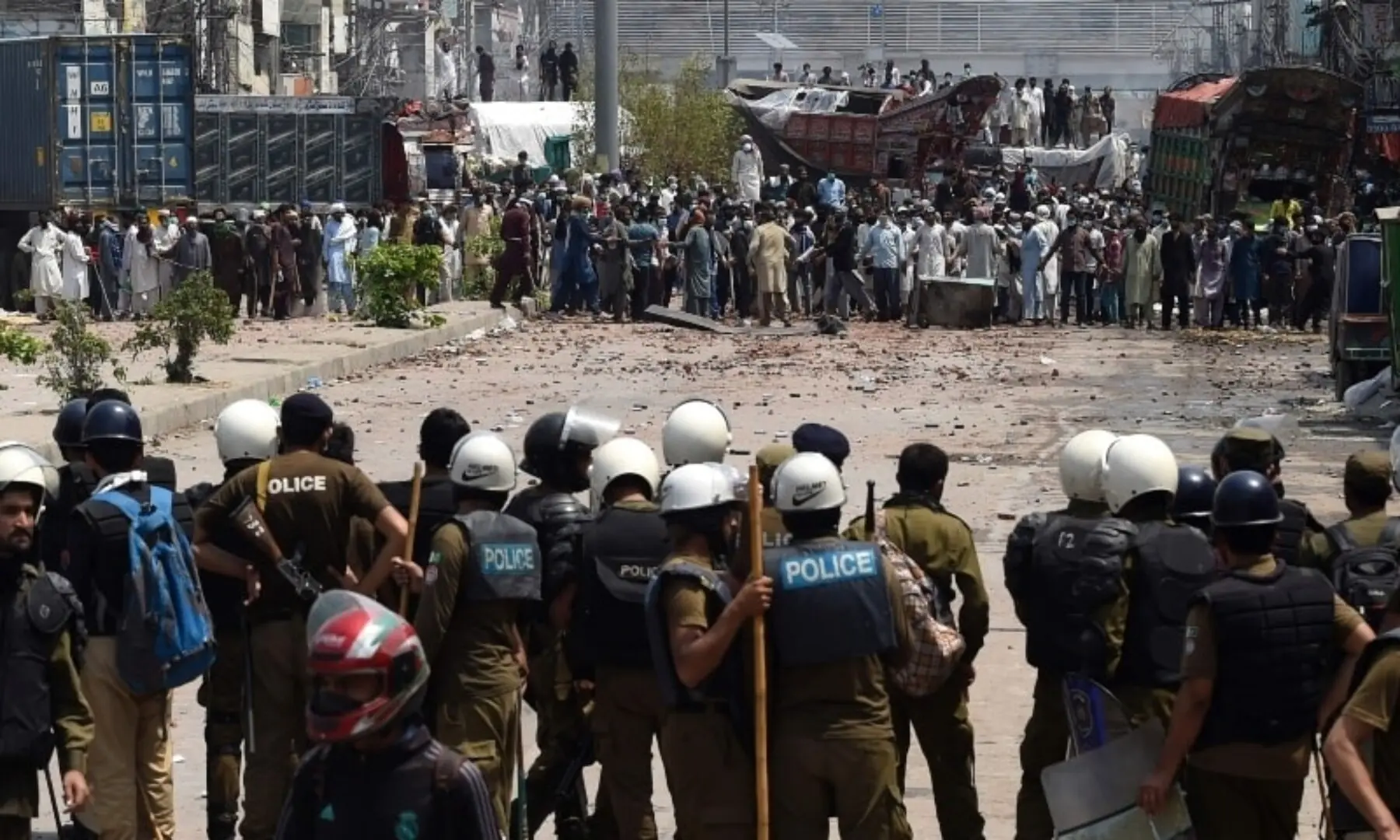
On finding the TLP chief and his supporters unmoved, the law enforcers started moving towards the protest camp, led by six armoured personnel carriers (APCs), and followed by hundreds of anti-riot personnel. The teams were supervised by the Regional Police Officers (RPOs) of Sheikhupura, Multan, Faisalabad and Gujranwala, who led their respective units on both sides of GT Road.
Seeing the police personnel advancing towards the camp, the protesters who had taken up positions on an overhead pedestrian bridge pelted them with stones. In response, the police fired teargas at the crowd in a bid to disperse them, which led to scuffles between the two sides.
According to a senior police officer, who was leading one of the units in the operation, the majority of protesters at the time had gone to nearby mosques and the homes of local supporters to rest, leaving around 1,500-2,000 of them at the protest camp on GT Road. As the law enforcers moved closer towards the camp, the TLP leaders asked their workers to make announcements in the local mosques about the imminent police operation and to urge them to return to the camp immediately.
Soon after, a mob attacked the police. Amid the scuffle, a heavy trailer, which had been part of the TLP convoy, drove into an APC. At this point, senior officials were informed that several protesters had dragged a police inspector and beaten him black and blue; he later succumbed to his injuries.
According to police officials who spoke to Dawn, they were shocked to see that several TLP protesters started firing at the police convoy. A senior police officer said the firing from the protest camp continued for several minutes, leaving the law enforcers stunned as they had not expected the TLP workers to be armed.
At this point, the police command decided to act swiftly — to first rescue the personnel stuck in the APC and then launch a round-up operation against the TLP workers from all sides. On receiving the instructions, the police personnel deployed in the streets and bazaars moved forward, while other formations also marched towards the protest camp.
According to residents who spoke to Dawn, the police personnel retaliated against the TLP protesters and returned fire, which continued sporadically for over three hours. The residents said that the gunshots echoed through the streets as the bullets ricocheted off buildings and structures, shattering windows and doors in some instances. Meanwhile, the air grew thick with white smoke from the tear gas and hung over the town like fog for the next several hours. Several residents recounted a thick smoke and a pungent smell, which made their eyes burn, constricted their throats and made it difficult to breathe even inside their homes.
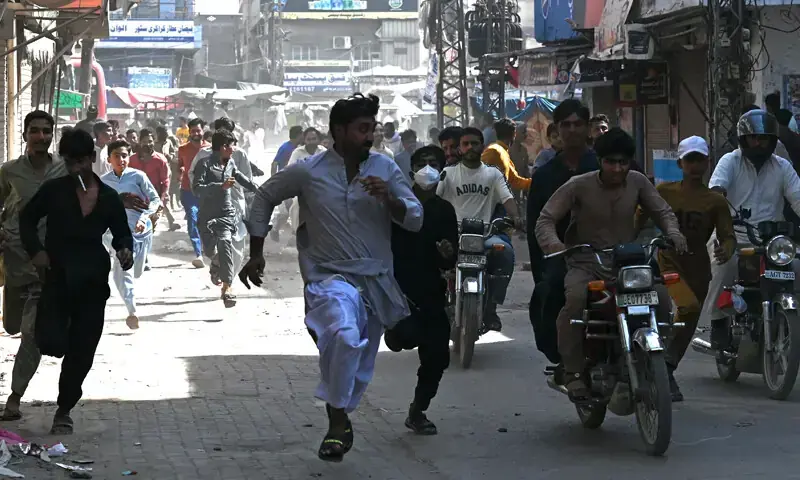
When the operation finally ended at around 7:30am, the police made several announcements on loudspeakers, instructing residents to stay in their homes. When they were finally allowed to leave several hours later, they found thousands of cartridges and bullet casings strewn on the roads and streets, besides bloodstains at the protest camp.
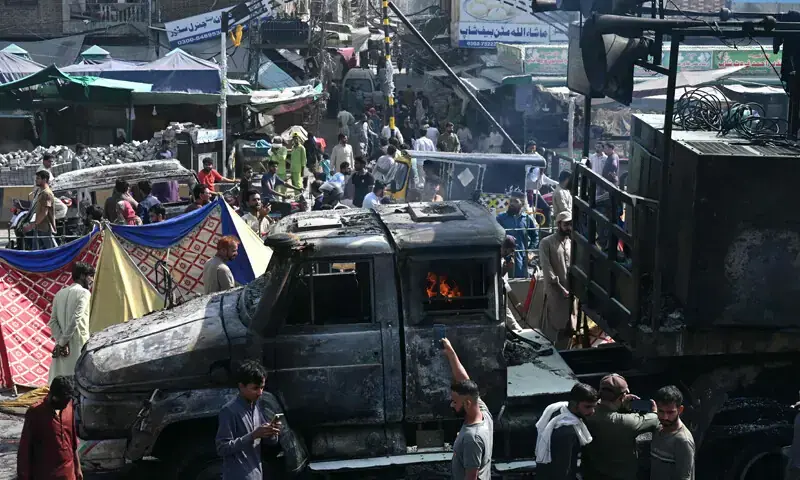
A Muridke-based trader, who asked not to be named, told Dawn that when he reached the venue in the morning, the air hung heavy with the acrid smell of smoke and gunpowder. The road was littered with wreckage, including several vehicles that had been burned beyond recognition.
Surprisingly, he said, he found no trace of any TLP worker, nor anyone who may have been injured or died in the four-hour-long skirmish with the police. “No one knows who took them [injured persons or bodies] away,” said the trader, adding that on the previous night, around 5,000 to 7,000 protesters had been present at the camp on GT Road. Not a single one remained when the operation ended.
Claims, counter-claims
As the country awoke the next day to find the protest camp disbanded, news reports started trickling in on what had gone down in Muridke in the dead of the night. While there was no official word on the death count, TLP-affiliated social media accounts claimed hundreds of their workers had been killed.
Punjab Police chief Dr Usman Anwar later rubbished the reports, saying two TLP workers had died during scuffles in Lahore, while seven had been killed in Muridke. “The police force opened fire in self-defence and that too in response to the armed attack carried out by some of the protesters,” the Punjab Police said.
“The Punjab police have so far registered 75 cases under sections of terrorism, murder and attempt to murder, while 30 FIRs were registered for other offences against the TLP chief, its senior leaders and workers,” said the IGP. They have, however, yet to arrest the TLP chief, Saad Rizvi and his brother, Anas, who are believed to have fled to Azad Jammu and Kashmir (AJK).
Meanwhile, Punjab Information Minister, addressing a press conference on Oct 21, said that three civilian passersby lost their lives in Muridke, adding that 48 civilians and 110 police officers were also injured. Eighteen of the 110 have sustained firearm injuries, she said.
The federal government has since banned the TLP under the Anti-Terrorism Act (ATA) on the recommendation of the Punjab government.
Back in Muridke, the town slowly crawls back to normalcy, its residents still in disbelief over what transpired here on that fateful night. While much of the wreckage has been cleared, the protest site still bears signs of what transpired here. And yet, questions linger: where did the TLP protesters vanish? How is it possible for the death toll to be so low after four hours of gunfire? Were the injured protesters provided medical aid?
*Names withheld to protect identity.
Asif Chaudhry is a crime and health reporter for Dawn with over two decades of experience. His reporting focuses on uncovering corruption and highlighting systemic failures within the public sector. He can be found on X at @asif_28.