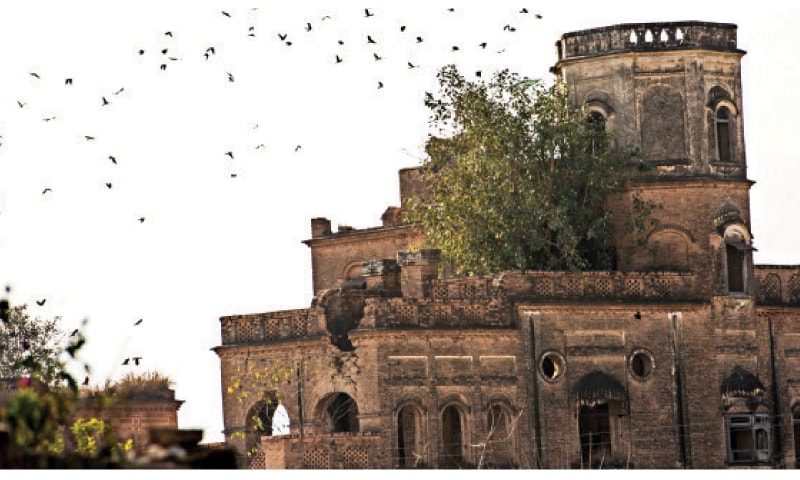
A 130-year-old haveli is wasting away in Gujar Khan, but neither the locals nor the provincial authorities seem interested in preserving the 19th century building before it crumbles.
The building is three storeys high, with a distinctive observation tower looming over it. Local residents have disposed of trash at the building’s entrance, largely unaware that the structure is a remnant of the wealthy Sikh community that once controlled business in the region.
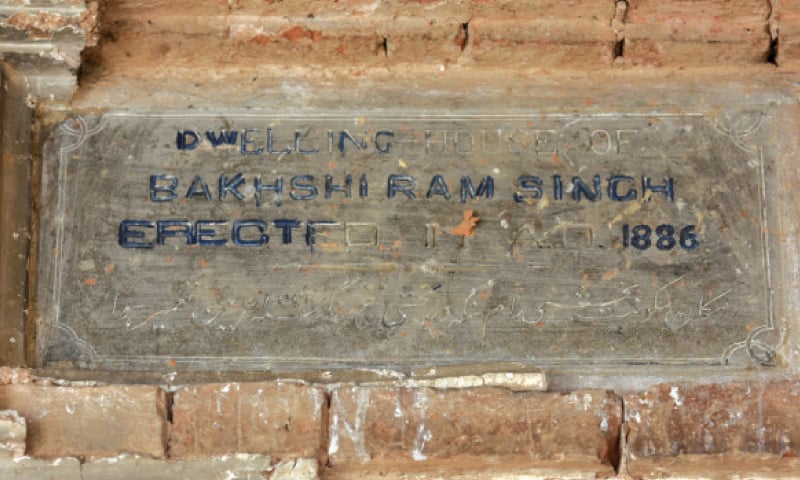
The large bricks used in the haveli suggest some influence of British architecture, and the building was completed in 1886.
It was home to its owner Bakhshi Ram Singh, a rich businessman, until 1947 and has been empty since. Today the haveli is the property of the local revenue department.
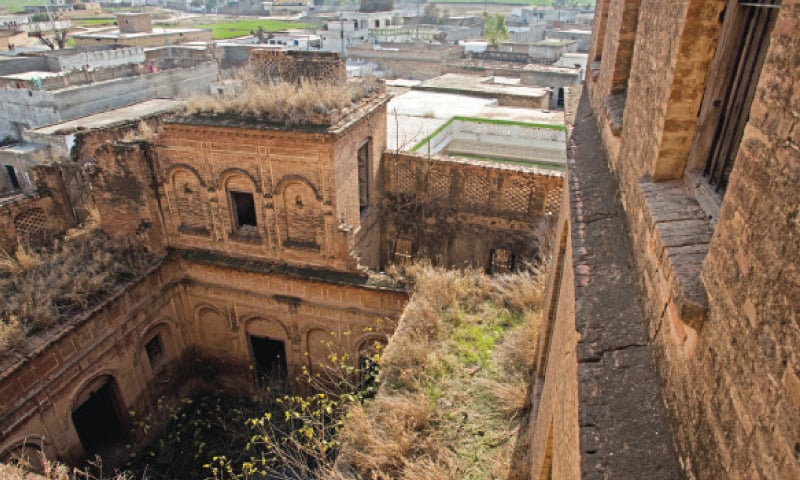
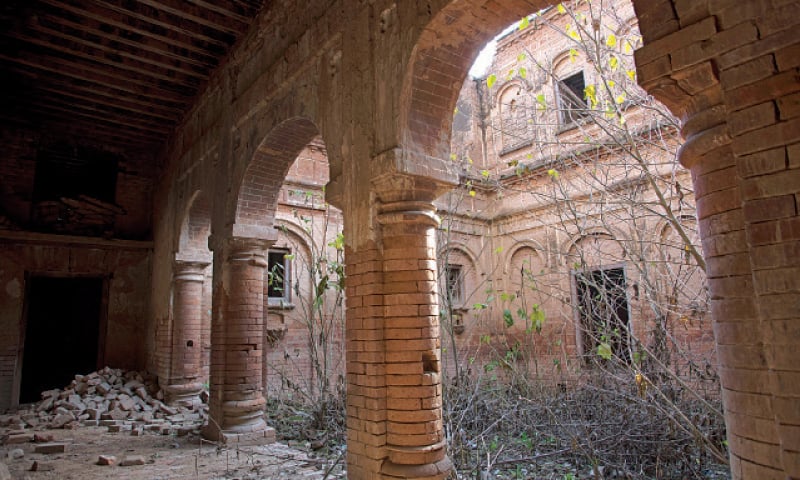
The building has started to crumble inwards. Some of the walls have developed cracks, and lean dangerously into the streets and neighbouring houses.
Rainfall has caused the roof to collapse over several rooms over the last year. The walls and the deodar beams have also been weakened by weeds, but where they have been spared the walls and wooden beams look solid.
According to local folklore, the spirit of a religious figure, Abdullah Shah Bukhari, reaches out from his grave across the street to hold the crumbling haveli together. But even he could not prevent bricks from the building from falling onto the roof of a neighbouring house during an earthquake in October 2015.
Mushtaq Hussain Bhatti is a local resident who gave a guided tour of the haveli. Afraid that the floor could collapse underfoot, the 71-year-old guide was unwilling to step into some of the building’s rooms that were decorated with fireplaces and floral patterns in the woodwork.
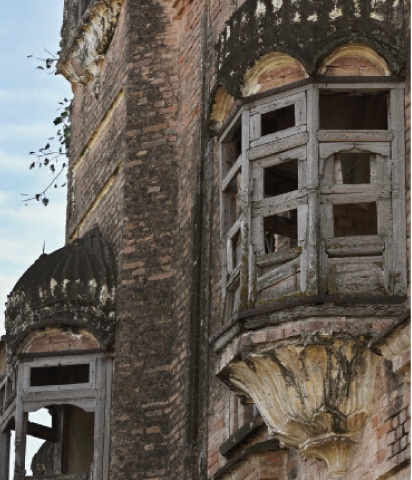
As with other havelis in the Potohar region, jharokas and balconies are dotted around the building, and in the centre there is a large courtyard.
Above the store and basement of the haveli is a hidden chamber, likely connected to a nearby school by a tunnel.
According to Zulfiqar Kalhoro, an anthropologist and head of department at the Pakistan Institute of Development Economics (PIDE), the land’s rich heritage could easily boost tourism.
“Where there is money to build monuments that have little or no relevance to the culture of the land, a lot more importance should be given to the heritage that tells tales of the region’s ancestors,” he said, adding that the haveli is not yet beyond saving.
Published in Dawn, February 12th, 2017