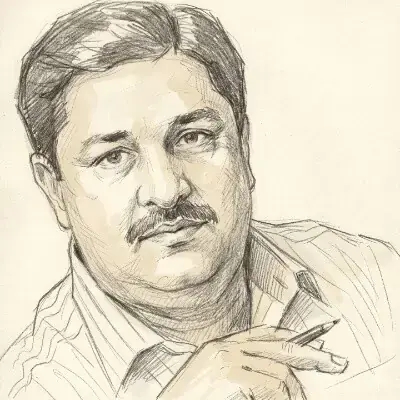
LAHORE, Dec 17: Punjab Governor Khalid Maqbool has said the government must find ways to develop contributory pension system for doctors and teachers being appointed on a contract.
Talking to Dawn here on Wednesday, he said the contributory pension system would help strengthen teachers and doctors’ bond with their professions as well as departments. He admitted that the employees on a contract faced constant threat of losing their jobs, saying “a future political government can fire them to accommodate its favourites.”
He said the protection given to such employees would encourage and motivate them. Now, the government had offered five-year contracts with higher pay package extendable for longer contract periods on satisfactory performance. He said policemen and patwaris were still being recruited regular and permanent employees.
The governor said there were around 600,000 teachers serving the education department, but most of them were not fully trained or equipped to impart quality education. He added that the teachers, especially for the elementary classes, needed to be given proper training to make a strong base of students.
He, however, said teachers could not be trained by force, but through motivation. “The government should motivate teachers and announce incentives, including pay raise, for those attending refresher training courses and passing certain tests,” he said.
He also said the government’s policy of recruiting graduate teachers would hopefully create a stable base of qualified teachers imparting quality elementary education in the province within a few years.
UHS RESULTS: Answering a question about the recent results declared by the University of Health Sciences and students’ reaction to these, he said the aggrieved students could check their results of MBBS (first professional) composite examination to ascertain whether any wrong was committed during the marking.
He said only the students of the Fatima Memorial Medical College, Lahore, and Quaid-i-Azam Medical College, Bahawalpur, had shown 11 per cent and 16 per cent results, respectively. Last year, the QMC result was 57 per cent.
“We do have a concern for the students of the QMC that why did they cut a sorry figure in the examination,” he said, adding that this was not the fault of the UHS. Denying that the AIMC’s result was mere 30 per cent, he said the college’s pass percentage communicated to him by the university showed 51 per cent results. He also said the Rawalpindi Medical College students showed 59 per cent results.
The UHS had so far conducted examinations of 7,900 students in all MBBS and BDS professional examinations and compiled and declared results with transparency and authenticity, claimed the governor.
He said, “it has been assessed that the results of only those colleges remained poor, which did not have basic science teachers.” Now, he said, the UHS was also working to produce 18 PhDs in basic science subjects by the next year.
Mr Maqbool said the medical education at the UHS was in the hands of professionals, but the Punjab University had no such expertise, as the top official dealing with education was only a clerk. There was a practice of tampering with the medical colleges’ results at the PU, he regretted.
The UHS, he said, had the same medical professors, who set papers and marked answer-sheets, but they had been provided a conducive working environment. The new university was now declaring all results within 15 days.
The university was created and five public sector medical colleges were affiliated with a conviction to upgrade the standards of medical education. “Although there were strong protests by the students as well as faculty, the decision was thoroughly discussed and okayed by the court,” he said. “The decisions taken with good intent must be carried on and one should not hesitate or express any fear about these,” he said.
He said the UHS had now secured recognition from the WHO, GMC and PMDC. The university had also got certain exemptions and it was still seeking more for its students.
MEDICAL CURRICULA: The governor said the latest curricula for MBBS had been devised and it would soon be implemented. Similarly, the BSc nursing courses developed by army medical experts would also be launched from next year.
SFS SEATS: Answering a question about offering 20 newly created seats in all public sector colleges on a self-finance, he agreed that these seats could have been given on merit.
Claiming that the government offered these seats on a self-finance basis to generate resources for the uplift of respective institutions, he added that the government must create seats to admit talented students on open merit. He said the students, having higher marks than those being admitted to public sector medical colleges on a self-finance basis, must be given admission to the medical colleges. “They must not be missed out,” he asserted.
INSTITUTIONAL PRACTICE: About the Punjab health department’s failure to upgrade infrastructure to start Institutional Private Practice in autonomous medical teaching institutions from July 1, 2004, he said the department must complete its homework to ensure launching of institutional private practice.
He said it would also benefit the lower staff and students to develop themselves professionally.
RESEARCH: The government, he said, was injecting a lot of resources to conduct research in various fields. He said the Higher Education Commission had recently heavily funded the universities. Similarly, he said the Pakistan Telecommunication Company Limited had offered huge resources to conduct research. “The PTCL is giving funds to conduct research in all fields,” he said.
INITIATIVES: The Punjab education department had revised and developed latest curricula up to class-X, which had been implemented across the country, the governor said.
He said it also took bold decisions of allowing free education up to Class-X and provide free textbooks to students up to Class-V, besides offering Rs200 stipend for girl students to ensure their participation in schools. “The Punjab government is acting as a role model for other provinces,” he said.
In order to promote higher education, he said, five colleges had been granted university status and two colleges degree awarding status. The government created two new universities — University of Education and University of Health Sciences — and was working to establish another university, two engineering colleges, an arts college and a medical college in the province.
He said the government had already opened three medical colleges offering admissions on a self-finance basis. The Children’s Hospital also had a great potential to cater to the needs of a full-fledged college, he added.
HEALTH: He also said the government was doing a great job in strengthening health care facilities from primary to tertiary care hospitals.
All the teaching hospitals were also offering medicines free of cost in cases of emergency, he concluded.