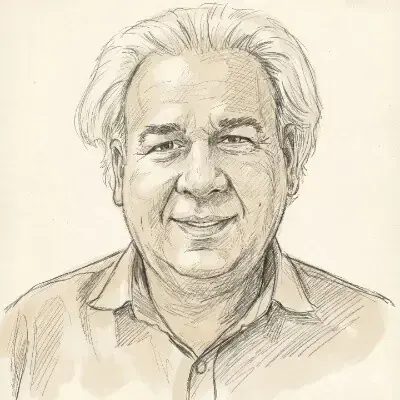
KARACHI: It would be an understatement to suggest that the session dedicated to the popular humorist and satirist Anwar Masood on the third day of the 8th International Urdu Conference brought the house down on Thursday evening. It was a one-of-its-kind experience that added a nice little dimension to the otherwise serious and scholarly moot at the Arts Council.
The segment was hosted by poet Amjad Islam Amjad.
Introducing the humorist, Amjad said classical poets Nazeer and Akbar Allahabadi converged in Masood’s poetry. His humour was the humour of an amiable human being, which was why, unlike many satirists, his satire too was not merciless about the people or situations he chose to write on.
Before unleashing a series of quatrains, Masood described the moment of being in the conference as ‘unfaramoshable’ and ‘unbayanable’ (funny coinage of Urdu words that had English prefixes and suffixes, meaning unforgettable and unexplainable). He then read his famous qita’at and ghazals. The following is one of the couplets:
Jamhooriat ik tarz-i-hukoomat hai ke jis mein
Ghodon ki tarha bikte hain insaan waghaira
(Democracy is a form of government in which People are traded like horses)
Earlier, the day commenced with a session on Urdu poetry, its tradition and possibilities. Ahsan Saleem set the tone for the topic by highlighting the importance of the prose poem. He said the subjects discussed through the genre, reflecting the dominant trends of the time, defined its efficacy. He claimed that the movement in favour of the genre was initiated by the late Qamar Jamil.
Indian poet Obaid Siddiqui’s topic was Urdu ghazal and the contemporary world. He said one should distinguish between modern and new ghazal as classical ghazal primarily entailed the subject of love (ishq) with all its manifestations and poets treated the ghazal as a genre, whereas the contemporary writers were treating it as a form (hai’et). He was of the opinion that the new breed of versifiers, since they were concerned with the form, touched upon a wide variety of subjects than their predecessors.
Another Indian scholar Anees Ashfaq said the question was whether ghazal was a declining art form or reaching its zenith. He categorically stated that it was in Pakistan that the great ghazal (bari ghazal) was created. To back up his argument, he mentioned the names of Nasir Kazmi, Munir Niazi, Ahmed Mushtaq and Zafar Iqbal. He showered profuse praise on Iftikhar Arif (who was among those who presided over the session) for influencing many in India with his diction, subject matter and style.
Dr Ziaul Hasan read a truncated paper on regional languages’ influence on contemporary Urdu poetry. He said regional languages had helped Urdu progress a great deal, and Urdu had the spirit of communion (ishtiraki rooh). He said poets like Zafar Iqbal had employed words from other languages (such as Balochi) in their poetry, which meant that there was no need to ask poets to write in chaste Urdu.
Nasir Abbas Nayyar spoke on neocolonialism and Urdu nazm. He said effects of neocolonialism began to be felt after the Second World War, when big multinational corporations came into alliance with imperialist forces. He argued that colonial powers always got together with local obscurantist and traditionalist forces to perpetuate their authority. It is in the light of this argument that he quoted lines from quite a few poems. He also clarified the difference between contemporary and modern nazm, saying that the latter had depth.
Dr Fatema Hasan’s paper was on the topic of new literary trends and women poets. She said women poets were influenced by the different literary movements. She took many names in that regard, beginning with Ada Jaffery, and moving on to Fahmida Riaz, Kishwar Naheed, Parveen Shakir to Azra Abbas and Ishrat Afreen.
Shahida Hasan’s paper focused on the 21st century ghazal. Although she was critical of the younger generation of poets for not being well-read and hence lacked the prerequisites for ghazal writing, she lauded many writers (including Iftikhar Arif, Jaun Elia, Nasir Kazmi, Sahar Ansari, Zafar Iqbal, Mushtaq Ahmed, Rasa Chughtai) who in her view had made a healthy impression on the literary scene.
Jazib Qureshi’s topic was modern poetic styles.
When Kishwar Naheed and Iftikhar Arif were asked to sum up the discussion, both recited their verses instead.
Saadat Sayeed said unless new vocabulary wasn’t added to ghazal, it would not progress.
Prof Shamim Hanafi said a lot of criticism had been levelled against ghazal (by the likes of Hali, Josh and Akhtarul Iman) but somehow it had managed to hold its own. He commented that every era had its own reservoir of words and phrases which connected it with its realities. If the present poets were unable to do that, then ghazal had exhausted its possibilities, he remarked.
The first post-lunch session was on fiction writers Ismat Chughtai and Rajindra Singh Bedi. It was presided over by Prof Shamim Hanafi and Intizar Husain. Asif Farrukhi, Zahida Hina and Dr Abul Kalam Qasmi presented their theses on the writers. Prof Shamim Hanafi said spontaneity was the marked feature of Ismat’s personality and writings. Her era was the golden period of Urdu short story, as it had literary giants such as Krishan Chander, Manto, Ghulam Abbas and Hayatullah Ansari writing stories. On Bedi, he said, his talent was recognised at a later stage. His stories had an ‘eternal’ (hamaishgi) quality about them, he added.
Intizar Husain, agreeing with a western scholar, said it was the women in any society which kept culture intact, and language was one of the ways of cultural expression. He was all praise for Ismat Chughtai’s use of the Urdu language citing that what had been started by Mir Amman was later completed in Ismat’s stories.
The session on new regions where Urdu was being used as a form of expression had speakers who had come from different parts of the world. The Bangladeshi scholar, Mahmoodul Islam, read out a paper in which he talked about the institutions in Bangladesh where Urdu was taught, and about poets and prose writers who were writing in Urdu. He also commented that after 1971, things in that context became difficult in his country.
Poet Iftikhar Arif, one of the two men who presided over the session, said Urdu poets could not be labelled as the best Urdu poet of a particular region, as they essentially they’re Urdu poets and should be judged only on their creative ability.
Broadcaster Raza Ali Abidi said the situation with Urdu in the UK, Canada and America was not an encouraging one, but he would keep working to improve it.
Apart from the sessions, book launches and a theatre play — Manto Mera Dost — were also on the programme list.
Published in Dawn, December 11th, 2015