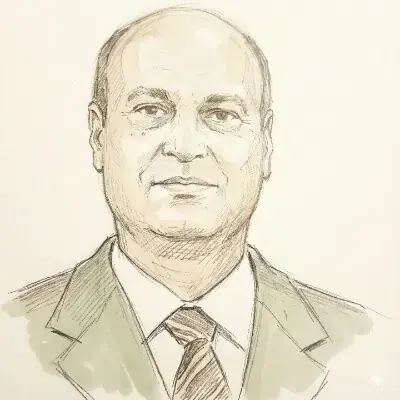
ISLAMABAD: Like other doctors, Dr Farooq Shah is excited about the news that the qualifying exam to become MRCP – Member of the Royal College of Physicians – might be held in Pakistan, but is not much convinced.
“We have been hearing that for quite some time. I will believe it only when a date for the Paces exam is announced,” he told Dawn.
Physicians and fresh graduates who aspire for the coveted membership have to sit the Paces, or the Practical Assessment of Clinical Examination Skills, after clearing two written exams, which are conducted by the Royal College of Physicians in Britain or some designated countries.
“It really would be a great help to aspirants who cannot afford spending around Rs500,000 sitting the Paces in a foreign environment, or risk misdiagnosing a patient from a different culture or speaking English in an unfamiliar accent,” said Dr Shah, 42, who did his MBBS in 1999, and a diploma in chest diseases in 2004.
Prof Akbar Chaudhry, former principal of Fatima Jinnah Medical College and Adviser to the Royal College of Physicians, while talking to Dawn noted that problems have been increasing for the MRCP candidates with the passage of time, such as to get visa to UK.
People of Pakistan have centuries-old relations with the Royal College of Physicians, which was established in 1518. “We have been trying to bring the Paces to Pakistan by involving the British Council,” he said.
Some issues, among them security of the examiners of the college coming to Pakistan for the purpose, remain to be thrashed out. “Fifty percent of the examiners will come from Royal College of Physicians, London,” he said.
Meanwhile, Dr Javed Akram, the recently nominated advisor of the Royal College of Physicians, has said that President Mamnoon Hussain would chair a meeting to be held on November 23 in the Presidency to deliberate on the matter.
It will be attended by the Country Head of British Council Peter Upton, the British High Commissioner and the Minister for Capital Administration and Development Division, besides other officials.
That sounded encouraging to Dr Shah who thought of borrowing money to sit the Paces exam in Britain. “But each time I postponed the decision after weighing the risks,” he said.
“Only two of every 100 Pakistani doctors clear that exam. It is not that our doctors are incompetent. After all, they reach that stage of Pace after passing the exam,” he said. Though Pakistani doctors have knowledge of English but accent and cultural barriers come in the way of understanding a foreign patient narrating his or her ills in the exam, according to him.
“If the Paces exam is held in Pakistan, our MRCP candidates will not be hindered by such problems,” he said.
Dr Shah said while patients in the UK have mostly cardiovascular and cholesterol problems, in Pakistan they suffer from infectious diseases. “So even the general pattern of diseases is different in the two countries,” he said.
Published in Dawn, November 16th, 2015