BEIJING: China is discouraging some Muslims in the far western region of Xinjiang from fasting during Ramadan. The government says the move is motivated by health concerns, but others said Friday that it’s a risky campaign to secularize the Muslim minority.
Several city, county and village governments in Xinjiang have posted notices on their websites banning or discouraging Communist Party members, civil servants, students and teachers from fasting during the religious holiday.
Regional spokeswoman Hou Hanmin was quoted in the state-run Global Times newspaper Friday as saying authorities encourage people to “eat properly for study and work” but don’t force anyone to eat during Ramadan.
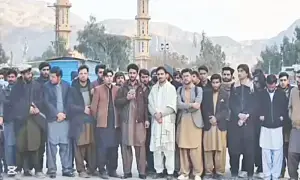
Xinjiang is home to the traditionally Muslim Uighur ethnic group. Long-simmering resentment among Uighurs over rule by China’s Han majority and an influx of migrants has sporadically erupted into violence.
Separatist sentiment is rife, with some Uighurs advocating armed rebellion.
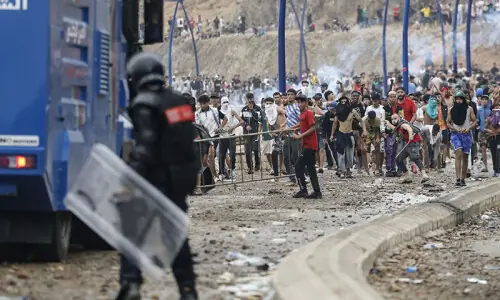
In July 2009, rioting between Uighurs and Han Chinese killed nearly 200 people in Xinjiang’s capital, Urumqi. Uighur activists say the riots were the result of decades of pent-up frustration with Chinese rule.
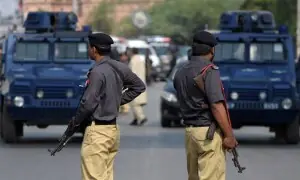
China has responded by boosting police presence and restricting the practice of Islam – moves that have further alienated many Uighurs and ratcheted up tensions. Over the last few months, authorities in Xinjiang have stepped up a campaign against illegal religious schools, which they believe are fomenting extremism and separatist thought.
Hou, the regional spokeswoman, said battling religious extremism and terror in the region remains a priority.
“Religious extremism is closely related to violence and terrorism, and cracking down on these is one of our top priorities,” Hou was quoted as saying.
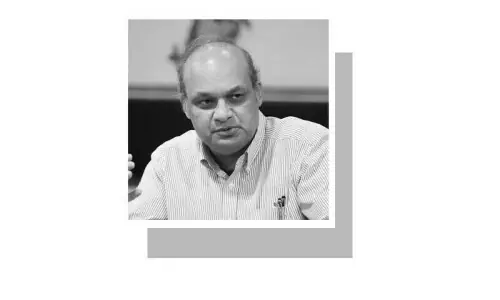
Ilham Tohti, a Beijing-based Uighur economist, said restricting participation in Ramadan is not new in Xinjiang but authorities are enforcing the limits more strictly this year, with some areas requiring people to sign pledges that they won’t take part in religious activities.
Tohti said the campaign appeared aimed solely at Uighurs in Xinjiang, noting that Kazakh and Hui Muslims in Xinjiang and Uighurs outside the region face no such restrictions.
At the Central University for Nationalities in Beijing, where Tohti teaches, there have been no warnings against taking part in Ramadan and up to 70 Muslim students, including about 10 Uighurs, gather nightly at a local restaurant next to campus to break their fast, he said.
He said officials may be particularly nervous about potential unrest in the lead up to a once-a-decade leadership transition that will kick off in Beijing in the fall. “As a result they are tightening control measures in many areas, not just religion, but this could give rise to new problems and they may end up with an outcome that is the opposite of what they were seeking,” he said.
Dru Gladney, a professor of anthropology at Pomona College in California and an expert on China’s Muslim minorities, said the campaign against Ramadan seems “a much more public and concerted effort” than in previous years and that in some cases Communist Party leaders were delivering food to village elders to try to get them to break their fast.
“I think it is a misguided effort to try to secularize the Uighurs and my feeling is it will backfire,” said Gladney. “It makes the Uighurs even more angry at the party for not honoring their religious customs.”