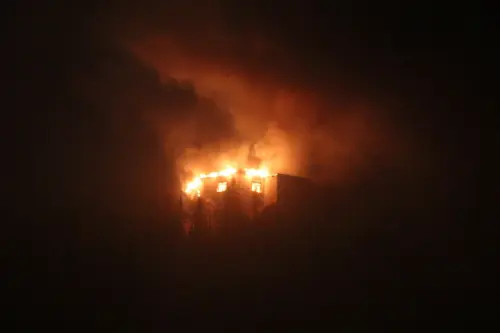
THERE was mounting evidence on Tuesday night that the scale of the oil spill disaster in the Gulf of Mexico has grown beyond all the initial worst-case scenarios, as thousands of gallons of oil continued to gush from the sea floor.
In Key West, coastguard officials said about three tar balls an hour were washing up on the beaches at a state park at the southernmost point of the Florida Keys.
Such evidence suggests the damage wreaked by the spill — which began with an explosion on BP's Deepwater Horizon rig on April 20 — could now grow larger, with crude oil caught up in the powerful loop current that travels a much wider course through the gulf and up the Atlantic coast. In response to the tar sightings, Washington doubled the no-fishing zone to 19 per cent of the waters in the gulf.
The Obama administration admitted on Tuesday it had underestimated the risks of offshore drilling. In a highly charged hearing in the Senate, Ken Salazar, the interior secretary, conceded failures in oversight by the agency responsible for policing offshore drilling. “We need to clean up that house,” he told the energy and natural resources committee.
The administration was for the first time held to account by Congress for the rigour of the Minerals Management Service (MMS), its regulatory body for offshore drilling. The agency was notorious in the George Bush era for sex-and-cocaine fuelled parties in Colorado.
Earlier, the oil spill disaster claimed its first resignation as a veteran official from the MMS brought forward his retirement.
Salazar, under heated questioning from some senators, was forced to concede that the agency had not been entirely cleansed in the 15 months under his charge. “We need to have the right regulatory regime in place and we will work hard to make sure that happens,” he said.
He admitted that the disaster had been a “wake-up call” and had persuaded him that policing of safety and environmental regulations on offshore oil rigs may have been inadequate. “My initial read on that is there should be additional safety requirements,” he told the committee.
Salazar also conceded there were “a few bad apples” among the inspectors of the MMS, and promised that if they overruled environmental advice from other government agencies — as alleged by some senators — they would be punished. “If there is someone in the department who ignored the science, then heads will roll,” he said.
But Salazar was adamant that the administration had been right to seek an expansion of offshore drilling last March, and made it clear there would be no revisiting that decision.
“The reality of it is we will be depending on oil and gas in the transition to a new energy future,” he said. He also refused multiple requests to provide a firm estimate for the size of the spill.
— The Guardian, London