Sehwan is different. Unlike the more officially-accepted shrines of Pakistan, such as the Data Ganj Bakhsh in Lahore, Bari Imam in Islamabad, and the lustrous tombs of the Suhrawardi sufis in Multan, Sehwan is rebellious and raging.
Sehwan is Laal — the red of resistance. Sehwan is Shahbaz — a soaring falcon with secrets in its heart and no fixed abode. Sehwan is Qalandar — the disorderly, the wanderer, the antithesis of the established law, form, and idols.
Sehwan is everything that a lot of contemporary Pakistan is not. It is inclusive and it does not impose religion. Sehwan is one of those cultural, geographical, and social spaces that stand on the peripheries of time and history, and defy everything that is official, resist the order of the day.
When Hindus perform the mehndi at the beginning of Lal Shahbaz's urs, one cannot tell if the Partition ever happened. When transgenders take part in dhamal and become part of the crowd without any mockery, one cannot tell that this is the same society where so much stigma is associated with deviant sexuality and gender.
When Shias and Sunnis pray in the same vicinity and a red alam flutters on the top of the shrine that belongs to a man named Usman, one cannot tell that we are in a country plagued by sectarian tensions. When Suhrawardis, Ismailis, and Shivaites claim the Qalandar to be one of their own, one cannot tell that we are living in an extremely polarised society.
Terrorists seem to have a problem with this. They claim to be at war with Pakistan. However, one must pause and ask as to which Pakistan are they at war with. They seem to differentiate between a Pakistan of puritanical seminaries, and a Pakistan of shrines, churches, imambargahs, and Ahmadi places of worship.
When we look at all the terrorist attacks in the last decade or so, a picture emerges which shows that everything that does not fit into a narrow definition of religion is condemnable to death and destruction. It is an ideology called takfir and takes on the form of militant extremism.
However, there exists a softer narrative that may not seem dangerous on the surface but fuels militant extremism by being apologetic about it. This worldview considers Islam of the masses as something alien to the spirit of the religion. Shirk, jahalat, bida’t, ghair-Islami are the buzzwords here. This holier-than-thou narrative is mostly prevalent mostly among the urban middle-classes who are contemptuous of indigenous and syncretic strains of religion.
This narrative may not be the official state narrative but when the state lets certain non-state actors off the hook again and again, questions need to be asked.
Qalandar rose up in defiance when some forms of sufism were adopted by kings' courts and saints were awarded state titles. Damadam mast Qalandar is a raging cry of rebellion against tyranny of established orders.
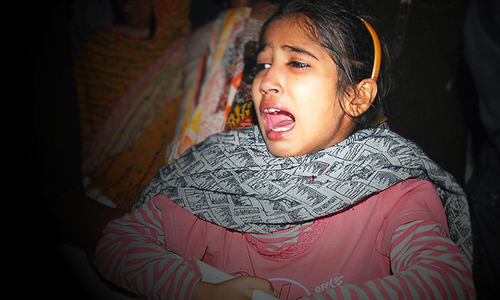
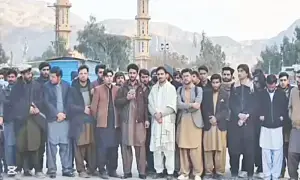
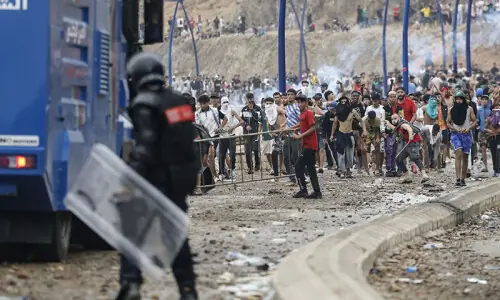
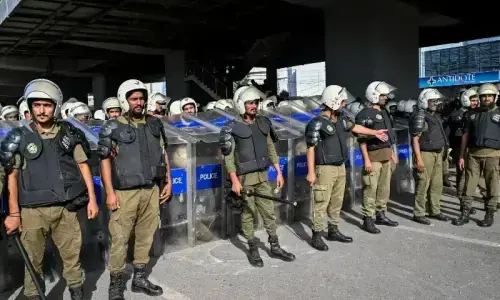
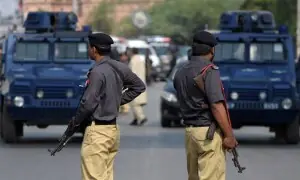
A day after the attack, devotees gathered at the shrine to resume dhamal in defiance of not only the attackers but also the police. One of the workers who looks after the shrine, Haja Shah, had tears rolling down his cheeks as he said, "This is no place for the police. This is our place."
Centuries after his death, despite all the trials and tribulations of time and history, Lal Shahbaz Qalandar continues defying the ruling order of the time, and probably this timeless resistance is something that terrorists are most afraid of.
Some call it a miracle. Some call it history. And above and beyond miracles and history, the Qalandar continues to dance.
“I am Usman i Marwandi, a friend of Khwaja Mansoor (Hallaj)
Although people blame me, I will dance upon the gallows”.
The earlier version of this article stated that there is a Hindu sajjada nasheen family of the shrine. This information was inaccurate and has now been corrected.