BEIJING: China has created three new military units and will update equipment as well as modernising its command structure, state media said on Friday, as part of a major overhaul of the armed forces announced by President Xi Jinping in November.
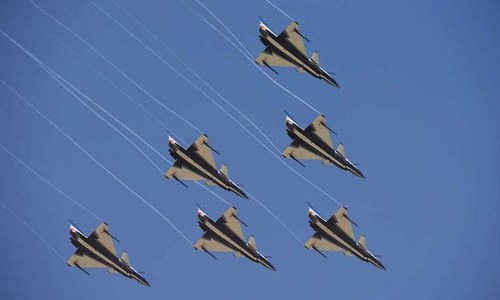
Xi's push to reform the military coincides with China becoming more assertive in its territorial disputes in the East and South China Seas. China's navy is investing in submarines and aircraft carriers and its air force is developing stealth fighters.
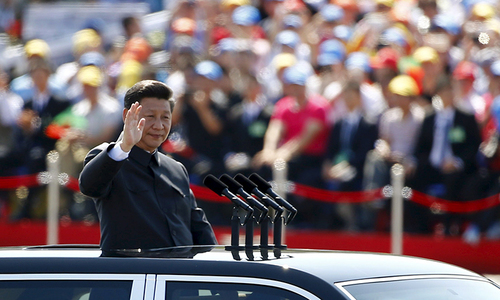
At a ceremony on Thursday, Xi inaugurated a new general command unit for the army, a missile force and a strategic support force for People's Liberation Army (PLA), state news agency Xinhua said.
State television showed Xi handing over a large red flag to Li Zuocheng, the new head of the land command force.
Li was previously commander of the key Chengdu military region, which includes restless and strategically vital Tibet.
The missile force is taking over from the Second Artillery Corps to control the country's nuclear arsenal but keeping the same commander, Wei Fenghe.
Xinhua said Xi urged the new unit to “enhance nuclear deterrence and counter-strike capacity, medium-and long-range precision strike ability, as well as strategic check-and-balance capacity to build a strong and modern Rocket Force”.
His reforms include establishing a joint operational command structure by 2020 and rejigging existing military regions, as well as cutting troop numbers by 300,000, a surprise announcement he made in September.
In a separate report listing the powerful Central Military Commission's recommendations on the reform process, Xinhua said the troop cuts will focus on non-combat personnel.
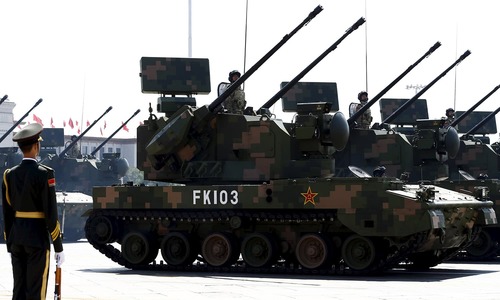
Phasing out old equipment and developing new weaponry as well as reducing the number of models operated will be another big feature of the reforms, Xinhua said.
China has been moving rapidly to upgrade its military hardware, but integration of complex systems across a regionalised command structure has been a major challenge.
The troop cuts and broader reform programme have proven controversial, though, and the military's newspaper has published a series of commentaries warning of opposition to the reforms and concern about job losses.
Xi has also made rooting out deeply entrenched corruption in the military a top priority, and dozens of senior officers have been investigated and jailed.