4
4
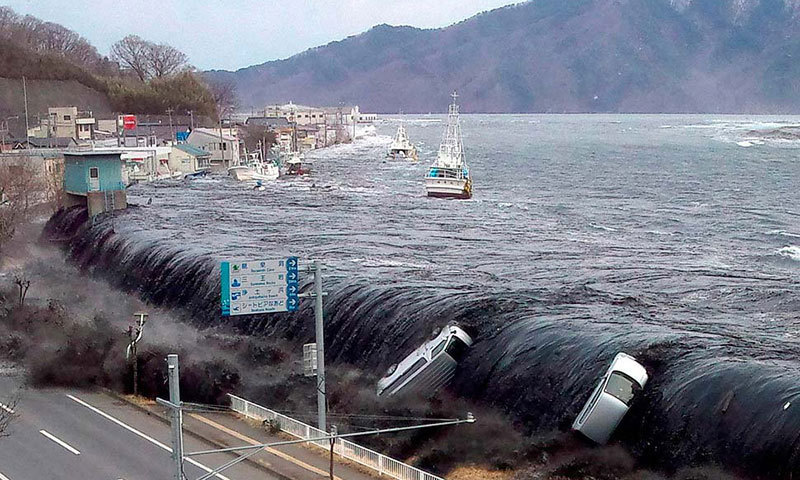

GENEVA: Nearly 20 million people were forced to flee their homes due to floods, storms and earthquakes last year, a problem likely to worsen due to climate change, but which could be eased by better construction, a report said on Monday.
Asia is particularly prone to natural disasters, accounting for almost 90 per cent of the 19.3 million displaced in 2014, led by typhoons in China and the Philippines, and floods in India, the Norwegian Refugee Council (NRC) said.
“Disaster-related displacement is on the rise and threatens to get worse in coming decades,” Alfredo Zamudio, director of the NRC's Internal Displacement Monitoring Centre, told a news briefing.
Since 2008, an average of 26.5 million people have been displaced every year by disasters, the report said, and although 2014 figures were lower than that, the NRC said there was a rising long-term trend.
“Our historical analysis reveals you are 60 per cent more likely to be displaced by disasters today than you were in the 1970s. Climate change is expected to play a strong role in the future by increasing the frequency and intensity of such hazards,” added Zamudio.
UN scientific experts say greenhouse gas emissions are stoking extremes such as heat waves and heavy rains.
As well as extreme climate events, rapidly growing and poorly built settlements in areas vulnerable to natural disasters are putting more people at risk, Zamudio said, citing areas around cities such as Mexico City, Mumbai, Karachi and Port-au Prince.
Extreme weather has struck Haiti and Cuba with different results. More than 300,000 people died in the 2010 quake in Haiti, where 60,000 still live in tents, said William Lacy Swing, director-general of the International Organization for Migration (IOM), which collected data for the report.
“Cuba is extremely well-prepared for disasters: hurricanes, typhoons, whatever happens. They have a shelter system, they have a public education system. Everyone knows what to do when disaster strikes,” he said.
Being uprooted by disaster is not limited to poor countries.
“The largest case we found is in Japan, where some 230,000 people are still displaced today following the Tohoku earthquake and the tsunami disaster in 2011, including thousands displaced from the area around the damaged Fukushima nuclear plant,” Zamudio stated.
More than 50,000 people in the United States still need housing assistance following Hurricane Sandy in 2012, he said.
The vast majority of people fleeing disasters remain within their own country, but may still face “an emerging anti-migrant sentiment, particularly in the developed world," Swing said.
“This simply adds to the number of people who will be, in many cases, moving without proper papers and therefore subject to being criminalised, or sent home forcefully, deported or otherwise."
“This is simply a further complication and exacerbation of this global phenomenon of migration in our time.”