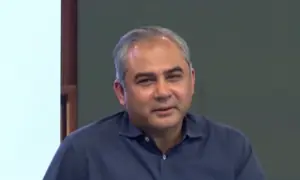
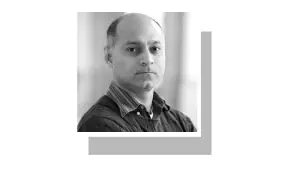
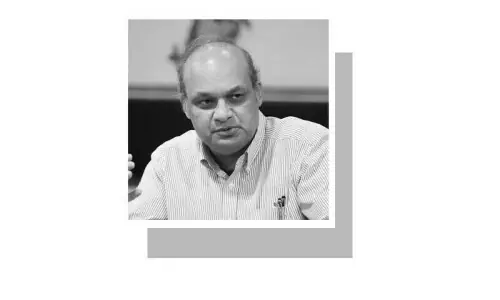
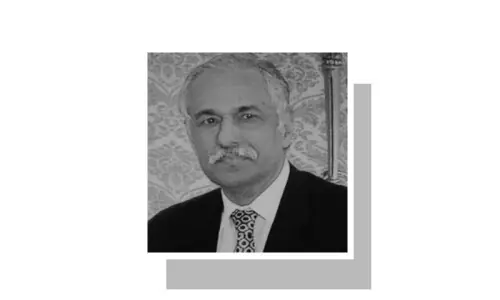
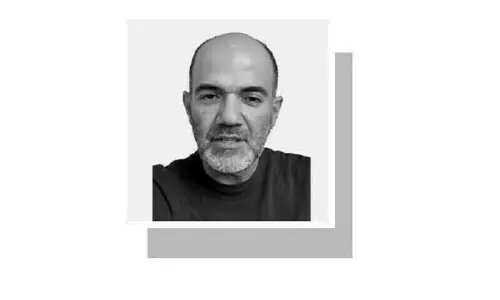
Shah Faisal Afridi is one of those businessmen who are not afraid of investing where the opportunity for growth exists. He is also not averse to risking, or losing, money on his investments as long as he is convinced of the business’ growth potential.
“Business is all about grabbing the opportunity; it doesn’t matter if it exists in the present or in the future. If you don’t seize the opportunity when you see it, you’re bound to end up in deep trouble,” the president and CEO of the Haier-Ruba Group told Dawn in an interview.
Unlike many other business owners who prefer to keep the entire control of their companies in their own hands, Afridi believes in creating a system that allows ‘professional managers’ to work independently to achieve the targets set for them.
“We have evolved an ecosystem in our companies where we have set specific targets for the next 15 years, to 2028. All our workers know what they need to do to achieve those targets. I do not have to remind them again and again that we need to enhance manufacturing capacity or improve supply chain to attain our goals. They already know it and are working on expansion plans according to the requirements of our future targets and market requirements,” he said.
The Haier-Ruba group is one of the largest manufacturers of polyester yarn and home appliances in the country. It has invested heavily in a lifestyle retail store chain and in tractor manufacturing. It has been the sole distributor of major global electronic brands — Sony, General and Panasonic — in Pakistan as well as in the Middle East, and has the distinction of being the first private investor to have developed a special economic zone (SEZ) near Lahore. It also has business interests in power generation, construction and real estate development.
With three textile factories in Indonesia and Korea and investments in Middle Eastern countries, the group has significant presence outside Pakistan. In the last one and a half decade, it has attracted significant Chinese investment and technology into Pakistan through joint ventures in home appliances and tractor manufacturing, power generation and real estate development.
Pakistan is one of eight countries where the Chinese government plans to help its investors set up and operate special economic zones to serve as a major base for manufacturing and exporting goods
“My family has been in trade since the early 1970s. We set up our first textile factory in Indonesia in 1985. From there, we expanded into Korea and returned to Pakistan to establish our first textile mill here in 1996. Since then, we have been investing and reinvesting to diversify our business into different sectors in the country, mostly in collaboration with Chinese companies like Haier and Shifieng.”
With the group’s current fixed investment touching $100m and with annual turnover of $300m, its expansion plans include heavy investments, in collaboration with Chinese manufacturers and investors, in its lifestyle retail chain, manufacturing of laptops and mobile phone handsets and the automobile industry.
“We are going to start local production of laptops in the next few weeks and handsets in one year. Our other expansion plans include raising the production of tractors from 3,000 units to 40,000 units. And we will start assembling low-cost Chinese cars and buses in the near future. We are also planning to increase the number of our lifestyle retail stores from 100 to 1,000 by 2020,” Afridi said.
He added that Chinese companies are interested in setting up their factories in Pakistan to reach other markets in South Asia, Middle East and Africa. Haier, for example, wants to use Pakistan as its business base for the South Asian and African markets. Shifieng will like to ship tractors made in Pakistan to other South Asian countries.
“Pakistan is one of eight countries around the world where the Chinese government plans to help its investors set up and operate SEZs, to use the country as a major base for manufacturing and exporting goods to the rest of the world. These zones have to be privately owned and operated,” said Afridi, who also heads the Haier-Ruba SEZ Company.
“There is a great opportunity to attract massive Chinese investment, create jobs, boost exports and turn around the economy. But Pakistan neither has a policy for SEZs nor is it finalising one, despite our repeated requests to escalate the process.
“You cannot imagine how much Chinese money will be diverted to the country once the SEZ policy is
finalised and incentives for investors spelt out. Pakistan is one of the most favourite destinations for Chinese investors. I know many small and big Chinese firms that are lining up to invest here. I expect $2bn in five years from now in our Haier-Ruba zone,” he said.
At present, the total size of Chinese investment in the country is estimated to be around $2.5bn.
Besides the formulation of the SEZ policy, Afridi wants the government to implement policy reforms to provide constitutional protection to investments made by local and foreign investors, create an investment-friendly environment that is free from extortion and coercion by government agencies, and a level field for everyone.
“How can anyone invest in a country where tax and other government authorities like to hound investors, where adverse court decisions can turn investments of billions of rupees into junk in no time, and where some business owners can use their political clout to force governments to allow them favours and incentives at the cost of their competitors?
“If we resolve all these problems, Pakistan will become a favourite destination for investors,” Afridi concluded.
Published in Dawn, Economic & Business, December 8th , 2014