Naziha Syed Ali explores how some charitable organisations have a more political agenda
For all its altruism and emphasis on selflessness, charity work can serve strategic political ends. It was charity work after all that enabled organisations like the Muslim Brotherhood and Hamas in Egypt and Gaza respectively to stay in contact with people during times of repression, so that when the opportunity came for them to seek public support and transition to a more formal political role, they had a ready constituency.
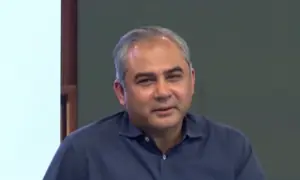
In Pakistan, the rise in right-wing tendencies over the past few decades has led to an increase in Islamic charities whose objectives have more to do with politics than public welfare. For example, the militant group Lashkar-e-Taiba (LeT), which was banned in 2002 by President Musharraf along with a number of other such organisations, re-emerged soon after as Jamaat-ud-Dawa which runs a network of welfare projects such as schools, health centres, etc. all over the country, particularly in central and south Punjab. “It claims to be a charitable entity, but it is very much a front organisation for the LeT,” says author and journalist Zahid Hussain. “Having a charitable face also helps to de-link it from active insurgency and reorganise itself as a political party.”
Among the mainstream political parties, only two — the MQM and the Jamaat-i-Islami (JI) — have social welfare wings. Most of their funding is derived from donations, including Zakat in Ramazan as well as sacrificial hides on the occasion of Eidul Azha. In Karachi, back in the ’80s, the JI used to compete with the Edhi Trust for the collection of sacrificial hides — a very lucrative source of funds — and later came into direct conflict with the MQM over the issue when the latter began to dominate the city’s politics.
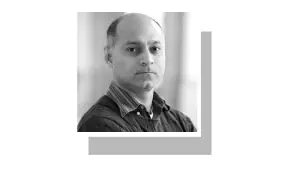
The JI’s welfare arm, Al-Khidmat, is active in a range of sectors, including education, health and disaster relief all over the country. However, it maintains a definitively apolitical façade, which is sound policy on two counts. Firstly, a non-partisan approach gives it access to a wider spectrum of potential donors, even those that do not subscribe to the politics of the parent body. Secondly, contact with the public is particularly vital for the JI as membership of the party is restricted, with the selection procedure being an extended and stringent one. “With maximum 100,000 members only, charity work broadens the JI’s support base,” says Zahid Hussain.
The MQM, under the banner of Khidmat-i-Khalq Foundation (KKF) runs a number of social welfare projects in Karachi, Hyderabad and other urban areas in Sindh, such as educational institutions, blood banks and mortuaries. It also operates two hospitals in Karachi and Hyderabad named after Altaf Hussain’s father, Nazir Hussain. KKF has expanded into disaster relief as well, for example, setting up health camps after the floods in Sindh. Unlike the apparent distance that the JI maintains from Al-Khidmat, the KKF and the MQM’s close affiliation is flaunted by the party.
On the KKF website is the statement “We desire neither reward nor acclaim”. However, one can safely say that political entities engaging in charity work have worldly objectives very much on the agenda.