What went wrong in energy sector
THE symptoms of an impending energy crisis have been apparent for quite some time. Equally obvious has been the lack of a strategy to counter this problem and break out of the logjam.
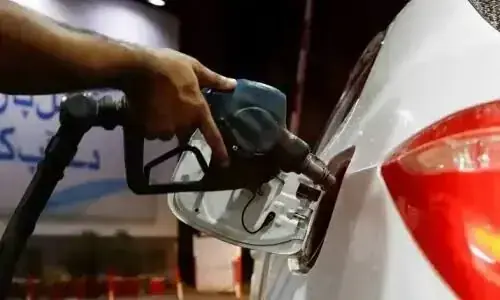
Recent press reports have exposed the fallout of the government’s poor energy planning. A hefty increase in gasoline prices is expected to again hit consumers any day. The problem has been festering for some time but the last government did not take any action fearing a severe backlash from consumers and instead passed the buck on to the caretakers.
Linked to this is the reported drop in the inventory of oil stocks and reduction in gas supplies to industry. Power blackouts have also returned to underscore the burdens being borne by the country’s consumers.
These are worrisome reports. But they are not unexpected and were foreseen years ago as the likely fallout of the structural problems of an antiquated energy regime. It was obvious that remedial measures were urgently needed to protect the economy and consumers from its ill effects but every attempt made to rectify the situation was scuttled.
If we cut out the rhetoric and public posturing by official spokesmen, there are two criteria that determine the success or failure of any energy policy: the security of supplies and the affordability of prices for consumers of the end product. On both counts, any independent observer would give failing grades to the energy policy pursued for the last decade.
Going by its energy portfolio it would seem that the country is a part of the oil- and gas-rich Gulf region and not part and parcel of energy-starved South Asia. Pakistan’s energy paradigm is largely stuck in the thinking of the 1960s when oil was $2 a barrel and the first oil shock was 13 years away. The first shock was followed by another in 1979, the depletion of world oil reserves, a spike in demand fuelled by Asian industrialisation and oil prices hitting $100 a barrel at any hint of a new crisis in the Middle East crisis. These repeated shocks forced the major powers to restructure their energy regimes but we are yet to wake up and see the writing on the wall.
In fact, the energy paradigm pursued at the time of the country’s independence was more affordable and secure. In 1948, sixty per cent of Pakistan’s power was produced from indigenous coal. After 60 years, the energy regime followed by Pakistan has resulted in the country becoming the most dependent in the region on imported energy. While India continued with the same old paradigm and now 65 per cent of its power comes from coal (the figure for China is 70 per cent), Pakistan’s power production from coal has come down to a mere one per cent, despite the country sitting on one of the largest coal deposits in the world.
There is no realisation of the urgent need to protect the economy and consumers through urgent course correction on the energy policy. A look at the ‘new’ 25-year Energy Security Action Plan (2005-30) confirms this. Its Power Generation Plan talks of further increasing the country’s dependence on oil from 30 per cent in 2005 to 51 per cent in 2030. As against this, it is envisaged that the share of indigenous coal in energy production will be no more than 12 per cent even after another 25 years. Contrast this with the fact that coal today accounts for 40 per cent of world power production.
The only consolation is that this airy-fairy energy plan cannot be implemented and will be overtaken by other events on the global energy chessboard. The mounting energy crisis has increasingly led to talk of energy wars and several countries have been working on counter-strategies. A reality check would tell us that Pakistan is neither going to be waging energy wars with other countries to capture their oil reserves nor is our economy going to afford the rapidly rising costs of higher levels of imported energy.
Apart from generating savings on oil imports by shifting to coal-based power, many countries have also learnt another lesson from the upcoming energy wars. By blending ethanol with gasoline they have further reduced energy imports — in the case of Brazil, $70bn has been saved on the oil import bill. This idea has also been accepted by major multinationals and Ford and VW are producing vehicles in Brazil equipped to handle a 15 per cent ethanol mix.
When such measures to reduce transportation-related fuel costs were proposed in these columns by several knowledgeable experts, the previous government declined to follow up on similar policy/legislation for Pakistan.
Another lesson for Pakistan was provided by Indonesia, itself an oil-producing country. When Indonesia realised that its power production had veered off course and the share of coal-based power (although much higher than Pakistan’s) had declined, it decided that the next 10,000MW of power would come only from coal until a balanced energy portfolio had been achieved.
Our approach has been the opposite. The first major breakthrough in restructuring Pakistan’s energy profile was achieved when, after years of hard work, a 5,200MW power project based on Thar coal was finally started during the second Benazir Bhutto government. However, within weeks of taking over, the Nawaz Sharif government arbitrarily cancelled it in 1997 without any rationale, forcing American investors to close the project and leave the country.
Five years later, a Chinese power company got involved when the president of Pakistan sought help in coal-based power production from the president of China. After four years of field work and technical and financial feasibility assessments that cost millions of dollars, the Chinese complained that decisions on critical issues were repeatedly deferred and changed. The last straw came in 2006 when the ECC meeting chaired by Prime Minister Shaukat Aziz declined to settle the issue and open up the energy market to coal-based power. The Chinese investors too decided to cut their losses, packed their bags and left the country.
At a recent international coal-mining seminar in Karachi, the participants complained of being cold-shouldered in their repeated attempts to help coal-based power gain a foothold in the Pakistani market. His critics spoke of the tall promises Shaukat Aziz made to the people of Thar when he was seeking a parliamentary seat from the area. The former PM was faulted for not achieving the much-needed breakthrough in coal-based power despite his eight-year hold over economic policymaking.
The structural problems embedded in Pakistan’s energy paradigm remain unresolved and their symptoms keep visiting us in respect of the woes of residential and business consumers. Major world players who are experienced in coal-based power generation are willing to make large investments in Pakistan backed by technological choices vis-à-vis the environmental standards desired by the country.
The major barrier in the way of a breakthrough, however, is the official mindset that sees neither penalty nor incentive in aligning the energy policies of the country with its economic and geographic realities.
The writer is a former head of the Board of Investment and federal secretary.
smshah@alum.mit.edu
What is the fuss about?
WHAT is the problem with people in Pakistan? Why are they protesting, albeit half-heartedly? And why are newspaper editorials and columnists so worried about the political situation in the country? Like the worthy president, I fail to understand what the fuss is about.
The president has very kindly restored your Constitution. What would you have done if, instead of being increasingly benevolent to the people, he had refused to restore it? He even made several amendments to the Constitution before restoring it so that in case there is another troublesome situation in the country, things can be put right without going through a lot of trouble, as he had to in October 1999.
The way our political leaders continue to disagree with each other, which of course is such a bad thing for the country’s unity, would it ever have been possible for them to gather a two-thirds majority in parliament to make such far-reaching and sweeping amendments? Poor souls, these politicians. Like politicians all over the world, they hold differing views on issues. Don’t they realise that Pakistan is different from the rest of the world and requires politicians who should behave properly and agree on all issues of national importance because Pakistan comes first?
The president knows how naïve the politicians are. That is why he had to take matters in his own firm and safe hands and do the right thing. He ordered the Constitution to ‘pause’, just as we press a button to pause a movie, made all the necessary changes to give him the powers to do more right things as and when necessary in the future, and then pressed the ‘play’ button so that the country would start playing from the same point as if nothing had happened. And during the brief ‘pause’ he solved all the difficult problems of the nation which politicians of other countries take decades to resolve, and which politicians of Pakistan are never able to solve.
The president knows of course that whoever wins in the coming elections, the politicians of Pakistan will never be able to undo his amendments. In Pakistan, you need the iron hand of a general to get things done, for Pakistan is different from the rest of the world. So what’s the fuss about?
As a matter of fact the president has solved another problem our politicians keep jabbering about: the role of the army in politics. Some say civilians should be ‘friends’ with the army; others say that the generals should serve under the civilians (however laughable this notion may seem), while still others say that a Pakistani president should always be a general (believers in this school of thought must have been mightily depressed when the president relinquished his uniform).
Many other formulae like the Security Council and a formal ‘troika’ have been seriously discussed among the bright intellectuals of the country.
The ‘mother of problems’ has finally been solved. In future there will be no need to impose martial law or to follow it with referendums and legal magic to declare that everything done during this period “is deemed to have been done rightly and constitutionally”.
Nor shall our elected representatives need to play games like the 8th and 17th amendments. The process has been made simple: whenever the chief of army staff feels that things are not going right for the country and that either the politicians or the judiciary are not behaving properly, he can push the pause button on the Constitution, put everything right, including the incorrigible judges, make necessary and useful changes in the Constitution and press the play button to restart the country smoothly on the right ‘democratic’ path.
Is this not such a blissful feeling to know that you are in safe hands? Does it not feel good to know that you are being watched by the kind gods themselves, and that they will make sure that you are always safe and sound? I am transposed to my school days, when we all knew instinctively that whatever the frequency or magnitude of the mischief we brought about, our teachers or parents will always be there to put things right.
What more could Pakistanis ask for? All their problems have been solved for them while they sat smugly in their homes. In other countries like Nepal and Georgia, people have to come out on the streets and get shot. Here they get everything on a platter and yet they are ungrateful? Count the blessings that they have obtained free of cost: democracy, which was about to be derailed has been put firmly back on the rails, the three pillars of state — the judiciary, executive and legislature — which were showing signs of dangerously independent thinking and tendencies of going astray have been brought in complete harmony, while the so-called fourth pillar, the media, has been cut to size and is now behaving like a good child.
Elections are happening without the usual messy noises and rowdyism; the Constitution is ‘on’ again; there is no emergency; all the major political parties are taking part; and the most important blessing will be bestowed upon the nation when the winning politicians take oath on the Constitution.
That day they will automatically validate all the myriad nice things that the gods have done to their country and its special brand of democracy.
Have they ever seen such benevolence in decades? The last time it happened was way back in 1962, when Ayub doffed his uniform and became a civilian president. Ungrateful Pakistanis. Would the ruling junta of Myanmar, to quote one example, even consider bestowing such favours upon their subjects?
Looking beyond the polls
WITH polling day less than a fortnight away, the greatest cause of anxiety among democratic-minded people is whether the anti-authoritarian stirrings of the past few months will survive the so-called general election. The question touches on the present society’s capacity for realising a democratic change as well as the direction of its strivings.
Whatever the outcome of the electoral exercise, it has already split the political community into two camps, one of them hoping for salvation by joining the process and the other by boycotting it. Neither camp apparently has a reason to be sanguine about its success.
Those joining the electoral race are crying themselves hoarse that the establishment is determined to rig the election and their inability to foil such designs will hardly be challenged. The boycott group argues that, instead of leading to a democratic dispensation, the election will only extend and legitimise authoritarian rule. But, regardless of the logic in its stand, this group too has not been able to demonstrate the strength needed to defeat the forces of the status quo.
That this division has weakened the democratic forces is quite obvious. The reasons that made unity among the parties professing adherence to representative rule impossible are now less important than the need to guard against the possibility of the rift continuing into the post-election period. Nobody should ignore the danger that those who come out on top in the election, howsoever it is conducted, or whoever are chosen by the establishment to lend it a democratic façade, may not be able to force the people’s agenda on their more powerful partners.
If that happens, those in assemblies and those outside will exhaust themselves fighting one another and thereby give a new lease of life to the autocracy that they should be fighting unitedly. Is it possible to ensure that after the polls the two camps will be able to jointly work for the restoration of democracy? Can the civil society elements out in the field — lawyers, media people, students — accomplish this?
The task has been made harder by the failure of political parties to nourish democratic ideals through regular contact with the masses during periods between elections. Lack of organised cadres has been the single most important cause of division on the boycott issue.
This is the fatal flaw in national politics that has enabled one authoritarian regime after another to make a mockery of civilised governance. And this is the truth the events of 2007 have laid bare, for what happened on Nov 3 constituted the greatest assault ever on the Pakistani people’s democratic rights. Now the restitution of the rights of the judiciary has been pushed to the top of the country’s agenda.
For more than 50 years political parties have tried to hide their lack of public support by shifting the responsibility of guarding democracy entirely to the judiciary. All parties, small ones as well as those that supposedly constitute the mainstream, have expected the courts to save them from the consequences of their sloth, lack of conviction and alienation from the people. And when, some months ago, the judiciary chose to fulfil its constitutional duty they were quick to assume that democracy had finally triumphed. It hadn’t.
The reality the political parties faced in November last was that they had exaggerated the role of the judiciary in enabling authoritarian regimes to stay in power as long as they did and to do whatever they had chosen to do, and that it was time they accepted the challenge of resisting autocracy, a challenge they could not pass on to any other institution or body of people.
The unity of pro-democracy forces the country needs will hinge on an understanding on the restoration of the judiciary to its pre-November 2007 status.
Unfortunately, some of the major players are reluctant to accept this formulation. The reasons vary from party to party. Some find it hard to overcome their subjective responses to the judiciary’s past performance while some others have consciously or unconsciously accepted the theory that the courts have been harrying the knights engaged in saving the world from terrorists. This complaint is similar to inefficient prosecutors’ protests at courts’ refusal to convict the accused without evidence and both grievances merit summary dismissal. The case for taking a stand on the restoration of the judiciary, on the other hand, can easily be summed up.
The mess one notices all around is largely due to the executive’s acts of omission and commission. It cannot possibly disown responsibility for first promoting militancy and then making a hash of the campaign to overcome it. It is also responsible for inviting judicial activism by neglecting its normal duties to the people. There would have been no need for the courts to reprimand the establishment’s privileged knights if the administration had rendered to the people what was due to them, if the police and security agencies had functioned within the law, if women had been protected from feudal brutality, and if bonded haris had been recognised as human beings.
The November attack on the judiciary has resulted in freeing a manifestly incompetent executive of any semblance of accountability. The consequences to the people are too grim to be ignored. Fears of an increase in police excesses and abuse of law to suit a predatory executive’s convenience are not unfounded. The restoration of the judiciary is necessary to repair the accountability bar to the executive’s actions that has wantonly been destroyed. The undoing of a wrong done to some justices is less important than the need to free the judiciary of its fears of an executive that recognises no limits to its powers.
More importantly, the people have been eagerly looking for means to make the polity immune to relapsing into absolute rule by the military after each spell of limited and strictly regulated representative governance. Progress towards this end demands, among other things, that elected representatives should be able to roll back the extra-democratic measures of authoritarian regimes. The idea is not unknown to students of Pakistan’s politics. The movement against Ayub Khan was aimed at ridding the country of the anti-democratic assumptions underlying the system of Basic Democracies and the so-called constitution of 1962. Similarly the prolonged agitation against the eighth amendment of Gen Zia was directed at demolishing institutionalised encroachments on democratic principles.
Now a large part of the population believes Pakistan will not be able to negotiate the crisis of the state unless the Nov 3 measures are expeditiously rolled back. Restoration of the judiciary is thus essential as the first step towards ensuring protection against any disruption of the constitutional order in future.
The people will forgive the boycott generals for challenging autocracy without gathering any soldiers behind them and the election-wallas their haste in coming to the executive’s rescue if they do not lose sight of the fact that the long-term survival of both depends on fighting for justice for the judiciary.
| © DAWN Group of Newspapers, 2007 |