Rigging and agitation
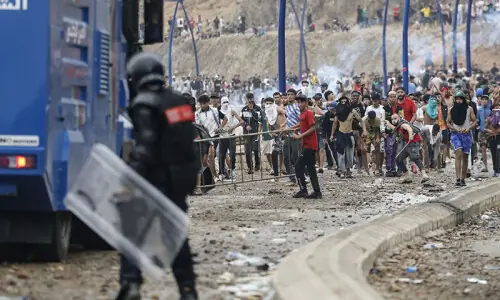
AS Jan 8 approaches, talk of rigging seems to be gaining momentum. On Wednesday, a New York-based rights group said free and fair elections would not be possible because of the government’s crackdown on judges and lawyers. In an 84-page report, the Human Rights Watch said a large number of judges and lawyers remained under arrest despite the lifting of the emergency. While these are the views of a foreign rights group, the political parties, too, have been voicing fears virtually daily of the Jan 8 election being manipulated. While the truncated APDM is out of the electoral arena, even those taking part in the elections have been repeatedly expressing their fear of rigging on a massive scale. Many politicians, including those belonging to the PPP and the PML (N), have warned of agitation if the elections are manipulated.
Given Pakistan’s history and the kind of elections that have taken place in the past, the fears do not appear unjustified. The 1977 general elections are a case in point. Even Bhutto’s enemies have conceded that the PPP would have won the general election in any case, but that Bhutto rigged the elections to get a two-thirds majority. The subsequent events are part of our history. There were many reasons for the success of the PNA’s agitation, but there were three advantages for the nine-party alliance: one, the popular momentum built up during the general election was kept up by the PNA, which found it easy to turn it into a street agitation and unleash furious mobs; two, the large-scale nationalisation by the PPP government had hurt the industrial class, which did not hesitate to plough in big money to fund the agitation. Three, the powerful ulema class, beholden to the socio-economic status quo, supported the elite and played a major part in giving the PNA movement a religious colour.
This time the situation is different in many ways. The religious camp stands divided. While the Jamaat-i-Islami has boycotted the election, the MMA’s major component, the JUI (F), is very much in the field. The government lifted the emergency on Dec 15, leaving only three weeks for campaigning. The business class is, of course, very happy with the government. The people might have remained poor, but the economic benefits to Pakistan in the aftermath of 9/11 have gone mostly to the business class, which has prospered at the people’s expense. For that reason, this class has no reasons to fund an anti-Musharraf (read anti-American) agitation. In fact, quite a few tycoons are contesting the elections and will most probably make it to parliament because of their power to buy votes. If, therefore, some parties are planning a popular agitation after the Jan 8 vote, they had better read the situation carefully. As the events since March 9 have shown, the lawyers’ and journalists’ agitation has failed to evoke a popular response, and it is unlikely that the people will respond zealously to an anti-government stir the way they did in 1977.
Tragedy on the tracks
THE tragedy that struck the Lahore-bound Karachi Express near Mehrabpur is, indeed, unfortunate and is bound to turn this Eid into an unforgettable occasion for all the wrong reasons for hundreds of families who were awaiting the arrival of their loved ones to celebrate the sacred festival. To all of them individually and collectively go our sincere condolences. Though the minister concerned has not ruled out sabotage as being the underlying cause of the accident, it appears to be more a reflection of the troubled times we are passing through that an act of sabotage can always be considered as one of the possibilities. However, there are also indications that Pakistan Railways’ record of maintenance — or rather the lack of it — of its rolling stock and tracks may have had something to do with the disaster.
Earlier this year, in one week of the month of May, as many as three similar incidents had taken place on this very sector: Burraq Express had derailed at Shahdadpur, a goods train had gone off the track near Nawabshah and Shalimar Express had a similar fate near Mehrabpur itself. A few months prior to that, seven coaches of Allama Iqbal Express had derailed near Hyderabad. Since there were no major casualty figures in any of the incidents, railway authorities apparently did not take them seriously enough to locate the fault, pin down the culprits, and, more importantly, learn their lessons so that such tragedies could be avoided in the future. The result is that in the wake of the latest tragedy, we are again talking of loose nuts and bolts, defective tracks and broken or missing fish plates.
As happens in such cases, the authorities concerned will take their time to figure out the exact cause of the incident. Even then it will have to be seen whether or not they decide to make it public for there has been no dearth of occasions when officials have tried to push the findings of their inquiry under the carpet. Without waiting for the inquiry to be over, however, it will harm no one if Pakistan Railways could start working to overcome the mass of issues related to human negligence and crumbling infrastructure which have together plagued its service for a very long time.
A free hand in Iraq?
WHILE it may be justified in seeking to subdue Iraq-based PKK militants attacking Turkish targets, Ankara unfortunately refuses to recognise the impact of its action. It could alienate a large section of Kurds who have several grievances against the Turkish state. Had the latter given its Kurdish population their rights, and had the economic uplift of the Kurds taken precedence over Ankara’s obsession with suppressing their cultural identity, Tuesday’s ground incursion by Turkey into Iraq may not have been needed. True, the listing of the PKK as a terrorist organisation by several countries, including the US, is not unjustified. For in its war against the Turkish state, this organisation has not held back from perpetrating excesses on the very people it claims to represent. Like other strong militant groupings around the world, it has indulged in killing and abducting those of its ethnic group suspected of collaborating with the enemy. But Turkey must shoulder its share of the blame for killing countless unarmed civilians and, as human rights reports have pointed out, making scores ‘disappear’. Naturally, Kurds in Turkey, the Middle East and in the West have reason to resent this attack on their community. Even though many do not support the PKK, they can understand its anger.
Besides causing anger among the Kurds, the latest incursion and previous ones have also been criticised by Iraq as violating its sovereignty. The Kurdish region in the north is autonomous and the rulers in Baghdad know that if Turkey is given a free hand (by the US) in northern Iraq, violence in this relatively peaceful part of the country could endanger the state’s integrity that is already fragile because of religious factionalism. The Kurds suffered tremendously under the Saddam regime, and Kurdish nationalism means more to a large section of them than Iraqi statehood. All players must tread carefully to avoid opening another front in the Middle East conflict. This means serious negotiations with the Kurdish leadership in the north to influence the PKK to stop attacking targets inside Turkey and a sincere effort by Turkey to redress the economic and cultural woes of its own Kurdish community.
Significance of sacrifice
THE literal meaning of Islam is “to surrender oneself to the will of some one and bowing in reverence and respect.” It was, in fact, a practical expression of this very obeisance and dutifulness to the Creator which that historic event of Prophet Abraham’s resolve to carry out the divine directive, received in a dream, to sacrifice his son in the outskirts of Kaaba denotes.
This happened about four thousand years ago and the Muslims celebrate this event annually on Idul Azha throughout the world.
Let us see how the Quran narrates this great event: “We gave him (Abraham) the tidings of the birth of a noble Son. And when his son was old enough to walk with him, Abraham said: O, my dear son, I have seen in a dream hat I must sacrifice you. So, what do you think? He said: ‘do that which you have been commanded. God-willing, you shall find me steadfast.’
Then, when they had both surrendered (‘aslama’ is the exact word in the Quran which can be translated literally as embraced Islam) and he (Abraham) had flung him down. “We called unto him: O, Abraham (Ibrahim) you have already fulfilled the vision. And thus do we reward the good, surely, that was a clear test. And then We ransomed him with a tremendous sacrifice the commemoration of which We left among the later generations” (Surah 37, Ayat 101-108).
The very fact that it is only the Muslims who celebrate this act of supreme sacrifice in obedience to divine wish but neither the Jews nor the Christians do so, is a manifest proof that it was Hazrat Ismail who was offered for sacrifice by Hazrat Ibrahim. The following excerpt from Bible’s book of Genesis 22-1-13 will show that the Quranic account of this event, as given in the preceding para, agrees with the Bible’s narrative except that whereas the Quran does not name the son offered for sacrifice, the Bible does name Isaac as the son involved.
It should be kept in mind that the book of Genesis which is incorporated in the Christian Bible is a part of Jewish Torah (Taurat in Arabic) and the Jews claim descent from Hazrat Ishaque (Isaac).
It is not understood why the Jews do not celebrate this event which is of greater significance, if Isaac was offered in sacrifice. We find that there is no tradition among the Jews to commemorate this event.
Now, let us read the relevant portion of Bible’s book of Genesis: “God tested Abraham; he called to him and Abraham answered ‘here I am’ (which is the Hebrew equivalent of ‘labbaik’ –– the intonation of Hajis during the pilgrimage). Take your son, God said, your only son Isaac, whom you love so much, and go to the land of Moriah (or Merwah near Mena?) There, on a mountain that I will show you, offer him as a sacrifice to me… When they came to the place which God had told him about, Abraham built an altar and arranged the wood on it.
“He bound his son and placed him on the altar on top of the wood. Then he picked up the knife to kill him. But the angel of the Lord called to him from heaven: ‘Abraham, Abraham’. He answered: ‘yes, here I am; Don’t hurt the boy or do anything’… Abraham looked around and saw a ram caught in a bush by its horns. He went and got it and offered it as a burnt offering instead of his son…”
The Quran refers to this sacrifice in various contexts which shows the importance Allah attaches to the example of extreme obedience even to indirect commands of God, let alone the direct and explicit commands.
Here are some of the quotations from the Quran concerning this exceptional event: “Recall when his Lord tested Ibrahim with his commands which he fulfilled. And the Lord said to him that He had appointed him as a Leader (Imam) for mankind… and We chose him in the world and he is among the righteous in the Hereafter” (surah 2, Ayat 124-30).
It is this complete surrender before God’s command, without giving it a thought and without weighing its pros and cons, which the event of Hazrat Ibrahim’s intended sacrifice of his son symbolises. This is the real spirit of Islam (or surrender before Allah).
This sacrifice which has been made an unforgettable example for the true believers of Hazrat Ibrahim, does not mean mere slaughter of animals in the name of Allah who is the Creator of both men like us and the animals that we slaughter in His name. What reaches Allah is neither the blood nor flesh of the slaughtered animal but the religious fervour and piety of those of us who spend out of their hard-earned money to perform this religious rite, with attendant joy and festivity, only to commemorate Hazrat Ibrahim’s success in earning the distinctive title of ‘Leader of mankind’, awarded by none other than the Almighty Himself.
It may have been a cause of concern to Hazrat Ibrahim whether his successors ––generations after generations of them –– would be able to remain steadfast in the face of trials and tribulations that may lie in their paths during their life-long journey. He took recourse to prayers to Allah, which Quran recounts in these words: ‘our Lord, make us and from our seed a nation that is submissive (actual word used is Muslim) to you and show us the ways of worship (actual word ‘manasik’) and relent toward us, as you are the Relenting and the Merciful. O, Lord raise up in their midst a messenger from among them who will recite to them your revelation and teach them the Scripture and things of wisdom and make them grow in piety (Surah 2, Ayat 128-29).
The prayer of a Prophet like Hazrat Ibrahim was most likely to be answered positively. And so it happened. The Prophet for whom he prayed appeared from his very seed in the person of Muhammad (PBUH). The Scripture which he taught them is the Quran and the things of wisdom are his sayings and doings, recorded as Hadith, and the ways of worship are Salat, Saum, Zakat and Hajj i.e. five-time prayers a day, fasting in a particular month from dawn to dusk, payment from earned income to alleviate poverty, and visiting the Kaaba if physical and financial resources permit.
OTHER VOICES - Pushto Press
Elections 2007
THE declaration of emergency on Nov 3 by General (retd) Pervez Musharraf has been instrumental in exacerbating the political, administrative, judicial and constitutional crises in the country like never before. The international community criticised General Musharraf’s second martial law … severely except for the US which responded in a mild manner. Sadly, the Supreme Court of Pakistan ruled that the declaration of emergency was justified.
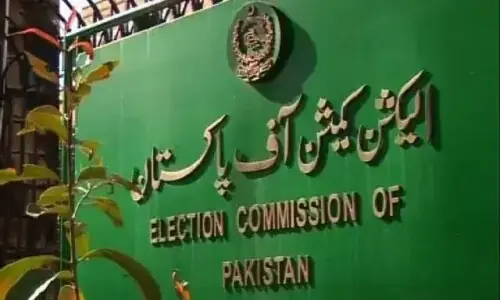
The decision of the incumbent Supreme Court was not surprising for anyone familiar with the history of judicial verdicts vis-à-vis constitutional references in Pakistan. And then it was announced that elections would be held on Jan 8, 2007. Who can believe in the fairness and transparency of elections in the absence of an independent Supreme Court, independent Election Commission and independent media?
There seems to be distrust among the major players in the mainstream political arena, mainly because no mainstream political party in the country has anything new to offer to the electorate. Most of the manifestos released by political parties consist of clichés that have lost their meaning over time.
Within the Pukhtoon-dominated areas, there is a question mark over the fate of the Pushtoon Democratic Alliance made up by the Awami National Party and the Pukhtoonkhwa Milli Awami Party. The former has decided to contest elections while the latter has kept away from the polls. But the modern social-democratic Pukhtoon — the politically and ideologically aware Pukhtoon — has quite a few questions for the Pukhtoon leadership.
Who are you siding with and who are you going to oppose? Which terrorist, extremist and corrupt elements are you going to throw out of the corridors of power? What are you going to give to the toiling Pukhtoon masses? What are you going to do for our historical brother Afghanistan? What agenda are you going to advance after coming to power? — (Dec 2007)
Conspiracy against Karzai
THE people of Afghanistan had a lot of hopes and expectations for a sustainable peace in Afghanistan when President Hamid Karzai came to power. Many Afghans who had migrated to other countries due to instability in Afghanistan returned to contribute to the reconstruction of their homeland.
The hopes of the people of Afghanistan were dashed to the ground with the passage of time, so much so that now people are counting the days and nights until the government is dismantled. This mistrust of the people is giving way to fears of yet another bloody phase in Afghanistan. There are reasons for this state of affairs in Afghanistan.
One of the major reasons is those groups who are apparently part of the present government but would like it to fail. These groups are comprised mostly by the northerners. There is substantial evidence proving that these groups have started conspiring with some of the neighbouring countries to malign the efficient elements in the present regime and render the current dispensation unsustainable.
This could lead to the failure of Hamid Karzai in the next elections, in which case the northerners may form the government in Kabul with the help of foreign powers.
The decision of an efficient minister, Hanif Atmar, to include the teaching of Pushto in schools was portrayed as being harmful to the unity of Afghanistan. It was done to discredit the minister and to stop him from carrying out other useful projects for the uplift of Afghanistan. In the same vein, chief security officer Abdul Jabbar Sabit was portrayed as having links with the ISI to prevent him from effectively performing his duties.
In this way, several important and competent officials of the present government in Afghanistan have been maligned to render them ineffective and to create a credibility problem for the Karzai regime. — (Dec 15)
— Selected and translated by Khadim Hussain.
| © DAWN Group of Newspapers, 2007 |