ISLAMABAD, Nov 23: Pakistan plans to raise more than $1 billion from overseas investors next month to enable the cash-starved Water and Power Development Authority (Wapda) to fund some of the projects needed to be undertaken to overcome the country’s worst ever electricity shortage.
A finance ministry official told Dawn the government was assisting Wapda and Pakistan Electric Power Company (Pepco) to issue international bonds of over a billion dollars to meet the needs of some hydropower projects, including the 969MW Neelum-Jhelum Hydropower Project.
After recent restructuring, Wapda is now responsible for irrigation and hydropower projects while Pepco, an umbrella organisation of power sector, looks after thermal power generation and distribution companies.
Some of the funds to be generated through the bonds could be used for general budgetary support in view of rising foreign debt repayment requirements but the primary objective would be Wapda’s foreign exchange needs, the official said. The bonds would most probably be of 5- and 10-year maturity and would be backed by the sovereign guarantees of the government of Pakistan, he added.
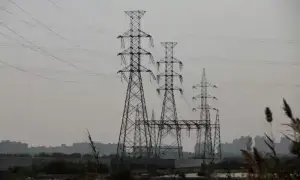
He said the government was in contact with about a dozen leading local and international banks as part of groundwork leading to the formal launching of the bonds next month so that the transaction could be closed within December. Wapda currently faces a shortage of about 3,000MW in peak hours, resulting in load-shedding across the country, mostly in rural areas. The situation aggravates when generation from the hydel sources drops owing to reduction in river flows. An official said that Wapda’s hydel generation had gone below 2,000MW against its total installed capacity of more than 6,500MW.
Wapda has been under immense financial pressure in recent months owing to non-payment of over Rs60 billion bills by the public sector and another Rs30 billion in subsidy being held back by the ministry of finance despite government’s commitment made last year. This stems from the 33 per cent tariff increase allowed by the National Electric Power Regulatory Authority (Nepra) last year, but the government decided to pass on only 10 per cent to consumers and promised to subsidise the remaining part.
The finance ministry, however, did not pay this subsidy to Wapda, and is now asking the water and power ministry to notify the remaining 23 per cent tariff increase allowed by Nepra last year.
The power ministry, however, is hesitant to increase tariff at its own unless a fresh government decision is taken. As a result, not only the self-financed development projects of Wapda are getting delayed but the fuel suppliers’ ability to finance oil supplies is being affected, and problems are being created for independent power producers. This has also triggered a chain of non-payment resulting in creation of a huge inter-corporate circular debt. Pakistan had a comfortable supply position till recently, but started facing shortages due to restrictions on Wapda to develop new thermal power projects and Wapda’s refusal to offer reasonable tariff to hydel projects, coupled with higher economic growth over the past few years. As a result, the consumers suffered the worst-ever electricity crisis during summer this year.
The World Bank estimates power shortage to the extent of 5,500MW by fiscal 2010 if new capacity is made available now. These estimates suggest the country is most likely to face a major energy crisis in natural gas, power and oil in three to four years that could choke the economic growth for many years to come.
The total energy requirement would increase by about 48 per cent to 80 million tonnes of oil equivalent (MTOE) in 2010 from about 54 MTOE currently, but major initiatives for meeting this gap are far from turning into reality. A major shortfall is also expected in the natural gas supplies.
According to official energy demand forecast, the demand for natural gas, having about 50 per cent share in the country’s energy consumption, would increase by 44 per cent to 39 MTOE from 27 MTOE currently. Partly contributed by gas shortfalls, the power shortage is expected to be over 5,250MW by 2010, a little lower than World Bank estimates of 5,500MW.
Simultaneously, oil demand would increase by over 23 per cent to about 21 million tonnes in 2010 from the current 16.8 million tonnes. This would leave a deficit of about nine million tonnes of diesel and furnace oil imports, he said. Since the gas shortfalls were expected to be much higher, the country would need to enhance its dependence on imported oil, thus increasing pressure on foreign exchange situation, more so as international market continues to go up.