Wider dimensions of security
PRESIDENT Pervez Musharraf hit the nail on the head when he told a seminar in Islamabad on Tuesday that national security depended on pursuing defence, foreign and domestic policies in line with the needs of the regional environment. It is now generally recognised that military security is only one element of national security; other aspects of national life such as foreign policy, governance, economy, law and order, health, education and the physical environment contribute to the security of a country in a big way. It is encouraging that the president acknowledged this. But he appears to give priority to military security which he says buys time for a nation to determine its other priorities. This view was held by conventional wisdom for a long time. But not any longer. The fact is that in recent years the states that have broken up have invariably imploded from within and not because they were victims of external aggression. That belies the notion that military security forms the backbone of a nation. What it does instead is give a people a false sense of security.
The seminar organised by the Institute of Regional Studies is also focussing on non-traditional spheres of security such as water management, energy deficit, environmental degradation and economic ills. Hopefully, the papers read there will provide the president with some food for thought and change his thinking on his government’s security achievements in terms of a “proactive” foreign policy and a “revived” economy which, according to him, are strengthening the security of the country. In this context the report released recently by the Mahbubul Haq Human Development Centre is most revealing. In a survey carried out in August 2005 in South Asia to assess the people’s perception of human security, which is an integral part of national security, the centre found that two-thirds of the respondents in Pakistan defined security as “life and self-security” and robbery/burglary/terrorist attack was cited as the main threat to security. Issues that are listed as being at the root of insecurity are lack of job security, a disconnect with the police, corruption, and absence of adequate health cover.
Such surveys reinforce the widely held impression that military security is not what people are clamouring for. In fact, many of the sources of insecurity that are troubling the people in the country are born of an overemphasis on military security that has led to a burgeoning defence budget and the weakening of the social sector. By focusing too much on defence, the government tends to divert attention and funds from the other vital sectors that contribute to national security in a big way. In fact, today the biggest threat that the country faces to its peace and security is from within. Given the state of international politics and the strategic environment in South Asia, Islamabad should be worrying more about the internal unrest spawned by the absence of a genuine democratic system, economic policies that encourage inequity and the denial of basic facilities of housing, healthcare, education, clean water, sanitation, power supply and transport to the people. The truth is that a high degree of militarisation will not compensate for the lack of these facilities. A militarist approach to national problems only creates more unrest and adds to a sense of deprivation, denial and insecurity among the people. This more than anything else brings out the wider dimensions of security.
A significant judgment
THROUGH a landmark judgment, the Lahore High Court has ruled that the defilement of the Holy Quran is an offence not against an individual but against the state. Consequently, no case can be registered by the police against an individual accused of defiling the holy book unless the federal or a provincial government is the complainant. The judgment said no individual was authorised to lodge such matters. The verdict concerned an individual, belonging to a village near Sialkot, who had been accused of defiling the Holy Quran. The police registered a case and arrested him, and a court later refused him bail. While granting him bail, Mr Justice Fazal Chauhan said that the relevant clause (295-A), read with section 196 of the PPC, made it clear that an offence of that nature was against the state and not against an individual. More important, Judge Chauhan said, courts could take notice of an alleged act of defilement only after the federal government or a provincial one had authorised the police to register a case.
The Lahore High Court’s observations must be taken note of by the police throughout the country, because, as experience has shown, people often try to settle personal scores by accusing their enemies of blasphemy or violation of Hudood ordinances, especially in rural areas. In this particular case, the man accused of defiling the Holy Quran was involved in a property dispute. His rival found no better way of cornering him than by accusing him of desecrating the holy book. This is not the only case of its kind, for cases of such nature, especially those relating to sex offences, occur every now and then, and the motivating factor invariably is personal enmity. Often, local influentials pressure the police into registering false cases. By making it clear that a case where a man has been accused of defiling the Holy Quran can be registered by the police only if the government is the complainant, the LHC decision seems to lay down a categorical interpretation of the relevant laws in a way that is based on justice and equity. It should help to check abuses of blasphemy and Hudood laws.
Collapse of Sri Lankan talks
THE collapse of peace talks between the Sri Lankan government and the Tamil Tiger rebels in Geneva the other day was only to be expected. Indeed, given the escalation in hostilities between the two sides, one wonders why the talks were not postponed altogether until such time that a more congenial environment for negotiations could be created. At present, it seems that the main reason why the two sides had agreed to meet in the Swiss city was because of international pressure to resolve their differences. There was also the added factor of being able to air their grievances against one another in public and, at the same time, to be seen by their troubled constituencies at home as supporters of the now tattered peace process. The mistrust between the two sides runs so deep that it would be hard to imagine either party being willing to give way on any issue, let alone actively cooperating with each other to end the ethnic conflict.
It is tragic that the two sides should be turning a blind eye to the consequences of the conflict. They stand to lose much more than the patient and high-minded services of the Scandinavian peace mediators, who have made an all-out effort to salvage the 2002 ceasefire despite many odds. The two-decade civil war has left more than 65,000 people dead and one million displaced. The Asian tsunami of 2004 was another devastating experience for the people. Considerable resettlement and rehabilitation efforts are needed to bring back some semblance of normality to the island. If no political solution is found soon, Sri Lanka will not only be unable to generate and utilise the funds and resources required to defuse the humanitarian crisis, it will once again be sucked into a vortex of violence that could prove far more deadly than the conflict so far.
Pricing the POL less painfully
PRESIDENT Musharraf has stressed the need to facilitate the common man’s access to resources through broadening the economic opportunities. That is the theme song of Prime Minister Shaukat Aziz and senior officials as well in a country where officially a quarter of the people are acknowledged to be extremely poor.
But the fact is that by transferring the new resources — arising out of the ‘turnaround’ within the economy — to the very poor and the disadvantaged, the government is not able to meet their very basic needs. They need safe drinking water, power and hygienic conditions around them along with facilities for education and public health.
Gone is the promise for water and power for all by 2007 and in large parts of the cities the people do have a pipeline system but have no or little water and when they have power connections, the supply is fitful and the breakdowns frequent and even the posh areas of major cities, like Clifton and Defence in Karachi, are extremely unhygienic due to continued official neglect.
As a result the people of Pakistan are exposed to most epidemics that afflict many parts of Asia. If it was the bad pandemic until recently it is Dengue virus which is claiming an increasing number of lives. Aids continue to afflict an increasing number of persons.
Varied stomach diseases in an epidemic form are common in southern Sindh due to persistent pollution of drinking water. In such circumstances what matters is not the president or the prime minister issuing orders to enable people benefit by the high economic growth and evident affluence but ensuring the people have lasting access to them.
But what is really happening is that while the poor continue to remain poor, the middle class is also getting relatively poor because of the sustained inflation and the ostentatious style of life that is becoming common and increasingly infectious. Protecting the purchasing power of the middle class is a real issue and an uphill task for them in our midst, but that must be done with imagination and resolutely.
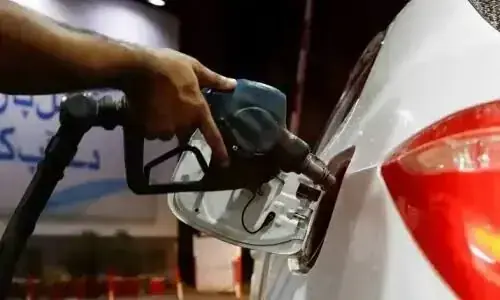
In such a situation, the economic advisor to the finance ministry Dr. Ashfaq Hasan Khan says that POL prices cannot be reduced until the Saudi light crude prices come down to 54 dollars a barrel from the current 58-60 dollars. He says the government has lost Rs83 billion by subsidising POL products between May 2004 and October 2006. Rs48 billion was paid to the oil companies as price differential and Rs35 billion was lost owing to the loss of the petroleum development surcharge when the world oil price had risen to 78 dollars before coming down to 60 dollars.
The current POL prices were fixed, he says, when the Saudi Arab light crude was around 53.30 dollars a barrel in April. During this period Rs50 billion was paid to consumers as a subsidy.
So far the government has paid Rs28 billion to the oil companies and another Rs20 billion remains to be paid, he says. There is no subsidy on petrol as the rich use it. There is a subsidy on diesel and kerosene which the poor use, he says. But it is wrong to say that those who use petrol are rich. A lot of low and middle income persons also use petrol-driven vehicles as they have no alternative or their cars are too old for conversion to CNG.
The POL products users are now facing a new threat. The government is to raise its Strategic Oil Reserve from 21 days to 45-to-60 days and a new tax is to be levied on POL products to meet the cost of storage as well as pay the price for the crude oil stored and turning over the crude oil at fixed intervals will also cost money. The tax is to meet all such costs.
The 21-day reserve was so far maintained by the oil companies which now want the government to bear the cost. That is all the more logical if the size of the reserve is to be doubled or tripled. What should be the size of the reserve, how soon should that be built and through what stages it should pass still remain to be determined. And instead of building costly new storage facilities, a few of the abandoned storage facilities of obsolete refineries could also be used economically.
All that will be decided following the report of a consultant for the purpose who will examine the issue in detail and mark out the options and the extent of the new taxation.
If the tax is heavy, the cost of production, trading and transport would go up and make life more difficult for the lower income groups. And the actual inflation would be far above the promised 6.5 per cent for the current financial year instead of the current 8 per cent and the suffering of the people would increase. The export cost would also rise and exports will come down after recording a rise of only 2.9 per cent in the first quarter of the new financial year.
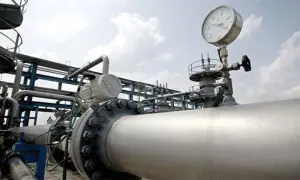
The problem has arisen as on one side the oil prices are very high and on the other side the domestic production of oil is very low. It meets barely 15 to 20 per cent of the country’s needs.
Determined efforts to increase oil production have not been a notable success. The more the OGDC and others look for oil, the more they get gas which meets about a third of the country’s energy needs. So the efforts to look for offshore oil are being stepped up vigorously, following the success of such efforts off Mumbai.
But they have to drill far deeper for success in offshore operations than done on the land by the OGDC and its partners who come up with small quantities of oil and far more gas. The result is that the oil import bill is over five billion dollars at today’s prices.
New efforts are being made to set up refineries in collaboration with China and Japan and enlarge the oil exploration efforts with their cooperation. A refinery is to be set up near Gaddani which is to be given the status and exemptions of an export processing zone.
Meanwhile the Jura Energy Corporation of Canada has announced it has entered into a partnership with a famous Chinese company to explore oil and gas in Sindh which has proved to be modestly rich in both.
With exports particularly that of textiles faltering and textile exports coming down by seven per cent in the next 2 months, nothing should be done which enhances the cost or production and transportation and the cost of doing business in Pakistan.
Indisputably, an increase in POL prices has a multiplier effect on prices as a whole. And it has a continuous ripple effect on prices for a long time in Pakistan but that has to be avoided at a time when Pakistan’s textile exports are reported to be less than even that of Cambodia, not to mention our principal competitors like China, India and Bangladesh.
India’s exports in the first six months of its financial year (April-September 2006) have risen by 37 per cent to $59.32 billion against $43.22 billion in the first half of last year. The trade deficit has risen by 47 per cent due to the high price of oil and higher oil import, but commerce minister Kamalnath brushes aside the deficit and focuses on the striking increase in exports, so the target for exports was enhanced to $125 billion for 2006-07. The earlier forecast was a 25 per cent increase in exports, but the performance shows a rise of 37 per cent. Last year exports increased by 25 per cent and touched $100 billion.
But Pakistan increased its export target this year modestly from $17 billion to $18.6 billion, but during the first quarter of the new year the export could only rise by 2.9 per cent. Pakistan has an uphill task which demands the active cooperation of the government, the industry and the exporters.
Meanwhile, the World Bank has come up with a loan of $300 million for the trade corridor improvement to reduce the cost of doing business in Pakistan and cut down the time it takes for the movement of goods from their places of origin to the port. That would make exports less expensive and move much quicker.
Wapda and its distribution companies have come up with a new remedy for power shortage and breakdowns. That is to set up capacitors of various capacities at the distribution points to increase the output of power. How well this scheme works remains to be seen.
Any measure that increases the output of power, improves the supply and reduces the cost of production and transportation is indeed welcome, but the schemes which are costly must fulfil what they promise and should not merely live up to the reputation of Wapda as a white elephant.
PS: A report from Islamabad says that the government had made Rs55 billion from POL sale. The report is credited to the Auditor General of Pakistan. The government has to explain from where this 55 billion rupees came and how this amount was spent.